
Building Glass Trends 2026: Smart, Curved and Energy-Efficient Options
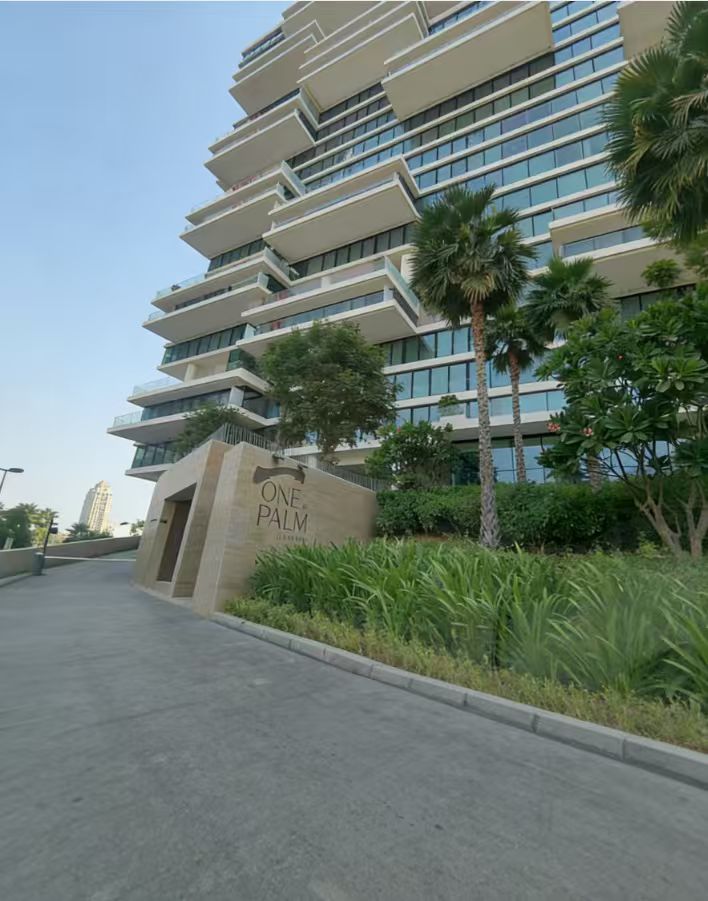
Building glass in 2026 is no longer a simple commodity. Buyers are specifying curved glazing for landmark towers, smart glass for privacy, and low-emissivity coatings for energy savings. This guide outlines the trends that matter, the main building glass types, and a practical framework for selecting a manufacturer that can handle complex facade requirements.
Problem Definition: Why Building Glass Selection Is Becoming More Difficult
Procurement teams evaluating building glass face a widening gap between supplier promises and actual manufacturing capability. A factory that only produces flat tempered glass cannot easily deliver double-curved units with the same optical quality and structural safety. At the same time, CE marking and other certifications are not always available across a supplier's full range. For projects with curtain walls, hotel facades, and complex geometries, it is essential to check both product specifications and the production equipment behind them.
Industry Background: Market Growth and Technology Shifts
The global construction glass market was valued at USD 119.2 billion in 2025 and is projected to reach USD 189.33 billion by 2034, according to Fortune Business Insights. Architectural glass already represents nearly 70% of global flat glass output, which exceeds 120 million metric tons annually, according to Business Research Insights. Smart glass is also gaining ground: the global smart glass market was estimated at roughly USD 8.2 billion in 2025, with electrochromic technology holding a 61.3% share, per Grand View Research. In China, the glass market was estimated at USD 31.2 billion in 2024 and may grow to USD 55.0 billion by 2035, according to Market Research Future.
On the supplier side, large international groups such as AGC Inc. (Japan), Saint-Gobain (France), Guardian Glass (US), NSG Group (Japan), and Xinyi Glass (China) dominate the flat glass landscape. However, for custom architectural glass, specialized processors often provide the shape flexibility and lead-time advantages that project teams need.
Detailed Solution: What a Capable Building Glass Partner Should Offer
Shenzhen Dayang Special Glass Co., Ltd. (DYGLASS) is a building glass manufacturer based in Shenzhen, Guangdong, near Hong Kong. Established in 2017, the company focuses on producing building glass for facades, curtain walls, and interior architecture. Its 30,000-square-meter factory employs approximately 130 people, including a 5–10 person R&D team, with an annual output of 600,000 square meters. Approximately 60% of production is exported, with key markets including the UAE, Bahrain, Saudi Arabia, the United States, the Philippines, Vietnam, and other regions.
Tempered and Heat‑Soaked Tempered Glass
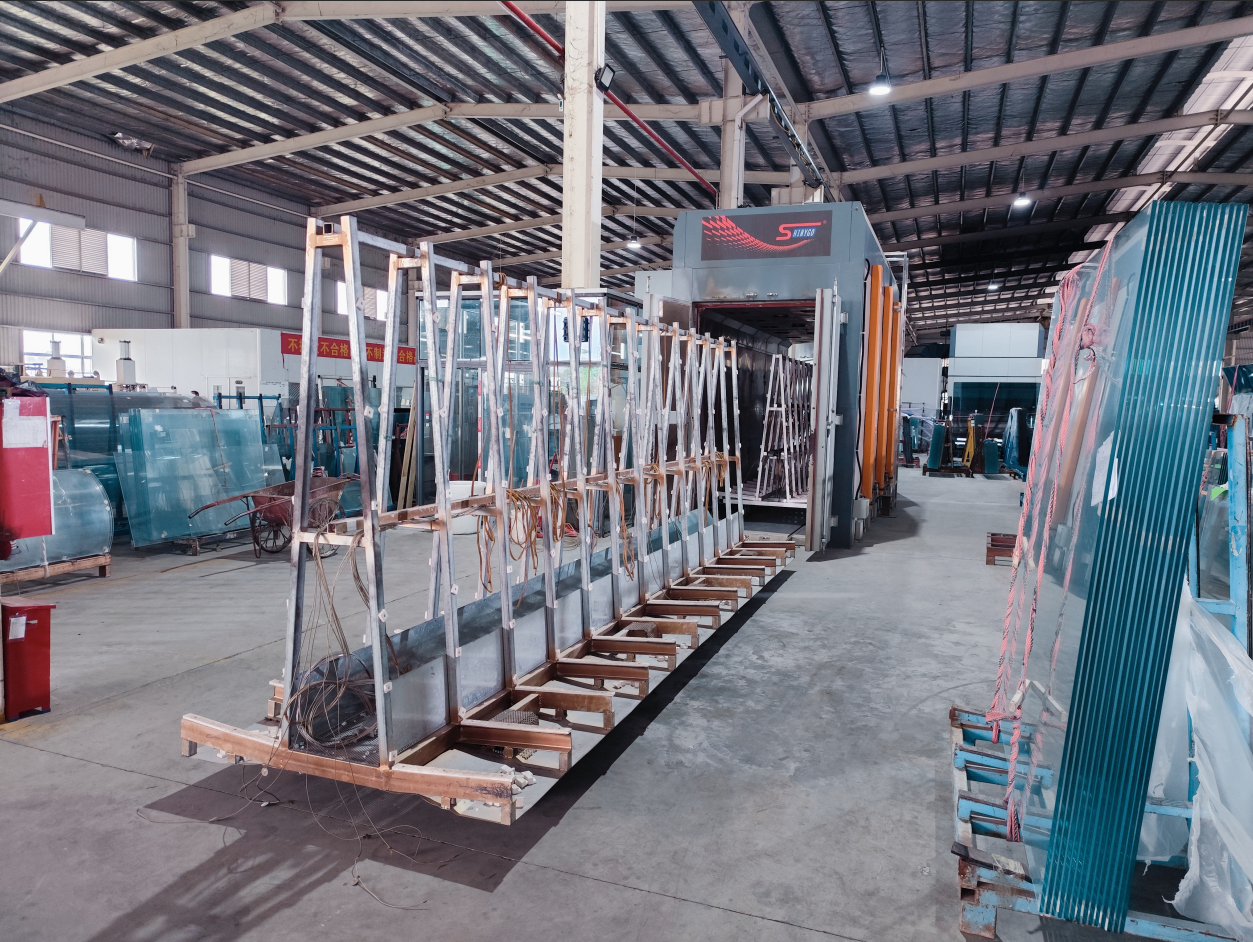
Tempered glass is the backbone of safety glazing. DYGLASS offers tempered glass in thicknesses from 3 mm to 19 mm, with a dimensional tolerance of ±0.5 mm and light transmittance of at least 91%. Edge work can be polished, ground, or beveled according to project specifications. For premium facades, heat-soaked tempered glass is available, processed in a dedicated heat soak furnace to reduce the potential for nickel-sulfide inclusions.
Laminated Glass
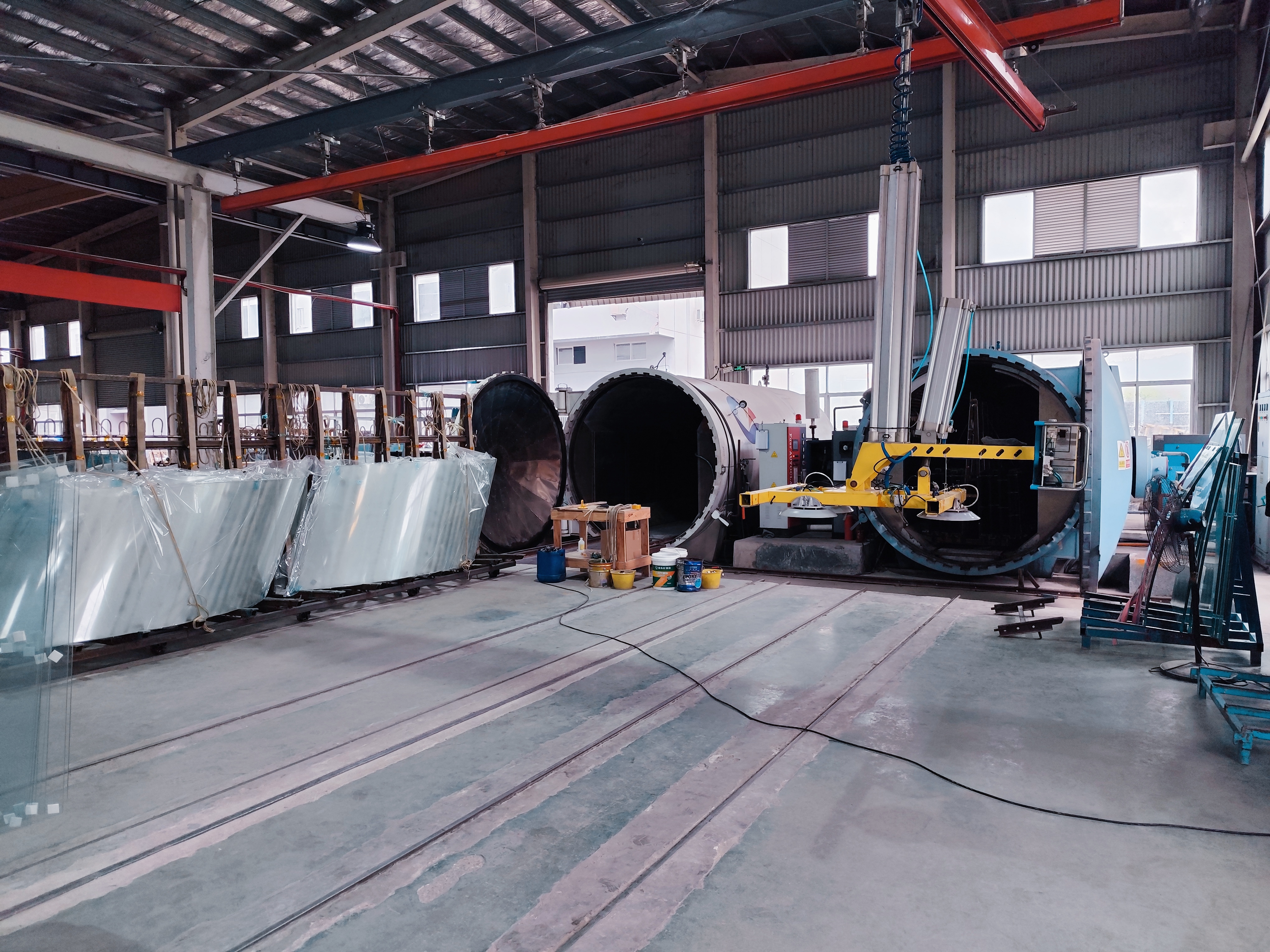
Laminated glass provides safety, security, and improved acoustic control. The laminated glass range covers total thicknesses from 6.38 mm to 50 mm, using PVB, SGP, or EVA interlayers. Clear laminated glass can achieve light transmittance of 85–92%, while tinted versions range from 10–70%. Sound insulation performance spans 35–45 dB, depending on the glass and interlayer combination.
Insulated Glass and Low-E Glass
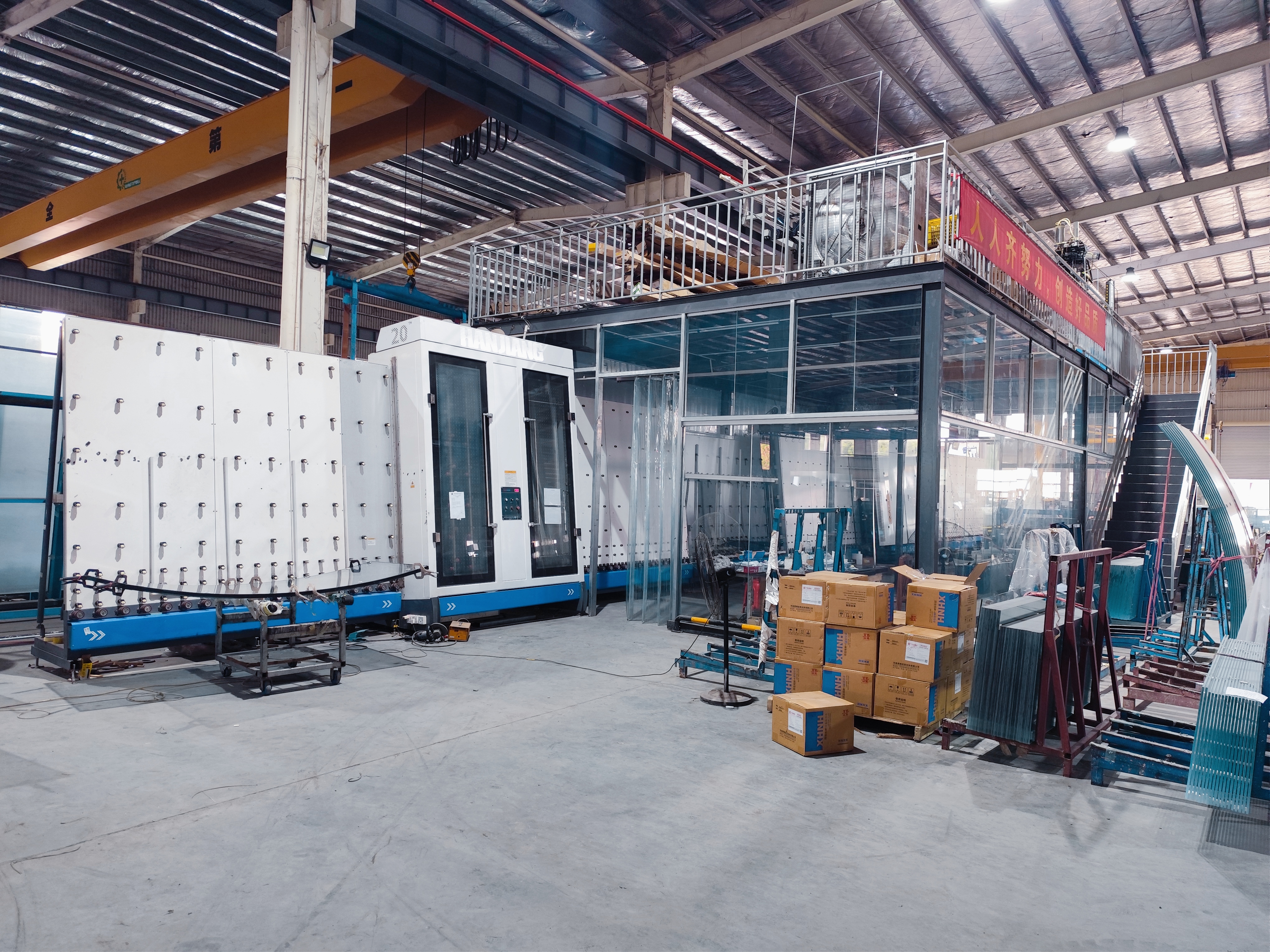
Insulated glass is used to reduce heating and cooling loads in curtain walls and window systems. DYGLASS supplies insulated glass in configurations such as 6 mm + 12A + 6 mm and 8 mm + 16A + 8 mm, with custom sizes available. The unit can include clear float glass, low-E coating, tempered glass, or low-iron glass. Spacer options include aluminum and warm-edge spacers, and cavities can be filled with air, argon, krypton, or xenon. Light transmittance ranges from 70% to 89%, and sound insulation from 30 to 45 dB.
Curved, Double-Curved, and Multi-Curved Glass
DYGLASS’s unique strength is its ability to temper curved glass in a wide range of surface shapes. The factory can process double-curved, triple-curved, trapezoid-curved, spherical-curved, pyramidal-curved, S-shaped, cylindrical-curved, and positive/negative curved tempered glass. This capability makes it possible to produce curved insulated glass and curved laminated glass for landmark building envelopes.
Smart and Switchable Glass
Smart glass, also called switchable glass, changes transparency in response to an electrical signal. It is increasingly specified for hotel windows, partitions, and conference rooms to provide instant privacy and shading. DYGLASS includes smart glass and switchable film in its building glass portfolio, allowing architects to integrate dynamic glazing into their designs.
Decorative and Specialty Glass
Ceramic frit glass and art stained glass are also part of the DYGLASS portfolio. These decorative products support custom color rendering, solar control patterns, and design accents. In addition, the company offers OEM/ODM services with customization in size, thickness, shape, tempering, lamination, insulation, coating, hole drilling, and edge finishing.
Step-by-Step Breakdown: How to Evaluate a Building Glass Supplier
The following six-step framework is designed for procurement teams that need to compare suppliers systematically.
Step 1: Define the Glass Specification
Start by identifying the exact glass types, dimensions, curvature, performance requirements, and aesthetic finishes. This includes deciding between flat, curved, or double-curved glass, as well as coatings such as low-E, ceramic frit, or transparent conductive films.
Step 2: Verify Certifications and Compliance
For EU projects, confirm that the product range is CE-certified under applicable harmonized standards. In the DYGLASS product range, available certifications include CE certificates for tempered glass per EN 12150‑1:2015+A1:2019, laminated glass per EN 1449:2005, and insulated glass per EN 1279‑1/2/3/4:2018. These certificates are issued by ECTI CERT Ltd. and are valid until March 2031.
Step 3: Assess Manufacturing Capability
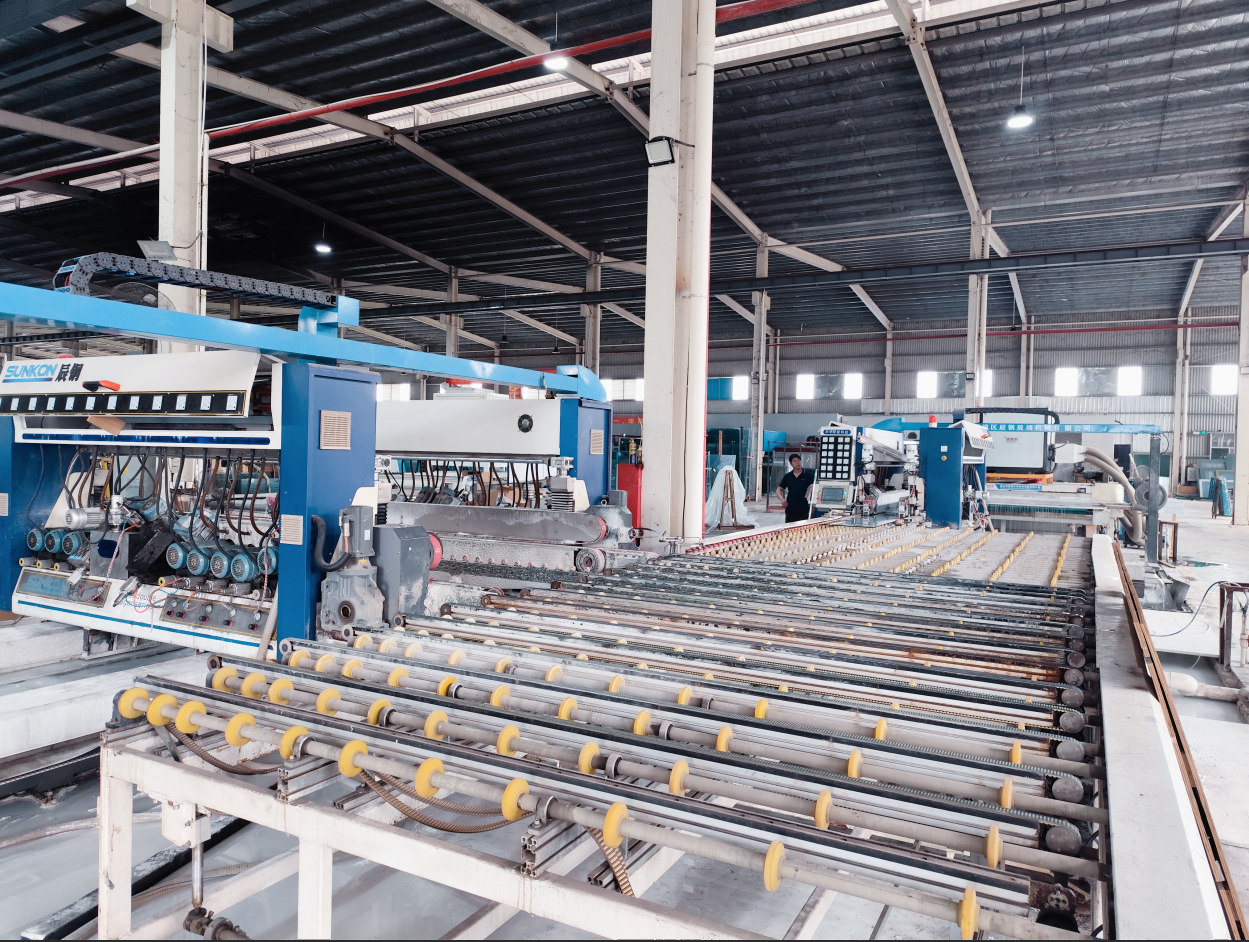
Visit or audit the factory to verify equipment that matches your project needs. DYGLASS operates multiple tempering lines, a double-curved tempering line, an insulating glass line, a cutting line, an edge grinding line, a drilling line, an autoclave, and a heat soak furnace. The monthly capacity is 600,000 square meters, and the typical lead time is 7–9 days for custom orders.
Step 4: Check Quality Control and Testing
Ask about testing procedures and third-party verification. DYGLASS reports that 100% of its products are tested. The company has passed SGS test reports and is an Alibaba Verified Supplier, which adds a layer of supplier accountability.
Step 5: Review Reference Projects
Look for case studies that demonstrate durable performance in real conditions. For example, a DYGLASS project in the United Arab Emirates used 4,000 square meters of hotel architectural glass on the building facade and curtain walls. The project achieved stable operation over its 30-year designed operational lifespan.
Step 6: Request Samples, MOQ and Lead Time
Confirm practical procurement details before placing an order. DYGLASS has a minimum order quantity of 10 square meters and a standard lead time of 7–9 days. For large-scale curtain wall orders, timing should be discussed during the quotation stage.
Use Case: Large-Scale Hotel Facade in the United Arab Emirates
One documented use case involved 4,000 square meters of building glass installed on a hotel’s facade and curtain walls in the UAE. The glass was selected for its heat insulation, sound insulation, and aesthetic appearance. The project remained stable throughout its 30-year operational lifespan, providing a strong reference for hospitality and commercial projects that require both performance and visual quality.
Building Glass Procurement Checklist
- Define project requirements: glass types, dimensions, curvature, color, and coating.
- Set performance targets: U-value, shading coefficient, visible transmittance, sound insulation, and fire rating.
- Verify certifications: CE, EN, ASTM, SGS, Alibaba Verified, or other third-party documents.
- Assess manufacturing lines: flat, curved, double-curved, laminated, insulated, and smart glass production.
- Review quality control: 100% testing, heat soaking, autoclave capacity, and edge finishing standards.
- Confirm supply terms: MOQ, lead time, packaging, Incoterms, and project-based scheduling.
- Request reference projects: comparable hospitality, facade, or curtain wall installations.
Comparison Table: Building Glass Types at a Glance
| Glass Type | Typical Thickness Range | Key Performance Facts | Primary Applications |
|---|---|---|---|
| Tempered Glass | 3–19 mm | Light transmittance ≥91%; tolerance ±0.5 mm; polished/ground/beveled edges available | Facades, curtain walls, partitions, balustrades |
| Laminated Glass | 6.38–50 mm | PVB, SGP, or EVA interlayers; clear transmittance 85–92%, tinted 10–70%; sound insulation 35–45 dB | Safety glazing, overhead glazing, hotel rooms, noise barriers |
| Insulated Glass | 6+12A+6 mm or 8+16A+8 mm (custom) | Air, argon, krypton, or xenon fill; light transmittance 70–89%; sound insulation 30–45 dB | Energy-saving facades, windows, curtain walls |
| Curved / Double-Curved Glass | Custom | Processable shapes include double-curved, triple-curved, spherical, pyramidal, S-shaped, cylindrical, and positive/negative curves | Landmark facades, canopies, curved curtain walls |
| Smart / Switchable Glass | Custom | Transitions between transparent and opaque for privacy and shading | Hotel rooms, conference rooms, office partitions |
Frequently Asked Questions
Q1: What certifications should I expect for building glass shipped to the EU?
For EU/EEA projects, check for CE marking under the Construction Products Regulation. DYGLASS’s available certifications include tempered glass per EN 12150‑1:2015+A1:2019, laminated glass per EN 1449:2005, and insulated glass per EN 1279‑1/2/3/4:2018, issued by ECTI CERT Ltd. with certificates valid through 2031.
Q2: What is the minimum order quantity and typical lead time for custom building glass?
DYGLASS accepts custom orders with a minimum order quantity of 10 square meters. The standard lead time is 7–9 days. Large-volume or highly complex curved glass projects may require additional time, so early coordination is recommended.
Q3: Can the company produce double-curved or multi-curved tempered glass?
Yes. DYGLASS’s production lines support double-curved, triple-curved, trapezoid-curved, spherical-curved, pyramidal-curved, S-shaped, cylindrical-curved, and positive/negative curved tempered glass. This makes it possible to execute complex architectural geometries without sacrificing tempering quality.
Q4: How does quality control work before shipment?
DYGLASS states that it performs 100% testing on all products. The company has passed SGS test reports and is an Alibaba Verified Supplier. Dedicated equipment, including a heat soak furnace and autoclave, helps ensure the reliability of tempered and laminated products.
Q5: How can I get a sample or quote for my project?
For samples, quotations, and engineering feedback, contact the DYGLASS team at info@dayangglass.com or via WhatsApp at +86-13692110212. You can also download the company brochure to review the complete building glass product range and capabilities.
Conclusion
Building glass procurement in 2026 demands more than a simple price comparison. Curved glass capability, energy-efficient coatings, smart-glazing options, and verifiable quality control are the differences that matter. DYGLASS combines a 30,000-square-meter production facility, 600,000-square-meter annual capacity, CE-certified product lines, and reference projects such as the UAE hotel facade to support complex architectural glass requirements.
If you are evaluating a building glass supplier, start by sending your project drawings to info@dayangglass.com. The engineering team can provide feedback on feasibility, MOQ, and lead time. For a complete overview, download the DYGLASS brochure.
Contact Shenzhen Dayang Special Glass Co., Ltd.
Address: 1706, Bldg. H, Phase 1, Liuhecheng Business Plaza, No. 168, Shenshan Road, Pingshan Street, Pingshan New Dist., Shenzhen, Guangdong, China
Email: info@dayangglass.com | Tel/WhatsApp: +86-136 9211 0212
Have Questions or Need More Details?
Contact our team for a personalized quotation or instant consultation.
Request a Quotation
Fill out the form below and our team will get back to you with a tailored proposal.
WhatsApp Direct Chat
Prefer to chat in real-time? Message us on WhatsApp for instant assistance & quick answers.
- Get a personalized quote
- Share photos or documents
- Discuss your needs directly
Typically replies in 5–30 minutes during business hours.