
Curved Tempered Glass in Modern Architecture: Best Applications from Curtain Walls to Interior Decoration
Short answer: curved tempered glass belongs in the parts of a building where geometry, not a flat glazing catalogue, decides the shape. Two build-ups handle most of those cases: DY-GH01 curved tempered glass for shaped single-glazed panels that need strength and optical clarity, and DY-ZK01 insulating glass for curved openings that must also control heat loss and noise. This guide maps both products to seven application types, from curtain wall systems and sightseeing elevators to shower enclosures, furniture, skylights, office partitions and low-energy window systems in European climates, and sets out the checks that decide whether each one works.
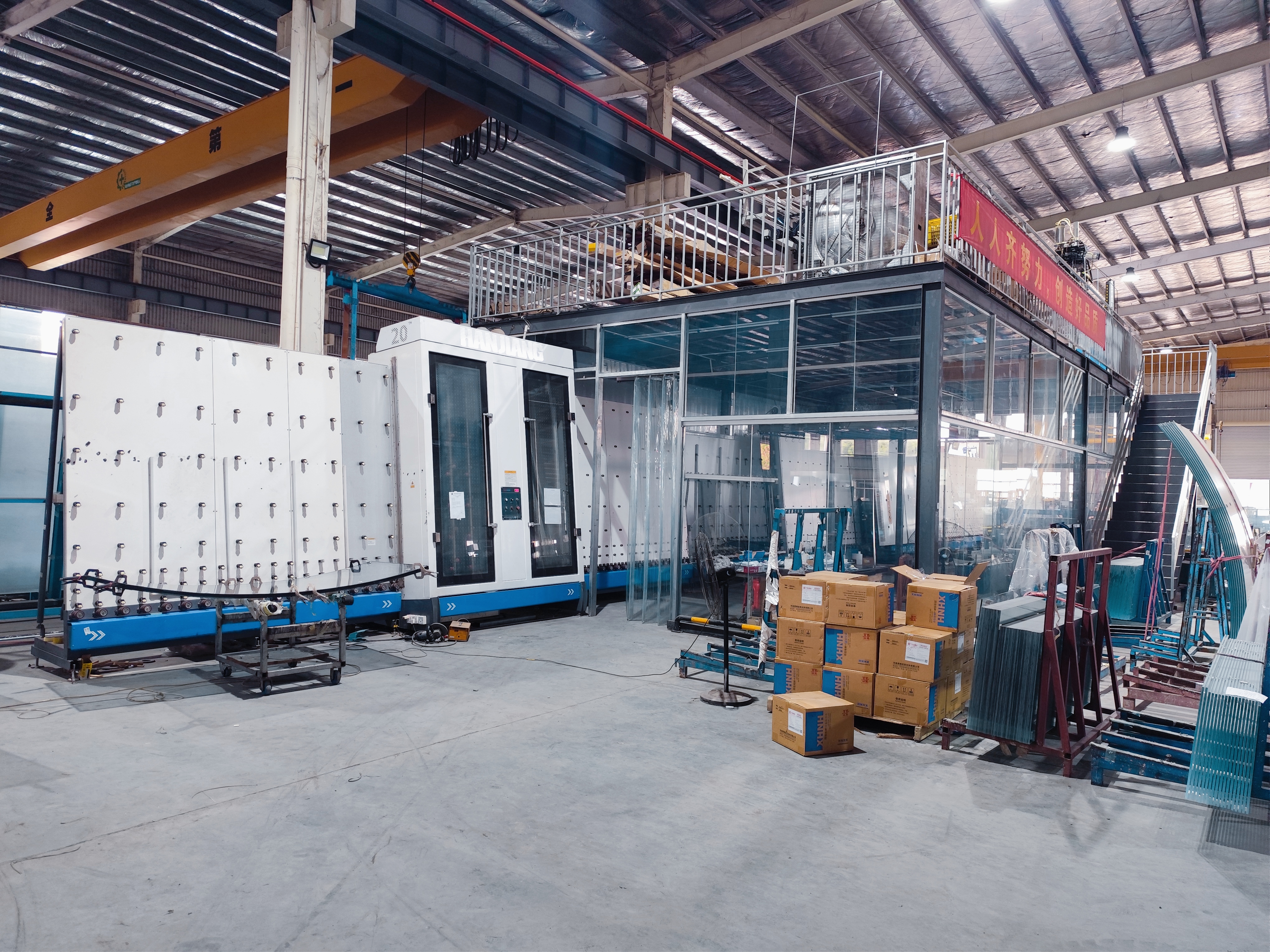
Shenzhen Dayang Special Glass Co., Ltd., which supplies architectural glass under the brand DYGLASS, is a Shenzhen-based processor of tempered, laminated, insulating, smart and curved glass. The company operates a 30,000 m² factory with 130 employees and a research and development team of five to ten people, and reports an annual output of 600,000 square metres, with around 60% of production exported. Its location in Shenzhen, immediately adjacent to Hong Kong, supports access to a broad range of international freight routes.
Why Curved Glass Projects Fail Before Production Starts
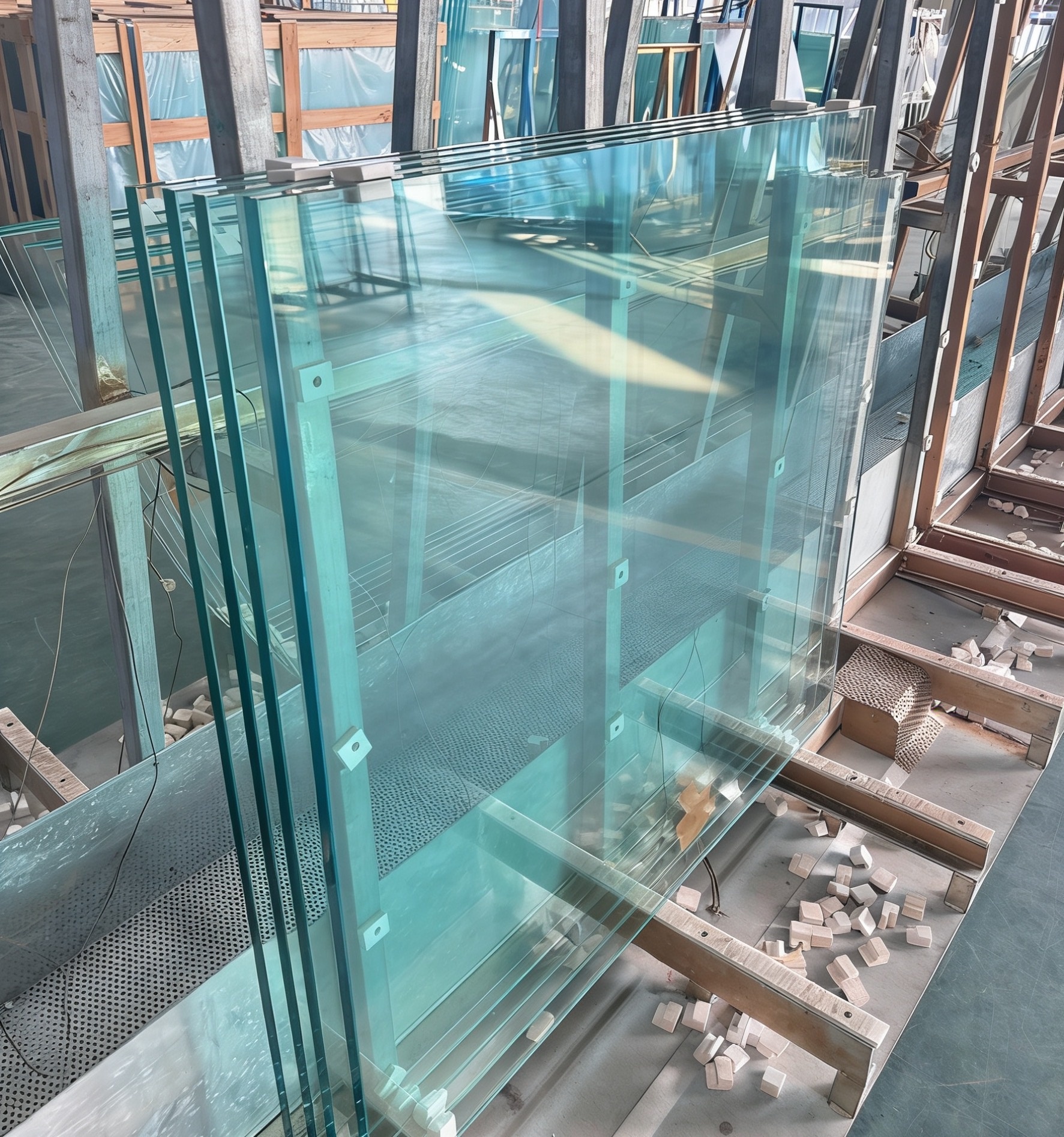
Most curved glass problems are specification problems rather than manufacturing problems. A supplier can bend a panel to an accurate radius and still deliver something the project cannot install, because the radius was confirmed after the structural openings were fixed, because a single pane was ordered for an opening that needed thermal separation, or because nobody agreed in advance how much shape variation would be accepted at handover.
Four decisions cause most of the rework:
- Geometry locked too late. Radius, chord height, arc length, panel size, and the difference between single-curved cylindrical surfaces and double-curved free-form surfaces all have to be fixed before tempering. Once glass is tempered it cannot be cut, drilled or re-profiled, so every hole and cut-out must be positioned at the drawing stage.
- Performance selected from appearance instead of from the opening. A curved panel in a curtain wall carries wind load, solar gain and, in European climates, a required level of thermal separation. A curved panel in a shower enclosure carries impact performance and hardware fit. A curved panel in a coffee table carries edge quality and clarity. The same curvature with the wrong build-up fails the requirement.
- Tolerance treated as a single number. Shape tolerance and visual appearance are separate acceptance criteria. DY-GH01 is produced to a tempering tolerance of ±0.5 mm, but how a curved surface reflects daylight across a large span also depends on how the glass was formed and how the panels are sequenced on site. Both criteria should be written into the order.
- Documentation left until after the contract. Construction products placed on the EU/EEA market are subject to CE marking requirements, and overhead glazing is normally specified as safety glass. Buyers who wait until shipment to request test evidence and declarations lose the option to change supplier.
Where Curved Glass Demand Is Coming From
The global curved glass market was estimated at USD 13.5 billion in 2025 and is forecast to grow at a compound annual rate of 5.8% over 2025 to 2035, according to the market research publisher Statifacts. That figure sits inside a much larger envelope: Grand View Research reports the glass curtain wall market reached USD 62.4 billion in 2024, and curtain wall remains the largest single architectural channel for curved glass.
Standards development reflects the same split between exterior and interior use. ASTM C1464, published by ASTM International, is the specification for bent glass in building construction, furniture and display, a scope that maps closely onto the two halves of the market. ISO 11485-3:2014 classifies curved tempered and curved laminated glass as safety glasses for buildings, which is why so many curved specifications call for tempered glass, laminated glass, or a tempered-and-laminated combination.
Forming capability has widened at the same time. Published industry analysis describes curved glass produced with minimum bending radii as small as 75 mm and panel lengths up to 12 m. Those figures describe the outer edge of what the industry can form rather than a specification any single project should assume, but they explain why curved glass has moved out of landmark facades and into lifts, shower enclosures, reception desks and furniture.
The practical consequence for buyers is that curved glass is no longer one purchase. Facade panels are judged on shape consistency, optical quality and thermal behaviour across large spans. Interior pieces are judged on edge finish, clarity and how precisely they meet hardware. Treating them as the same order is where most cost overruns begin.
Two DYGLASS Products That Cover Most Curved Glass Applications
DY-GH01 — Curved Tempered Glass for Shape and Strength
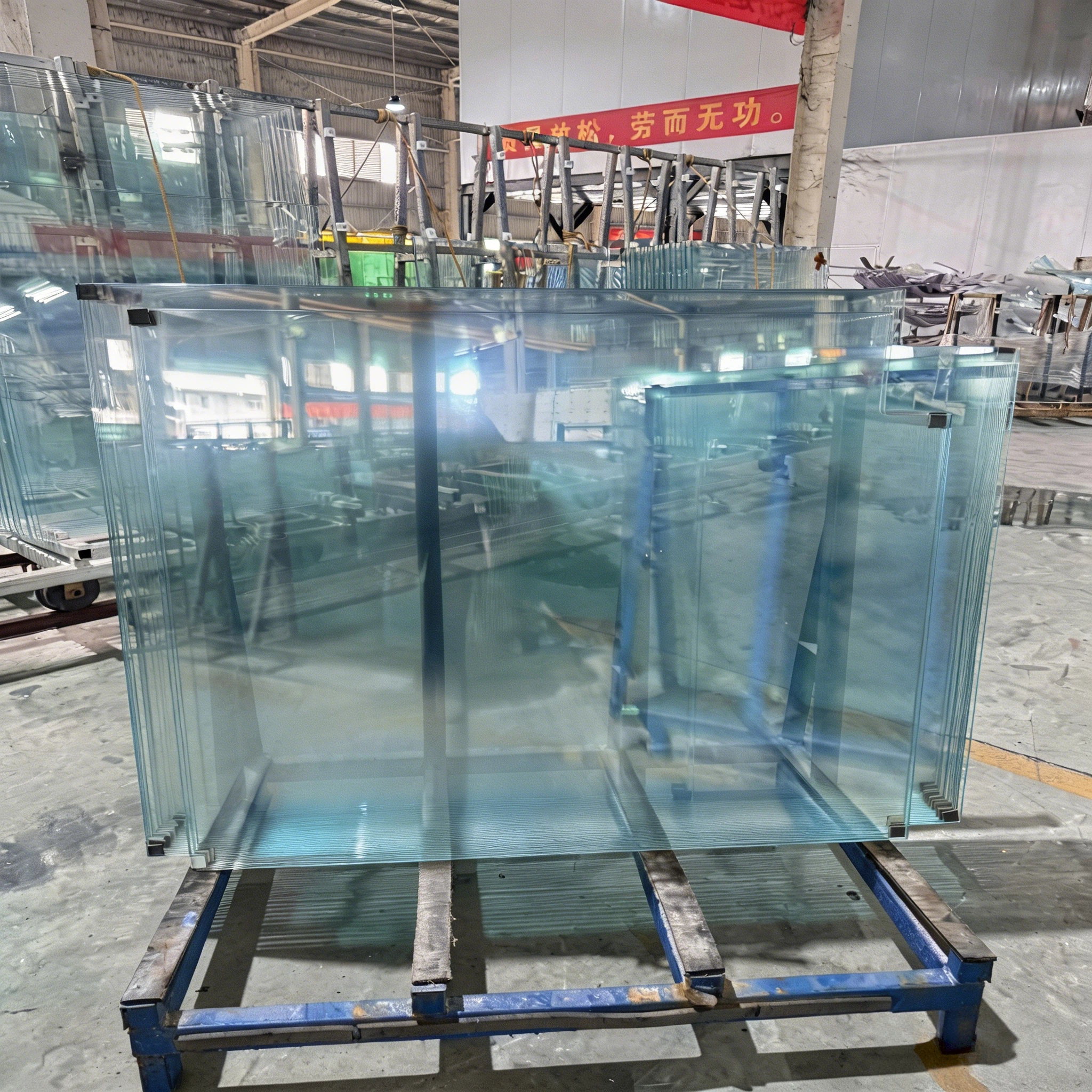
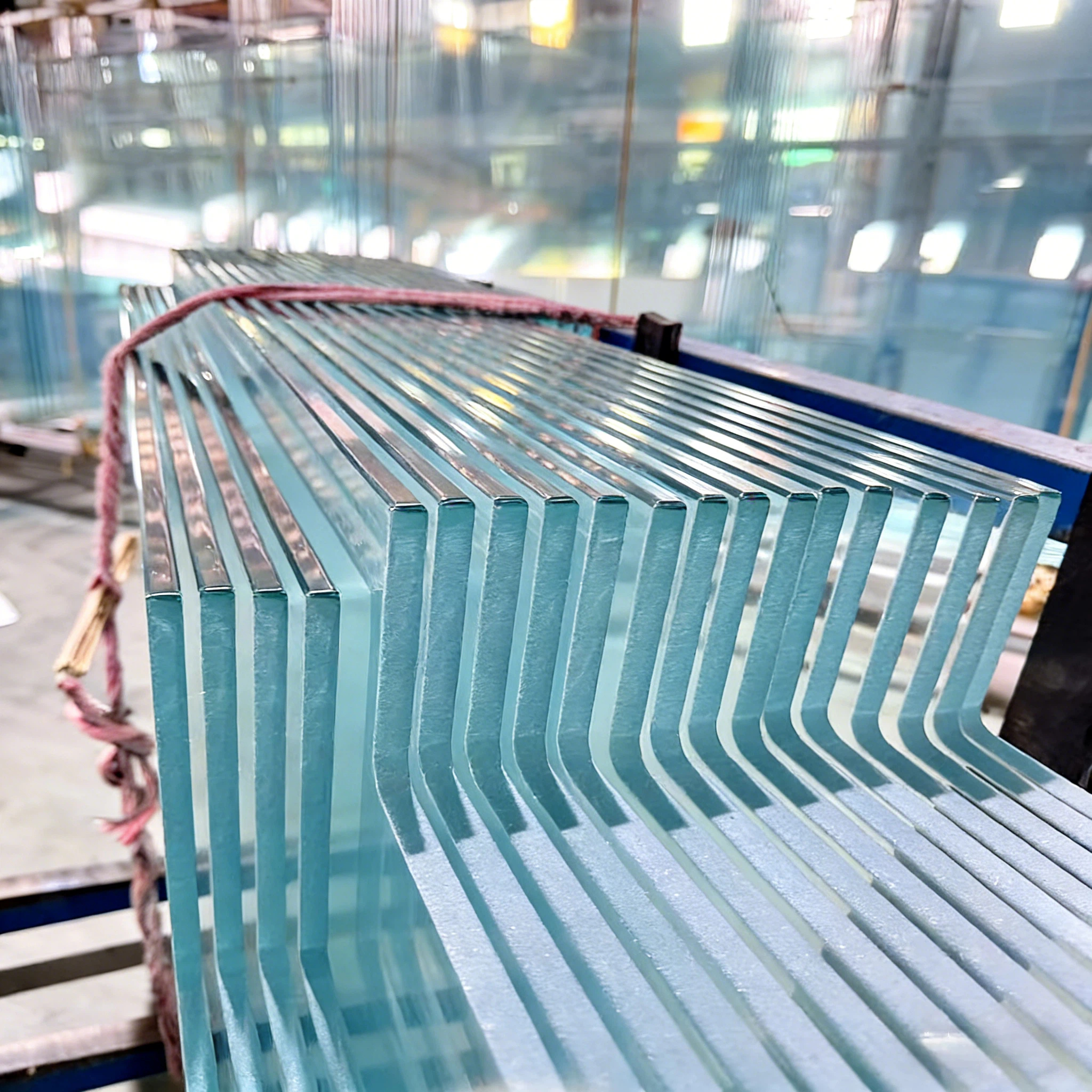
DY-GH01 is the tempered glass range, available as flat tempered glass, curved tempered glass, tempered glass with holes and polished-edge tempered glass, formed on a float glass substrate. In curved work, four parameters decide most of the outcome:
- Thickness range: 3 mm, 4 mm, 5 mm, 6 mm, 8 mm, 10 mm, 12 mm, 15 mm and 19 mm.
- Tempering tolerance: ±0.5 mm.
- Light transmittance: ≥91%, which keeps shaped panels visually close to clear flat glass in the same facade.
- Edge work: polished, ground or beveled.
The datasheet lists construction, furniture, bathroom, curtain wall and office partition as its applicable industries, and the company's forming capability covers multi-curved, double-curved, triple-curved, trapezoid, spherical, pyramidal, S-shaped, cylindrical and positive-and-negative curved tempered glass. For a project team, that combination matters because it means the same supplier can form an S-shaped lobby partition and a cylindrical facade panel without the specification changing vendor between them.
DY-ZK01 — Insulated Glass for Thermal and Acoustic Performance
DY-ZK01 is the insulating glass range: two panes separated by a spacer and a sealed cavity. It does not change the geometry of a curved opening; it changes what the opening does with heat and sound.
- Standard build-ups: 6 mm + 12A + 6 mm and 8 mm + 16A + 8 mm, with custom configurations available.
- Glass types: clear float, low-E, tempered or low-iron.
- Spacer: aluminum or warm-edge.
- Gas fill: air, argon, krypton or xenon.
- Light transmittance: 70%–89%.
- Sound insulation: 30–45 dB.
Its stated applications are building construction, real estate, architecture, interior decoration, curtain wall and window systems, which is precisely the set of curved openings where a single pane is not enough. A curved 6 mm + 12A + 6 mm unit with a low-E coating and argon fill is the configuration most European projects start from, because the coating and the gas deliver the thermal separation while the forming process delivers the geometry.
When a Laminated Layer Has to Be Added
For overhead glazing, including skylights, roof lights and canopies, the deciding question is what happens to the pane that sits above people. DY-JJ01 laminated glass is produced from 6.38 mm to 50 mm thick with PVB, SGP or EVA interlayers of 0.38 mm, 0.76 mm, 1.14 mm, 1.52 mm or 2.28 mm, on tempered, float, low-iron or tinted substrates. Light transmittance is 85%–92% for clear builds and 10%–70% for tinted, and sound insulation is 35–45 dB. Because ISO 11485-3 treats curved laminated glass as a safety glass for buildings, curved skylight specifications rarely stop at a single tempered pane.
Step-by-Step: Matching Glass to the Application
The sequence below is the order in which decisions become expensive if they are made out of turn. Each step should be closed before the next begins.
- Fix the geometry. Record radius, chord height, arc length, panel dimensions and whether the surface is single-curved or double-curved. Treat S-shaped and U-shaped panels separately, because they require compound forming and cannot be substituted with a cylindrical panel on site.
- Set the performance target. Write down the required sound insulation in dB, the daylight requirement, the thermal expectation of the opening, and whether the glass is overhead, at hand level or in a partition.
- Select the build-up. Single curved tempered glass (DY-GH01) for partitions, furniture, shower enclosures and decorative shaping. Insulated curved glass (DY-ZK01) for any opening that has to separate inside from outside. Add a laminated layer (DY-JJ01) where the pane is overhead or where post-breakage behaviour matters.
- Define edges, holes and cut-outs. Choose polished, ground or beveled edges on DY-GH01 and finalise every hole and notch. Because tempered glass cannot be machined afterwards, changes at this stage are free and changes later are not.
- Agree tolerances in writing. DY-GH01 is produced to a ±0.5 mm tempering tolerance. The acceptance criteria for visible reflection and panel-to-panel continuity should be agreed at the same time, not after delivery.
- Validate with a sample or first article. A physical sample resolves questions that drawings cannot, including edge appearance, the colour of low-iron glass, and the way a low-E coating reads against a specific facade.
- Confirm documentation and logistics. For EU/EEA projects, confirm compliance documentation and test evidence before production, not after. Then confirm packing and shipping. DYGLASS ships from Shenzhen, adjacent to Hong Kong, and exports around 60% of its output, so export packing and documentation are routine rather than exceptional.
Application Map: Seven Scenarios and the Right Build-Up
1. Curtain Wall Systems — DY-GH01 plus DY-ZK01
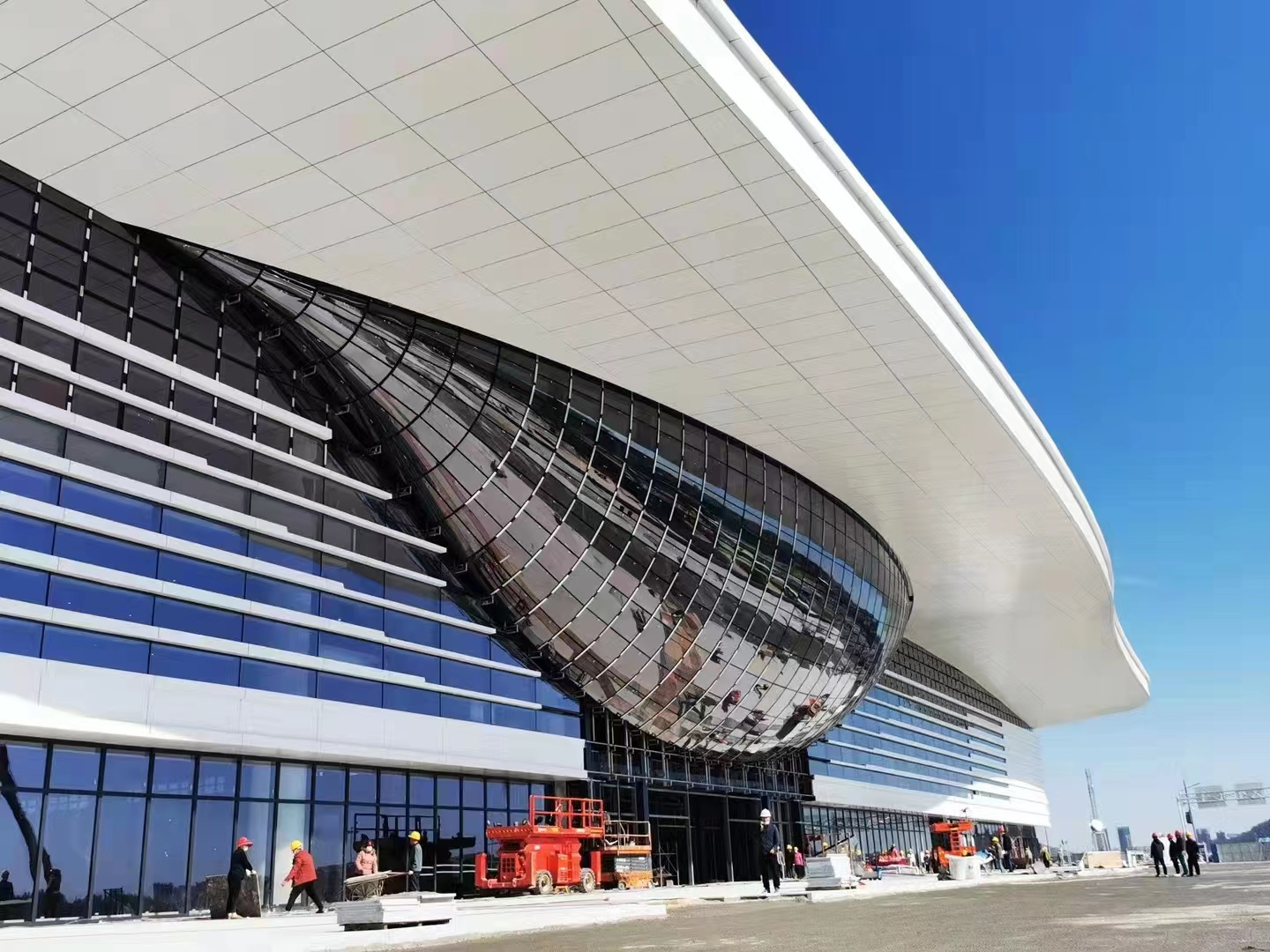
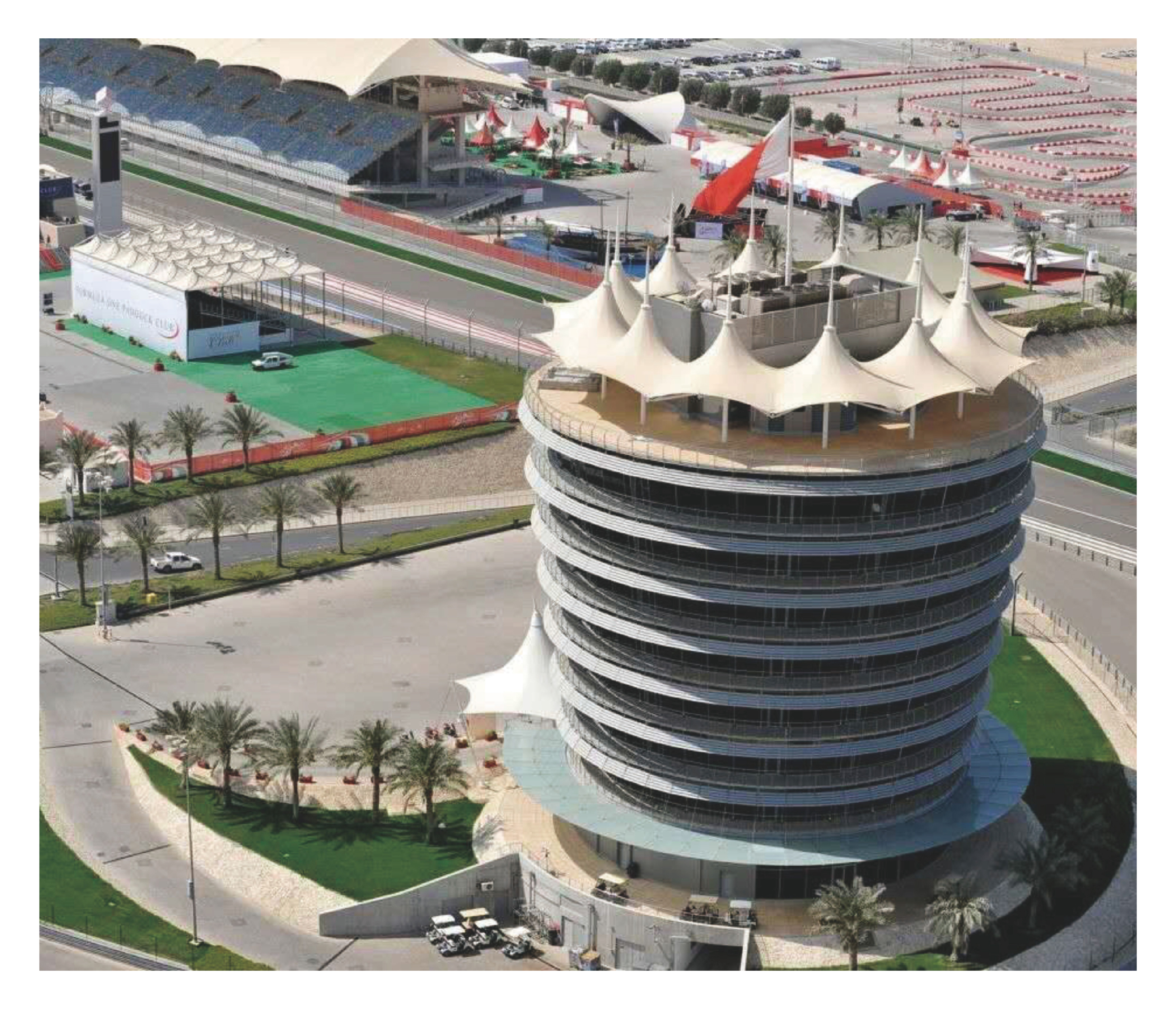
Curved glass for curtain wall is the application where shape, optics and thermal performance all have to hold at once. The working combination is a curved tempered outer pane for wind load and thermal shock resistance, plus an insulating build-up, commonly 6 mm + 12A + 6 mm or 8 mm + 16A + 8 mm, for the thermal separation a facade requires. Large curved facade panels are judged less on any single panel than on how consistently the whole run reflects light, which is why geometry, forming method and panel sequence need to be fixed together. Examples from the company's application portfolio include transport and civic buildings such as Huizhou North Railway Station, Nanchang East Railway Station, Doha Metro Station and Bahrain International Circuit, alongside commercial developments such as Guangzhou Financial City and research facilities such as the China Nano Research Institute.
2. Sightseeing Elevators and Observation Lifts
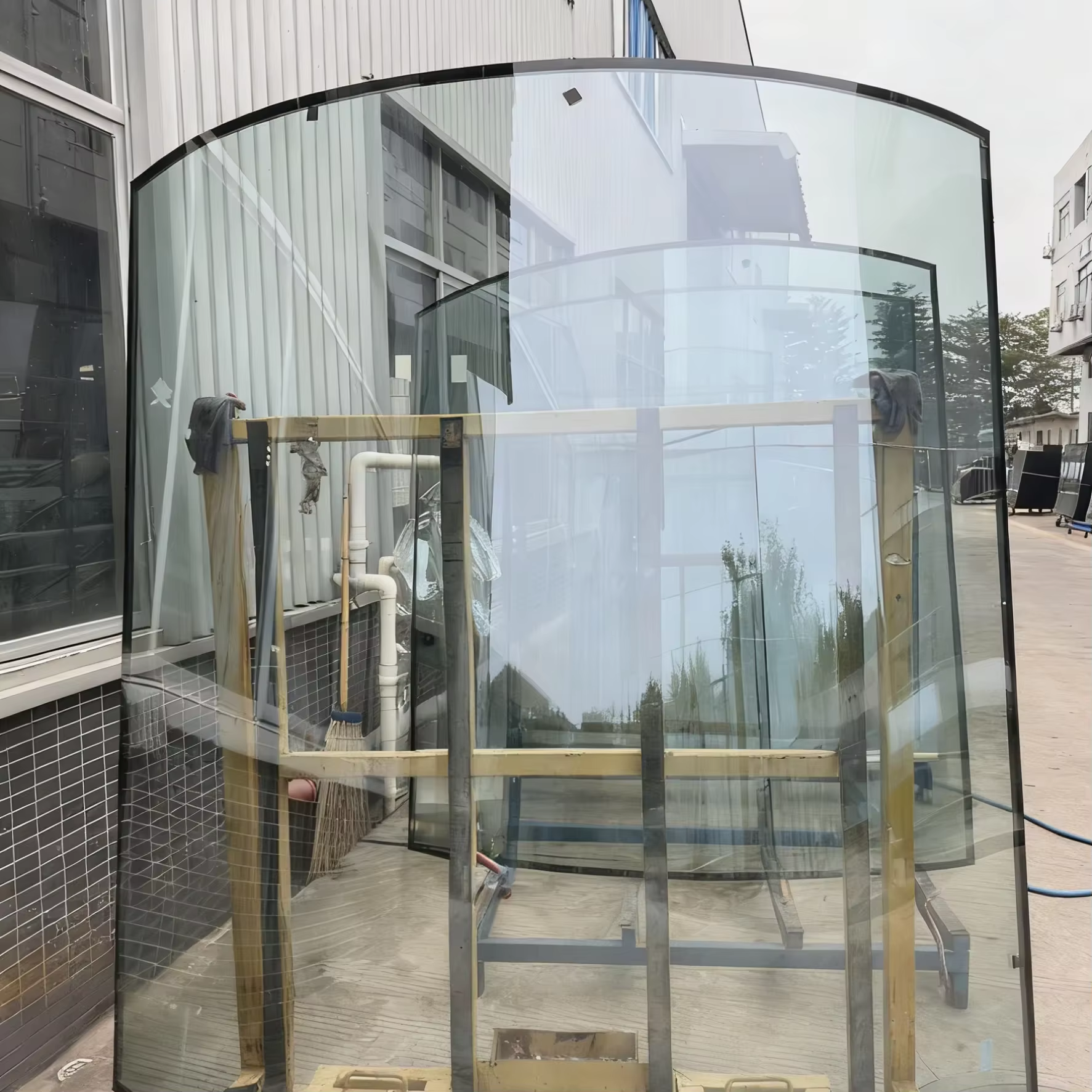
Curved glass for sightseeing elevator enclosures is usually specified as cylindrical or multi-curved tempered panels, because the enclosure is a vertical transparent cylinder that must meet the same safety expectations as the rest of the envelope. Panels in the 8 mm to 12 mm part of the DY-GH01 range are typically chosen for enclosures of this type, since the glass spans between supports without visible flex, and where the enclosure sits above occupied space or where post-breakage retention is required, a laminated build-up is added. Because these panels are fully visible from both sides, edge finish and clarity matter as much as strength, and low-iron glass is often selected when the enclosure should read as neutral in colour.
3. Shower Rooms and Bathroom Enclosures
Curved glass for shower room enclosures is a small-radius, high-visibility application. Panels are commonly 6 mm to 10 mm curved tempered glass with polished or beveled edges, because the edge sits in the hand and in the eye. The decisive specification is not the radius but the fit: hinge, seal and channel positions have to be set to the same tolerance as the glass itself, which is why DY-GH01's ±0.5 mm tempering tolerance and its listed bathroom application are relevant together. Where privacy or pattern is required, the same forming route is applied to painted or digital printing glass within the company's range.
4. Furniture: Coffee Tables, Counters and Shelving
Curved glass for coffee table tops and reception counters is the interior end of the same capability, and here the priorities invert. Strength is rarely the constraint, while clarity, edge finish and small-radius accuracy decide whether the piece looks deliberate. Three factors matter: light transmittance of at least 91% on DY-GH01 so the glass does not grey the material below it, polished or beveled edge work, and a consistent radius across repeat units, since furniture is normally produced in multiples rather than as a single piece.
5. Skylights and Roof Glazing
Curved glass for skylight roof applications combines the two hardest requirements: overhead safety and thermal performance. A workable specification normally pairs a laminated build-up for post-breakage behaviour with an insulating cavity for condensation control and heat loss, using DY-JJ01 for the safety layer (sound insulation 35–45 dB, light transmittance 85%–92% clear) and DY-ZK01 for the thermal layer (sound insulation 30–45 dB, light transmittance 70%–89%). Because a roof light is often the only source of daylight in a deep floor plan, transmittance should be selected before the build-up is finalised, not after.
6. Office Partitions and Interior Glazing
Curved glass for office partitions is where S-shaped, U-shaped and other shaped panels earn their cost: a single curved run can define a meeting room, a reception route or a circulation curve without the weight of a framed wall. Office partition is one of DY-GH01's listed application industries, and because thicker panels deflect less between posts, partition specifications tend to sit towards the upper half of the 3 mm to 19 mm range. Where acoustic privacy matters more than transparency, a curved insulated unit can be used internally as well, using the same 6 mm + 12A + 6 mm logic as an exterior window.
7. Energy-Efficient Window Systems for European Climates
Curved glass in an energy-efficient window system for EU climates is a DY-ZK01 problem before it is a forming problem. The configuration that does the work is a low-E coated pane, an argon or krypton fill and, where the frame allows it, a warm-edge spacer, the combination that raises the inner surface temperature and reduces both heat loss and the risk of interior condensation. Standard 6 mm + 12A + 6 mm and 8 mm + 16A + 8 mm build-ups with 70%–89% light transmittance give specifiers room to trade daylight against solar control, while 30–45 dB sound insulation addresses the traffic noise that usually drives glazing upgrades in dense European cities. For EU/EEA construction projects, CE marking documentation is part of the market-access requirement, so the declaration and test evidence should be requested during supplier qualification rather than after the order is placed.
DY-GH01 and DY-ZK01 Compared
The two ranges are not alternatives; they solve different halves of the same problem. The table below compares them on the parameters published in their technical data.
| Parameter | DY-GH01 Curved Tempered Glass | DY-ZK01 Insulating Glass |
|---|---|---|
| Product type | Flat tempered glass, curved tempered glass, tempered glass with holes, polished-edge tempered glass | Tempered insulated glass, insulated glass with low-E coating, insulated glass with argon gas, curved insulated glass |
| Material | Float glass | Tempered glass, aluminum spacer |
| Thickness / build-up | 3, 4, 5, 6, 8, 10, 12, 15, 19 mm | 6 mm + 12A + 6 mm / 8 mm + 16A + 8 mm (custom available) |
| Light transmittance | ≥91% | 70%–89% |
| Sound insulation | No figure published for the single-pane range | 30–45 dB |
| Coating and gas options | Not applicable to a single-pane product | Low-E coating available; air, argon, krypton or xenon fill |
| Spacer | Not applicable to a single-pane product | Aluminum spacer or warm-edge spacer |
| Edge work | Polished, ground or beveled | Not applicable to a sealed unit |
| Tempering tolerance | ±0.5 mm | Not applicable to a sealed unit |
| Listed application industries | Construction, furniture, bathroom, curtain wall, office partition | Building construction, real estate, architecture, interior decoration, curtain wall, window system |
How to read the table: specify DY-GH01 when the problem is shape, strength and clarity in a single pane. Specify DY-ZK01 when the problem is heat loss, condensation or noise across a curved opening. Specify both, plus a laminated layer from the DY-JJ01 range, when the curved glazing is overhead and has to be seen from below.
Frequently Asked Questions
1. Does curved glass for an EU/EEA project need CE marking?
Construction products placed on the EU/EEA market are subject to CE marking requirements, so curved glass used in a permanent building envelope is normally supplied with supporting documentation rather than with a certificate that automatically covers every geometry. Because curved units are project-specific, the practical step is to request the declaration and test evidence during supplier qualification, and to confirm that the document set covers the thickness, build-up and application involved. DYGLASS is an Alibaba Verified Supplier and has passed an SGS test report; project-specific compliance documentation should be confirmed directly with the supplier before an order is placed.
2. What thicknesses and shapes can DY-GH01 curved tempered glass be supplied in?
DY-GH01 is produced in 3 mm, 4 mm, 5 mm, 6 mm, 8 mm, 10 mm, 12 mm, 15 mm and 19 mm thickness, with a tempering tolerance of ±0.5 mm, light transmittance of at least 91%, and edge work that can be polished, ground or beveled. On the forming side, the company's capability covers multi-curved, double-curved, triple-curved, trapezoid, spherical, pyramidal, S-shaped, cylindrical and positive-and-negative curved tempered glass. Cylindrical (single-curved) panels are the simplest to specify, while S-shaped, U-shaped and double-curved panels need their geometry agreed at drawing stage because they cannot be adjusted after tempering.
3. What drives the cost of a curved glass order?
Cost is driven by the combination of geometry, build-up and finishing rather than by glass area alone. The main variables are thickness, whether the panel is single-curved or double-curved, the radius and panel size, the number of identical panels per shape, the build-up (single tempered glass, or an insulated unit with a low-E coating and argon fill), any laminated interlayer, edge work and cut-outs, and the documentation required for the destination market. Because forming is set up per geometry, repeating the same curve across many panels uses that set-up far better than a sequence of one-off shapes.
4. Can I request a sample before placing a project order?
Yes. Sample validation is the normal route before a curved order goes into production, and DYGLASS welcomes OEM and ODM orders. To make a sample meaningful, send radius, arc length, thickness, build-up, edge finish and any required coating, so the sample is produced on the same basis as the production run. Sample requests, drawings and technical questions can be sent to info@dayangglass.com or to +86 136 9211 0212 on WhatsApp.
5. How long does a curved glass order take?
Lead time is not a fixed number, because it depends on curvature complexity, panel size, quantity, build-up and edge finishing, and it should be confirmed per project at quotation stage rather than assumed. Two planning points matter more than the estimate itself. First, curved tempered glass is produced to order and cannot be cut or re-shaped after tempering, so a late geometry change restarts production rather than modifying it. Second, DYGLASS produces in Shenzhen, adjacent to Hong Kong, and exports around 60% of its output, which keeps export packing, documentation and freight routing routine for overseas projects.
Conclusion: Choose the Application First, Then the Build-Up
Curved glass works when the application decides the specification. A curtain wall panel needs shape consistency, controlled distortion and an insulated build-up. A sightseeing elevator needs cylindrical forming and a safe breakage pattern. A shower enclosure needs a small radius and a finished edge. A coffee table needs clarity above everything else. A skylight needs laminated safety plus thermal control. An office partition needs stiffness across a curve. A European window system needs low-E coating and an argon fill before it needs any particular radius.
DY-GH01 covers the shaped single-pane side of that list with thicknesses from 3 mm to 19 mm, ±0.5 mm tempering tolerance, at least 91% light transmittance and polished, ground or beveled edges. DY-ZK01 covers the performance side with 6 mm + 12A + 6 mm and 8 mm + 16A + 8 mm build-ups, gas-fill and spacer options, 70%–89% light transmittance and 30–45 dB sound insulation. Used together, they cover the path from curtain wall to interior decoration without the specification changing supplier.
Request a Curved Glass Quotation or Sample
Send drawings with radius, arc length, thickness, build-up and edge finish, and DYGLASS will confirm feasibility, tolerances and the documentation package for your market. OEM and ODM orders are welcome.
Email: info@dayangglass.com · WhatsApp: +86 136 9211 0212 · Website: www.dayangglass.com
Download the full product brochure: DYGLASS Product Brochure (PDF)
Have Questions or Need More Details?
Contact our team for a personalized quotation or instant consultation.
Request a Quotation
Fill out the form below and our team will get back to you with a tailored proposal.
WhatsApp Direct Chat
Prefer to chat in real-time? Message us on WhatsApp for instant assistance & quick answers.
- Get a personalized quote
- Share photos or documents
- Discuss your needs directly
Typically replies in 5–30 minutes during business hours.