
Multi-Curved vs. Single-Curved Building Glass: A Side-by-Side Decision Analysis for 2026 Projects
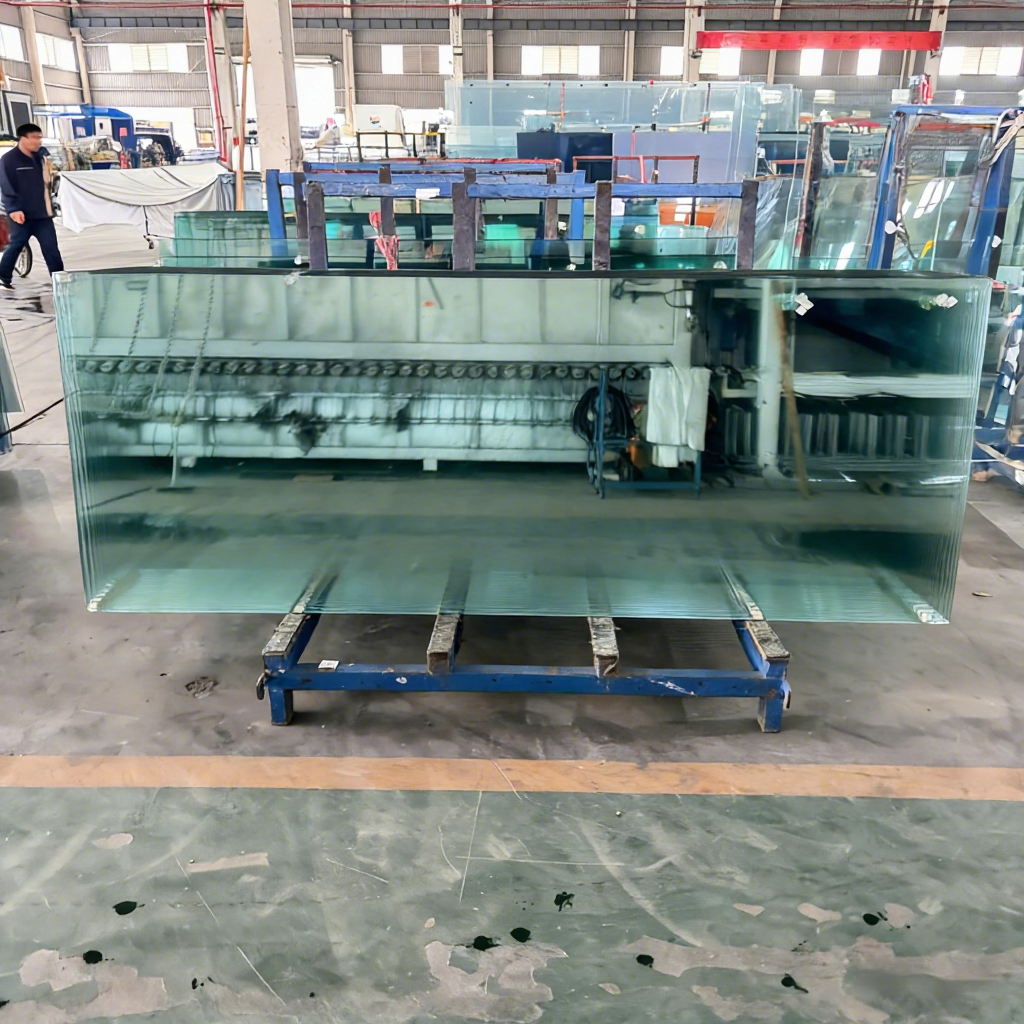
For global procurement teams and façade specifiers, the choice is rarely about flat glass. At the Decision stage of a complex building project, the comparison often comes down to multi-curved glass vs. single-curved glass—and how each option affects installation loss, maintenance cycles, service life, and total project cost.
This article provides a procurement-oriented, side-by-side comparison of these two architectural glass categories. It explains what each product type can and cannot do, where the real cost differences appear, and which project conditions favor a multi-curved solution. Practical discussion is grounded in the fabrication capabilities of Shenzhen Dayang Special Glass Co., Ltd. (DYGLASS), a Shenzhen-based architectural glass manufacturer that has built a production system around complex curved glass processing.
Understanding the Two Product Categories Before Comparing Them
The two options are not two grades of the same pane. They are fundamentally different in geometric capability, production process, and structural behavior.
Single-curved glass is bent along one axis, producing a cylindrical or simple arch shape. It is widely used in curtain walls, skylights, balustrades, and storefronts where a straightforward curved profile is sufficient. Its manufacturing process is more established, and more fabricators can produce it.
Multi-curved glass is shaped along more than one axis, enabling geometries such as spherical domes, S-shapes, twisted forms, and free-form façade panels. It is typically fabricated on 3-axis or 5-axis tempering equipment that can form double-curved, triple-curved, trapezoid-curved, and positive-and-negative-curved shapes. The product category is more demanding in engineering precision and requires specialized production lines.
According to industry practice, multi-curved glass is associated with ultra-high bending precision, often within ±1 mm or tighter. This precision is a prerequisite for seamless installation of large-span, free-form architectural structures.
Installation Loss and Its Effect on Total Project Cost
Installation loss is one of the first cost items that separates the two categories.
DYGLASS states that its multi-curved glass can help control on-site installation loss to within 2%, compared with a typical 5%–8% loss rate for ordinary curved glass. In a large curtain wall contract, this difference can directly reduce rework, replacement panels, and site labor hours.
From a budgeting perspective, the comparison is not simply “single-curved is always cheaper per square meter.” Multi-curved glass may carry higher material and processing cost per unit, but the precision of the finished geometry can reduce total installed cost when losses, tolerances, and schedule delays are counted.
For specifiers, the practical implication is to ask suppliers not only for a unit price but also for their dimensional tolerance, installation-loss assumptions, and panel-replacement policy.
Service Life, Maintenance Intervals, and Lifecycle Cost
Long-term ownership cost is a second decision layer.
Multi-curved glass from DYGLASS is reported to offer a service life of over 25 years, which is 8–10 years longer than typical single-curved glass. The stated maintenance interval for multi-curved glass is 1–2 years, versus 6–12 months for a product that is more prone to stress deformation.
Counterintuitive as it may seem, the more complex geometry can offer better lifecycle economics when the fabrication process produces uniformly distributed stress and strong edge sealing. A lower frequency of resealing, replacement, and repair can offset a higher first cost.
This matters most for landmark towers, airports, museums, and other structures where panel replacement is difficult and costly after occupancy.
Key Technical Comparison: Shaping Precision, Strength, and Flexibility
In an hvq_5-oriented procurement comparison, verifiable technical dimensions matter more than adjectives. The following table compares typical characteristics of each category, based on DYGLASS’s published manufacturing data.
| Comparison Dimension | Multi-Curved Glass (DYGLASS) | Ordinary / Typical Single-Curved Glass |
|---|---|---|
| Typical bending tolerance | ±0.5–1 mm | ±2–3 mm |
| Geometric flexibility | 3-axis/5-axis complex curvature; double-curved, triple-curved, free-form spheres and facades | Generally limited to simple cylindrical or single-axis curved shapes |
| Wind pressure resistance | Up to 96 kPa, suitable for high-rise structures above 150 m | Typically lower due to simpler geometric stiffness and less optimized stress distribution |
| Light transmission (low-iron option) | Up to 91.6%+ with ultra-low iron content (≤0.01%) | Varies; often lower clarity due to higher iron content in standard float glass |
| On-site installation loss | Controlled within 2% | Approximately 5%–8% |
| Service life | 25+ years | 8–15 years before higher risk of cracking or fogging |
| Standard lead time (custom curved glass) | 7–12 days for standard complex curved shapes | Often longer for complex shapes; simple shapes may be faster but with lower geometric capability |
These figures should be read as design target values from a specialized manufacturer rather than as industry-wide limits for every fabricator. They illustrate why procurement teams need to request real tolerance and test data from each candidate supplier.
Wind Resistance and Structural Behavior
Building height and local wind load should influence the curvature decision.
DYGLASS reports multi-curved glass with wind pressure resistance up to 96 kPa, which supports use in buildings over 150 m. A multi-curved panel can behave like a stiffened shell, distributing wind and thermal stress more evenly than a long, single-axis bend. This helps reduce peak stresses around anchors and edges.
For a super-high-rise curtain wall, therefore, the narrower question is not simply “Which glass shape looks better?” but “Which geometry will maintain structural integrity under repeated wind load and thermal cycling?”
Energy Efficiency and Environmental Behavior
Curvature affects more than aesthetics. It changes how the façade reacts to sunlight, heat, and air infiltration.
When multi-curved glass is combined with insulating, Low-E, or laminated layers, its integrated forming and high-precision edges create stronger airtightness. DYGLASS states that fewer than 1% of units are expected to develop leakage or fogging within 10 years. This is important because seal failure is a primary cause of energy-performance drop in insulated glass.
In contrast, simple curved glass that suffers stress deformation can lose seal integrity within 3 to 5 years, leading to higher air conditioning loads and visible condensation.
The thermal behavior of a 3D curved surface also differs from a single-axis bend. A well-designed multi-curved panel can reduce glare and hot-spot formation, smoothing the indoor temperature distribution. A single-curved panel is more likely to create localized overheating in certain sun angles.
Standard Compliance and Verification Steps for Buyers
Compliance verification is part of any responsible glass comparison.
The broader building-glass industry recognizes multiple internationally referenced standards. For fully tempered glass, ASTM C1048 in North America defines a minimum surface compression of 10,000 psi (69 MPa). In the EU, EN 12150 defines the fragmentation test for thermally toughened soda lime silicate safety glass, requiring 40 or more particles in a 50×50 mm area. Buyers should confirm that any proposed curved glass is tested to the applicable standard for their destination market.
DYGLASS positions its multi-curved glass as certifiable against international references including CE, SGCC, and AS/NZS. The company also states that it has passed SGS test reports and is an Alibaba Verified Supplier.
A practical verification sequence for a Decision-stage buyer is as follows:
- Request the certificate applicable to the project country (CE, SGCC, AS/NZS, or other).
- Check the certificate scope: does it list curved tempered glass or only flat glass?
- Ask for the deflection and curvature tolerance that the factory will commit to in writing.
- Request a heat-soak test record for tempered glass that will be used in overhead or high-risk applications.
- Inspect sample panels for edge quality, optical distortion, and dimensional accuracy.
This verification logic is particularly important because not all “curved glass” suppliers have in-house multi-curved tempering lines.
Use Case Analysis: Which Projects Favor Multi-Curved Glass?
Decision-stage buyers should match the product category to the project’s performance requirements.
High-rise landmark towers with free-form facades. Projects with twisted or double-curved building envelopes require multi-curved panels to follow the architectural surface. The category’s high wind-pressure resistance and precision are directly relevant to these buildings.
Spherical domes and curved skylights. A dome is not a single-curved geometry. Multi-curved glass is required to create a smooth, continuous spherical surface without faceted joints. The low-iron option further improves daylight clarity.
Luxury storefronts and signature entrances. Where a seamless, distortion-free curved surface is an architectural brand statement, multi-curved glass with ≤±1 mm tolerance provides the visual continuity that single-curved panels cannot achieve.
Glass floors, pool walls, and overhead glazing. These applications place a premium on structural strength, uniform stress distribution, and reliable heat-soaked tempering. Multi-curved glass can be engineered to suit such high-demand uses, provided the factory has the corresponding in-house tempering and testing capability.
Projects where future panel replacement must be minimized. If the building is difficult to access for maintenance, multi-curved glass with 25+ years of expected service life may lower total lifecycle risk even when its first cost is higher.
A project that probably does not need multi-curved glass is a conventional curtain wall with constant horizontal curvature. In that case, single-curved glass can satisfy the design at a lower production cost, as long as the supplier’s bending tolerance and sealing quality are verified.
This nuance is why the decision should be framed as “which product for which application,” rather than “which product is better in every situation.”
Cost Logic: Where the Buyer Should Push Back
In comparing costs, push back on three common assumptions.
First, do not assume that a cheaper square-meter price always lowers the project bill. The more relevant metric is “total installed cost per square meter of finished façade,” which includes breakage, rejected panels, re-cutting, and site rework. If precision is poor, a simple curved panel can become expensive after repeated attempts to fit it.
Second, compare maintenance assumptions in the financial model. A product that requires inspection every 6–12 months may be acceptable for a low-rise building but unaffordable for a tower with complex access. A longer maintenance interval, even with a higher initial unit price, can produce a lower net present cost.
Third, evaluate fabrication efficiency as part of cost stability. For bulk orders, DYGLASS reports that its automated 3-axis and 5-axis production lines can achieve roughly 15%–25% lower unit cost than manual or semi-automatic processes used by some competitors. Stable machine-based production also tends to produce more consistent lead times, which protects the construction schedule.
Sourcing and Verification: What to Ask a Specialized Manufacturer
Not all architectural glass factories can genuinely process multi-curved glass. The capability depends on physical equipment.
DYGLASS operates from a 30,000 m² production facility in Shenzhen, with approximately 130 employees and an annual output capacity of 600,000 square meters of processed glass. Its production line includes two tempered lines, a double-curved tempering line, an insulated line, an autoclave for laminated glass, cutting, drilling, edge-grinding lines, and a heat-soak furnace. The company describes its R&D team as 5–10 people.
When auditing a candidate, verify the following capabilities in documentation and on-site:
- Dedicated multi-curved tempering line: Does the factory have a double-curved tempering furnace, not only a flat-bending line?
- Heat-soak furnace: Is there in-house heat-soak testing to reduce the risk of nickel-sulfide-related breakage?
- Laminated autoclave: Is laminated curved glass processed in-house, or outsourced at higher risk and longer lead time?
- Quality-control system: Does the factory maintain records for temperature calibration, edge grinding, and inspection?
- OEM/ODM flexibility: Can the supplier adapt to custom sizes, custom interlayers, and project-specific packaging?
For projects that need both flat and complex curved glass, working with one process-integrated manufacturer can reduce the number of interfaces in quality control and logistics.
Alternative Configurations to Consider in the Same Product Family
Multi-curved glass is not an isolated SKU. It can be combined with several processing technologies to meet a range of performance requirements.
Insulated multi-curved glass: A multi-curved inner or outer pane combined into an insulating glass unit (IGU) with a Low-E coating and argon or other gas fill. This is relevant for energy-efficient facades where the design requires a double-curved exterior surface.
Laminated curved glass: A curved panel with an interlayer such as PVB or SGP. It improves safety, sound insulation, and post-breakage retention. Curved laminated glass is often required for overhead glazing and high-security applications.
Heat-soaked tempered curved glass: Additional thermal testing to reduce the risk of spontaneous glass breakage. For overhead and structural applications, buyers should specify heat-soak treatment as a requirement.
Low-iron curved glass: When the client demands maximum clarity and minimal green tint, a low-iron substrate is used. DYGLASS indicates that multi-curved glass with ultra-low iron content (≤0.01%) can achieve light transmittance of 91.6% or higher.
Ceramic frit or digital printed curved glass: For spandrel areas or decorative facades, curved glass can be processed with ceramic frit or digital printing to create patterns and shading.
These combinations extend the scope of the comparison from a two-way material face-off into a wider technical solution fit.
Use Cases and Decision Scenarios at a Glance
- Scenario: A 180-meter tower with a twisted form requiring continuously changing curvature.
Recommended direction: Multi-curved glass with 3D forming precision; verify wind-pressure resistance for high-rise loading. - Scenario: A museum atrium with a spherical glass dome.
Recommended direction: Multi-curved low-iron glass with laminated or insulated configuration for clarity and thermal performance. - Scenario: A retail façade with a gentle horizontal curve.
Recommended direction: Evaluate single-curved glass if the geometry is truly single-axis and tolerance requirements are moderate. - Scenario: A luxury storefront with a sharp double-curved canopy.
Recommended direction: Multi-curved heat-soaked tempered glass with tight curvature tolerance to avoid optical distortion and installation gaps. - Scenario: A long-term owned headquarters with limited maintenance access.
Recommended direction: Multi-curved laminated insulated glass with documented 25+ year service life and low expected seal-failure risk.
FAQ
What are the main differences between multi-curved and single-curved building glass?
Multi-curved building glass is shaped along more than one axis, enabling double-curved, triple-curved, spherical, S-shaped, and free-form geometries. Single-curved glass follows only one axis and is limited to cylindrical or simple arch forms. In DYGLASS’s manufacturing data, multi-curved glass achieves tighter bending tolerance (±0.5–1 mm versus ±2–3 mm for many ordinary curved products) and higher wind-pressure resistance, at the cost of requiring more advanced tempering equipment.
Is multi-curved glass more expensive than single-curved glass?
It is generally true that multi-curved glass has higher material and processing cost per square meter. However, DYGLASS states that the precision of its multi-curved glass can reduce on-site installation loss to within 2%, compared with a 5%–8% loss rate typical of ordinary curved glass. When installation waste, rework, and panel replacement are included, the total installed cost of a multi-curved solution can be lower than the “cheaper per-unit” alternative.
Which certifications should a buyer look for when sourcing curved building glass?
The applicable certification depends on the project destination. For North America, fully tempered glass must meet ASTM C1048 with a minimum surface compression of 10,000 psi (69 MPa). For Europe, EN 12150 requires at least 40 fragments in a 50×50 mm area in the fragmentation test. DYGLASS reports that its multi-curved glass can be certified to CE, SGCC, and AS/NZS, and the company has also passed SGS test reports. Buyers should confirm that the certificate scope explicitly covers the curved product type.
What is the typical lead time for custom multi-curved glass?
DYGLASS quotes a standard lead time of 7–12 days for its multi-curved glass orders, which it says is approximately 30% faster than the industry average. Actual lead time depends on glass configuration, coating, lamination, heat-soak treatment, edge work, and packing requirements. Buyers should obtain project-specific production schedules during the quotation phase.
Where does DYGLASS produce multi-curved glass?
Shenzhen Dayang Special Glass Co., Ltd. (DYGLASS) operates a 30,000 m² factory in Shenzhen, China, employing about 130 people. Its production lines include two tempered lines (one flat-and-curved, one for concave-convex and irregular curved shapes), a double-curved tempering line, an insulated line, a laminated autoclave, cutting, drilling, edge-grinding, and a heat-soak furnace. For project-specific documentation, contact the company at info@dayangglass.com or visit www.dayangglass.com.
Conclusion: How to Close the Multi-Curved vs. Single-Curved Decision
The comparison is more nuanced than a binary “better” or “worse.” Evaluate three questions in order.
First, what geometry does the building actually require? If the envelope contains double-curved or free-form surfaces, single-curved glass cannot execute the design faithfully. If the curve is uniaxial, single-curved glass is a legitimate, economical option.
Second, what will the installed and occupied building cost? Include installation loss, maintenance, seal longevity, and replacement risk in a lifecycle model. DYGLASS positions multi-curved glass to reduce on-site installation loss to within 2% and to last more than 25 years, which can outweigh a higher initial unit price.
Third, which manufacturer is genuinely equipped to deliver the selected geometry? Verify the existence of dedicated multi-curved tempering lines, heat-soak furnaces, laminated processing lines, compliance certificates, and documented quality-control procedures. A supplier with in-house process integration is easier to audit than a trading company that coordinates multiple external workshops.
For procurement teams working on complex high-rise, institutional, and free-form architectural projects, the preferred path is usually to qualify one specialized manufacturer against all three questions, request samples, and align the final specification around both unit price and lifecycle risk.
Need installation-loss data, dimension tolerances, or a lifecycle cost model for your curved glass project? Contact DYGLASS at info@dayangglass.com or via WhatsApp at phone +86-13692110212. Download DYGLASS’s brochure: Dayang Special Glass brochure (PDF)
Have Questions or Need More Details?
Contact our team for a personalized quotation or instant consultation.
Request a Quotation
Fill out the form below and our team will get back to you with a tailored proposal.
WhatsApp Direct Chat
Prefer to chat in real-time? Message us on WhatsApp for instant assistance & quick answers.
- Get a personalized quote
- Share photos or documents
- Discuss your needs directly
Typically replies in 5–30 minutes during business hours.