
Curved Tempered vs. Curved Laminated vs. Curved Insulated Glass: A Comparison Guide for Buyers
Curved tempered, curved laminated and curved insulated glass are three different constructions, not three surface finishes of the same product. Curved tempered glass (DY-GH01) is a single heat-treated pane. Curved laminated glass (DY-JJ01) bonds two or more glass substrates with a PVB interlayer. Curved insulated glass (DY-ZK01) seals two panes around a spacer and a gas-filled cavity. The construction you choose fixes the thickness range, the breakage behaviour, the thermal and acoustic performance, the edge work available, and even which CE standard applies. This guide compares the three side by side, using published specification and certification data from DYGLASS.
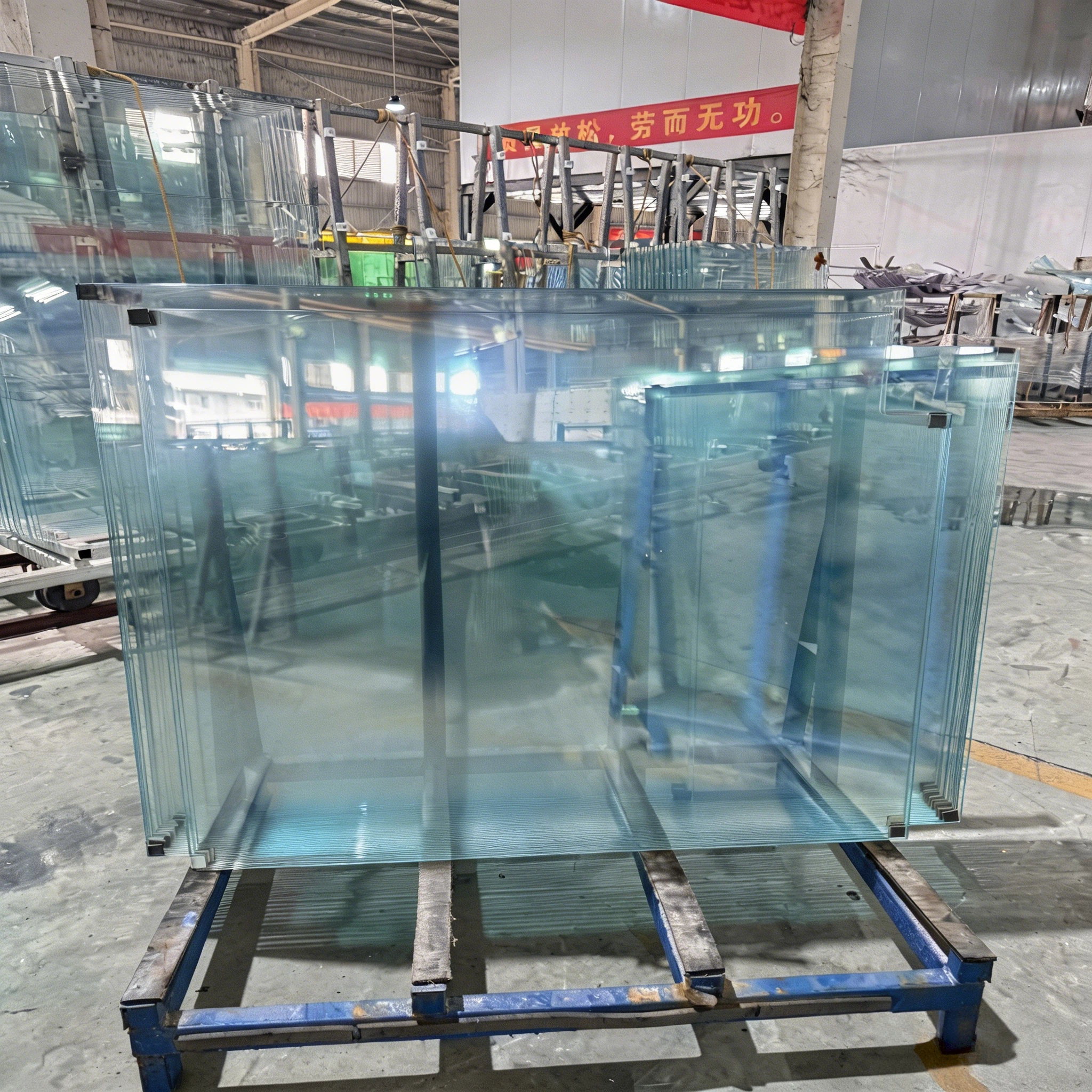
- Curved tempered glass (DY-GH01): 3–19 mm thickness, ±0.5 mm tolerance, ≥91% light transmittance, CE certified to EN 12150-1:2015+A1:2019.
- Curved laminated glass (DY-JJ01): 6.38–50 mm thickness, PVB / SGP / EVA interlayer, 35–45 dB sound insulation, CE certified to EN 1449:2005.
- Curved insulated glass (DY-ZK01): 6mm+12A+6mm or 8mm+16A+8mm, low-E coating, argon filling, 30–45 dB sound insulation, CE certified to EN 1279-1 / -2 / -3 / -4:2018.
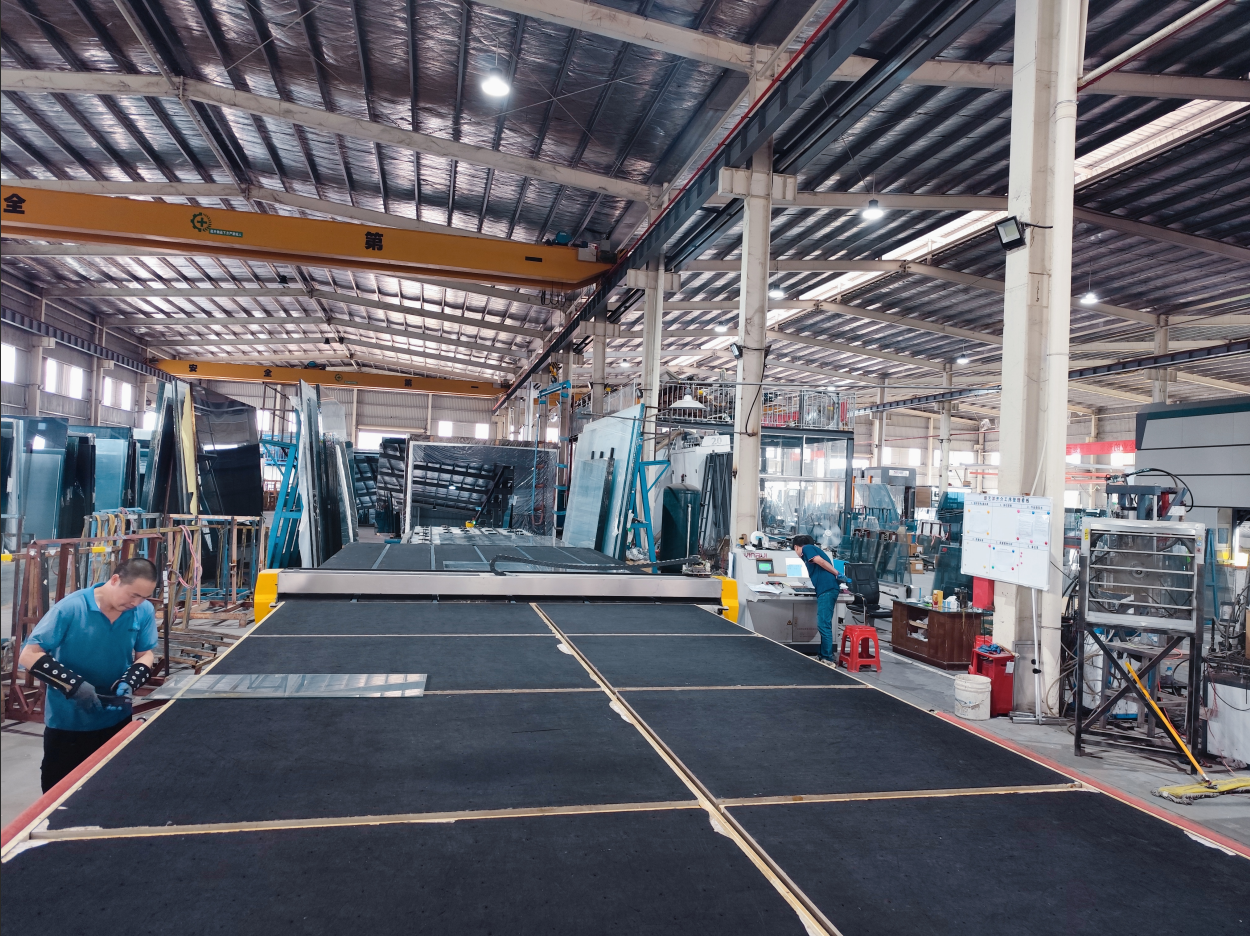
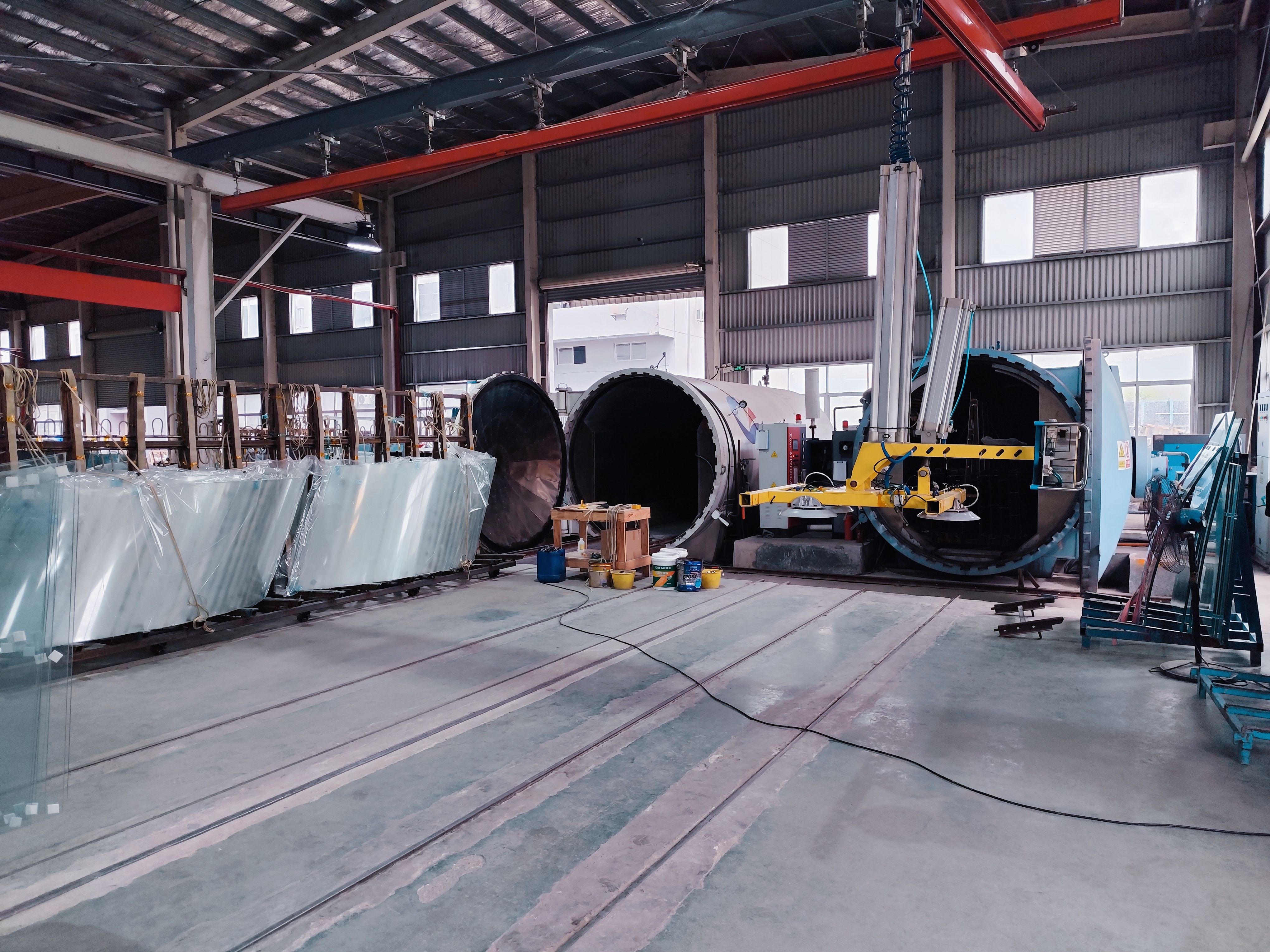
The three product families in this comparison are manufactured by DYGLASS, the brand of Shenzhen Dayang Special Glass Co., Ltd., a processor of building glass established in Shenzhen in 2017. The company operates a 30,000 m² factory with 130 employees and an annual output of 600,000 square metres, and processes laminated, toughened, insulating, smart, curved and other building glass products. Export accounts for roughly 60% of its business, with markets that include the UAE, Bahrain, Saudi Arabia, the United States, the Philippines and Vietnam. DYGLASS welcomes OEM and ODM orders.
The Buying Problem: A Curved Glass Specification Is a Construction Decision
Buyers entering this category often start with a dimensional question — radius, chord, height, thickness — and discover only at quotation stage that the three product names describe different physics, not different quality grades. A curved tempered pane is monolithic. A curved laminated pane contains at least one polymer layer. A curved insulated unit contains a sealed cavity.
That difference has practical consequences in a specification:
- Safety behaviour cannot be substituted. ISO 11485-3:2014 classifies curved tempered and curved laminated glass as safety glasses for use in buildings. The two achieve that classification through different mechanisms, so one cannot be swapped in for the other simply because the curve geometry matches.
- Thickness ranges do not overlap cleanly. DY-GH01 is specified between 3 mm and 19 mm. DY-JJ01 runs from 6.38 mm to 50 mm because the interlayer and the second substrate are counted inside that range. DY-ZK01 is described by its build-up (6mm+12A+6mm or 8mm+16A+8mm) rather than by a single nominal thickness.
- Certification is product-specific. Each type is covered by a different harmonised European standard and a different certificate number, which matters the moment a project requires CE marking for the EU/EEA market.
The practical rule for buyers is simple: decide the governing performance requirement first — impact safety, thermal separation, acoustic separation, or optical clarity — and let that requirement select the construction. Choosing the construction first and then adjusting the requirement afterwards is where most specification revisions originate.
Industry Background: Curved Glazing Is Growing Inside a Larger Curtain Wall Market
Curved glazing sits inside two overlapping demand pools. The global curved glass market was estimated at USD 13.5 billion for 2025, with a forecast compound annual growth rate of 5.8% over the 2025–2035 period, according to Statifacts. The wider glass curtain wall market reached USD 62.4 billion in 2024, according to Grand View Research. Curved glass is a specialised segment of that facade spend rather than a mass substitute for flat glazing, which is why specification quality per square metre matters more in this category than volume pricing.
Two standards frame the technical conversation. ISO 11485-3:2014 addresses curved tempered and curved laminated safety glass for buildings. ASTM C1464-06 covers bent glass and sets requirements across building construction, furniture and display applications. Together they explain why a buyer comparing curved products is usually asked to declare the end application before a technical datasheet is issued: the applicable requirement set changes with the use.
Geometry adds a third variable. Curved production is no longer limited to simple cylindrical bends. DYGLASS processes multi-curved tempered glass, double curved tempered glass, triple curved tempered glass, trapezoid curved tempered glass, spherical curved tempered glass, pyramidal curved tempered glass, S-shaped curved tempered glass, cylindrical curved tempered glass, and positive and negative curved tempered glass. Each shape carries its own tooling and inspection implications, which is why shape complexity belongs in the same conversation as glass type.
What Each Curved Glass Type Actually Is
Curved Tempered Glass — DY-GH01
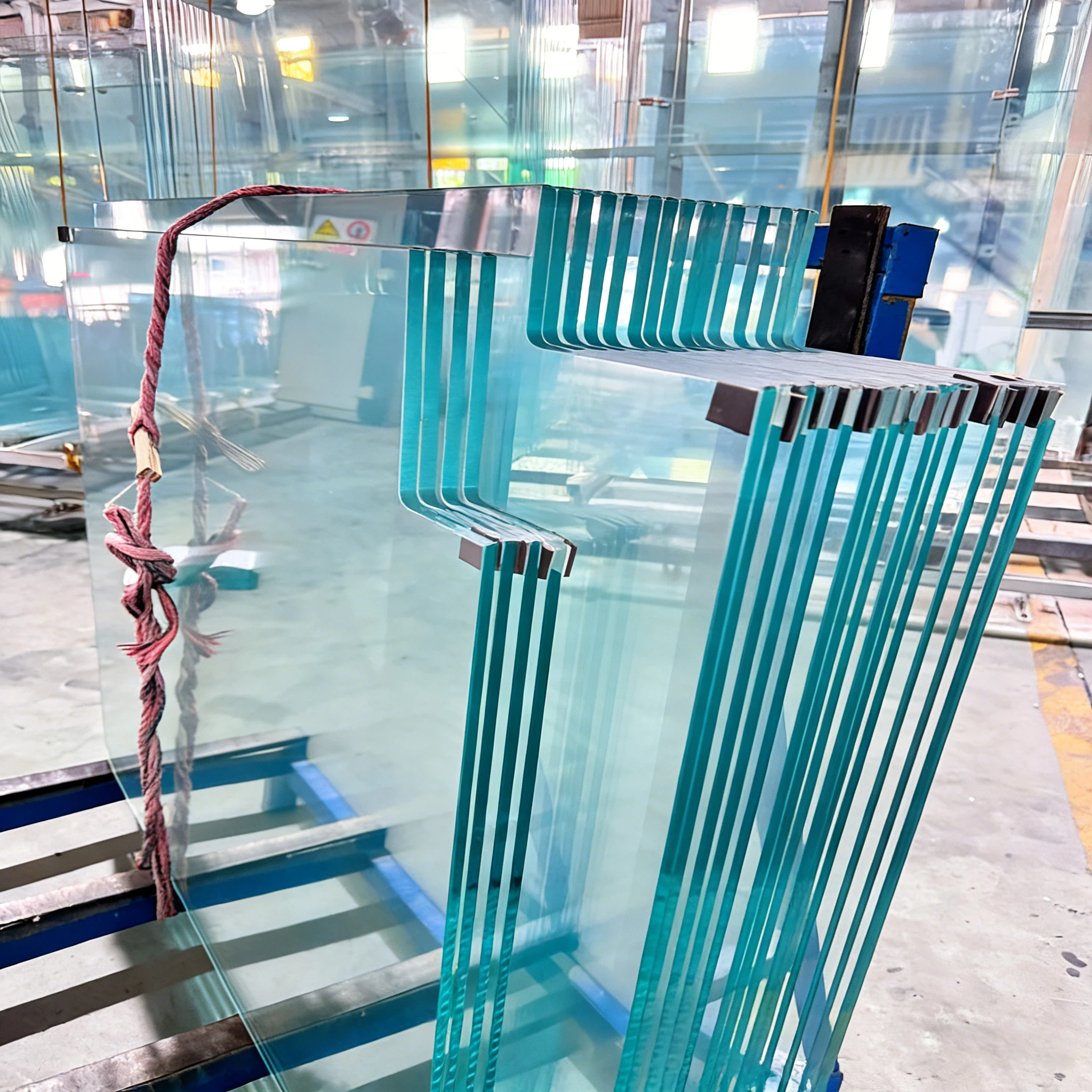
DY-GH01 is float glass that has been heated and rapidly cooled while bent, leaving the pane in a toughened state. Published parameters are a thickness range of 3 mm, 4 mm, 5 mm, 6 mm, 8 mm, 10 mm, 12 mm, 15 mm and 19 mm, a tolerance of ±0.5 mm, light transmittance of ≥91%, and edge work available as polished, grinded or beveled. Its listed application industries are construction, furniture, bathroom, curtain wall and office partition.
Because it is a single pane, DY-GH01 is the lightest and simplest of the three constructions and the easiest to detail at openings, partitions and interior features. The trade-off is that there is no interlayer and no cavity, so acoustic and thermal performance are properties of the pane alone. The published specification does not claim a sound insulation rating in decibels for this product, and buyers should not assume one.
Curved Laminated Glass — DY-JJ01
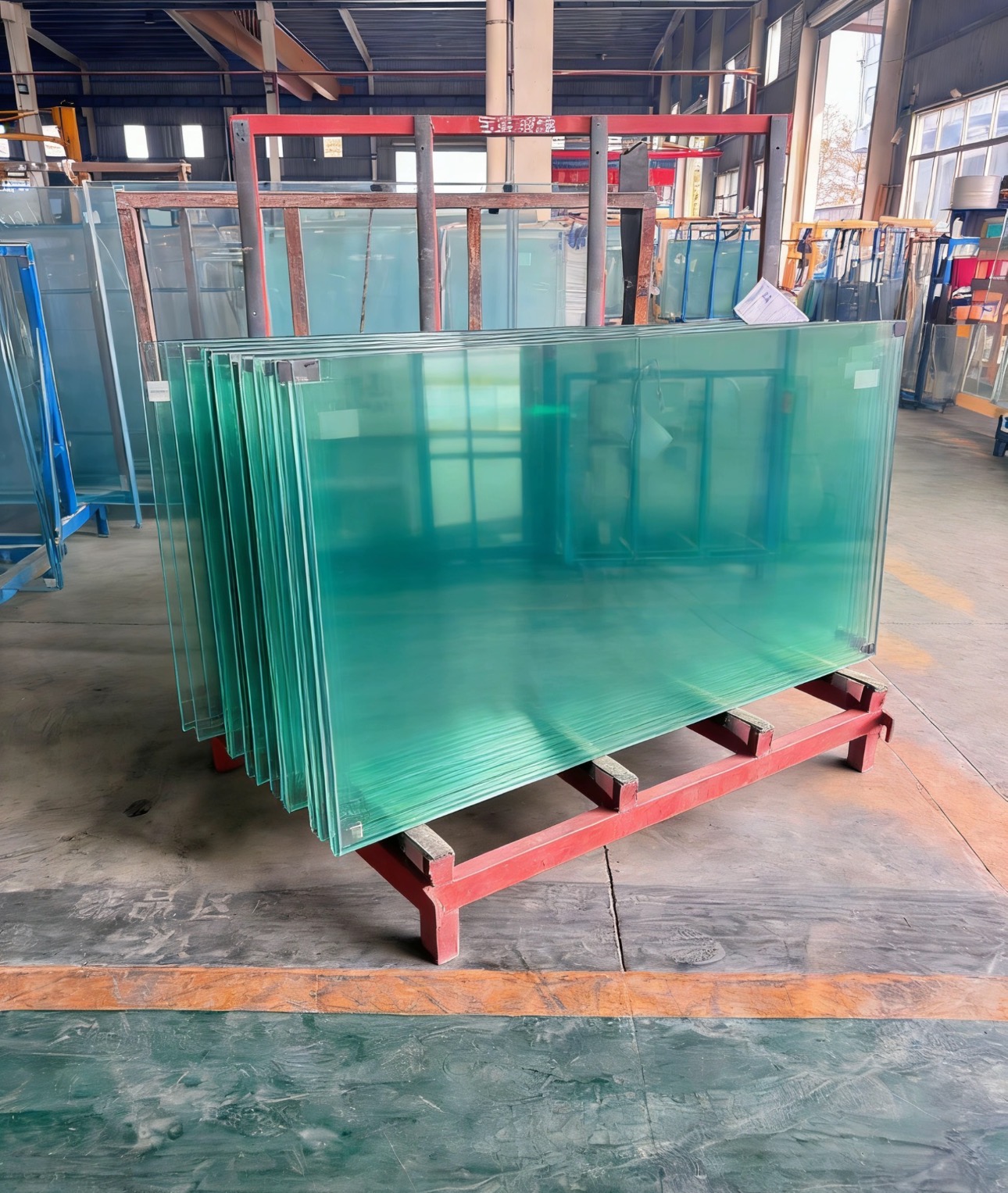
DY-JJ01 combines two or more glass substrates with a polymer interlayer under heat and pressure. The published thickness range is 6.38 mm to 50 mm, with interlayer options of PVB, SGP and EVA at 0.38 mm, 0.76 mm, 1.14 mm, 1.52 mm or 2.28 mm. Substrates can be tempered glass, float glass, low-iron glass or tinted glass. Light transmittance is 85%–92% for clear builds and 10%–70% for tinted builds, and sound insulation is rated at 35–45 dB.
The product family also includes tempered laminated safety glass, bulletproof laminated glass, fire-resistant laminated glass and curved laminated glass variants. For projects where post-breakage integrity is the design driver, the interlayer is the functional layer: it holds the assembly together and keeps fragments in place. Low-iron substrate is the usual route when the specification calls for low iron curved glass with minimal green tint.
Curved Insulated Glass — DY-ZK01
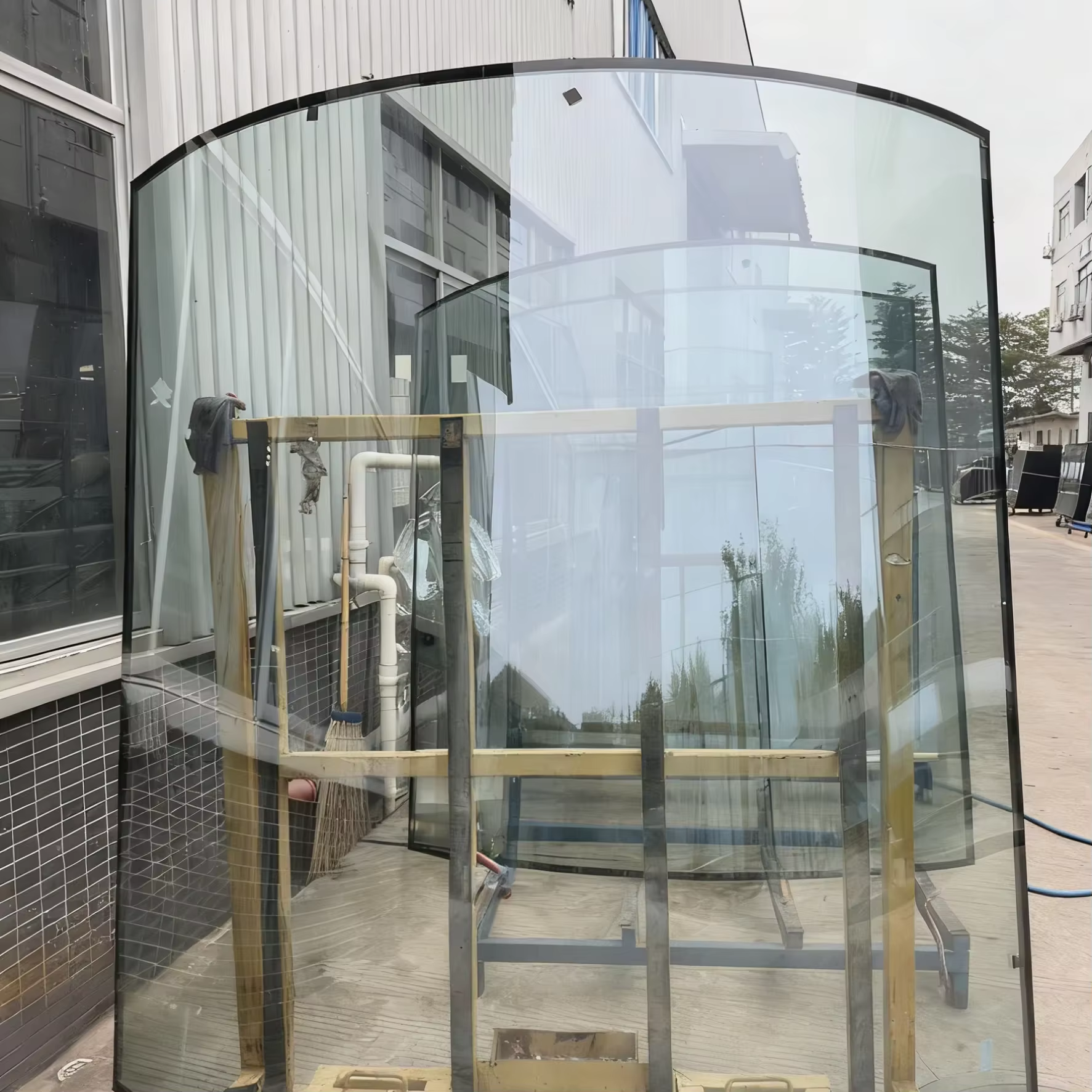
DY-ZK01 is a sealed unit: two panes held apart by a spacer, with the cavity filled with air or a heavy gas. Standard build-ups are 6mm+12A+6mm and 8mm+16A+8mm, with custom combinations available. Glass types include clear float, low-E, tempered and low-iron. Spacer options are aluminium or warm edge. Gas fill options are air, argon, krypton or xenon. Light transmittance is 70%–89% and sound insulation is rated at 30–45 dB.
The low-E coating and the argon fill are the two configuration choices listed for this product that address thermal and solar control, which is why the insulated type is the one normally tied to curtain wall and window system applications in the published data. The unit is also offered in a tempered insulated build, so impact requirements and thermal requirements can be met in a single assembly.
Specification and Performance Comparison
The table below sets the three constructions against the same parameters, so that a specification can be written against a single row rather than a mix of datasheets.
| Parameter | Curved Tempered — DY-GH01 | Curved Laminated — DY-JJ01 | Curved Insulated — DY-ZK01 |
|---|---|---|---|
| Construction | Single heat-treated pane | Two or more substrates bonded with an interlayer | Two panes with a sealed gas cavity |
| Thickness | 3, 4, 5, 6, 8, 10, 12, 15, 19 mm | 6.38–50 mm | 6mm+12A+6mm / 8mm+16A+8mm (custom available) |
| Dimensional tolerance | ±0.5 mm | Not stated in the published specification | Not stated in the published specification |
| Light transmittance | ≥91% | 85%–92% clear; 10%–70% tinted | 70%–89% |
| Sound insulation | Not rated in the published specification | 35–45 dB | 30–45 dB |
| Thermal / solar configuration | None — monolithic pane | Substrate choice: tempered, float, low-iron, tinted | Low-E coating; air, argon, krypton or xenon fill; aluminium or warm edge spacer |
| Interlayer / cavity options | None | PVB, SGP, EVA at 0.38 / 0.76 / 1.14 / 1.52 / 2.28 mm | 12 mm or 16 mm cavity in standard build-ups |
| Edge work | Polished, grinded, beveled | Not stated in the published specification | Not stated in the published specification |
| CE standard | EN 12150-1:2015+A1:2019 | EN 1449:2005 | EN 1279-1:2018 / -2:2018 / -3:2018 / -4:2018 |
| Certificate number | BGTC20260403-02 | BGTC20260403-03 | BGTC20260403-05 |
Source: DYGLASS product specification and CE certification records. Entries marked “not stated” are intentionally left blank rather than estimated; they should be confirmed project by project.
What the CE Certificates Actually Cover
All three products hold CE certification issued by ECTI CERT Ltd. for the European Union / European Economic Area market. The certificates were issued on 3 March 2026 and are valid to 3 March 2031. What differs is the harmonised standard and the certified scope, and buyers should read the scope before assuming a certificate covers an unusual build-up.
| Product | Standard | Certificate No. | Certification body | Market | Valid to |
|---|---|---|---|---|---|
| DY-GH01 tempered glass | EN 12150-1:2015+A1:2019; EN 12150-2:2004; CPR 305/2011/EU | BGTC20260403-02 | ECTI CERT Ltd. | EU / EEA | 2031-03-03 |
| DY-JJ01 laminated glass | EN 1449:2005; CPR 305/2011/EU | BGTC20260403-03 | ECTI CERT Ltd. | EU / EEA | 2031-03-03 |
| DY-ZK01 insulated glass | EN 1279-1:2018; EN 1279-2:2018; EN 1279-3:2018; EN 1279-4:2018; CPR 305/2011/EU | BGTC20260403-05 | ECTI CERT Ltd. | EU / EEA | 2031-03-03 |
Two scope details are worth flagging at quotation stage. First, the tempered glass certificate lists the thickness specifications covered as 4 / 5 / 6 / 8 / 10 / 12 / 15 / 19 / 22 / 25 mm. A project that specifies a tempered thickness outside that list needs a documented position before the CE declaration is relied upon. Second, CE marking addresses the EU/EEA market only; projects in the Middle East, North America or Asia-Pacific are governed by their own approval routes and should be checked against the destination authority rather than assumed from the European certificate.
In addition to CE certification, DYGLASS is an Alibaba Verified Supplier and has passed an SGS test report. Those documents are commonly requested alongside the CE certificates in tender submissions.
Step-by-Step: How to Specify the Right Curved Glass Type
The sequence below turns a performance requirement into a purchase order without revisiting the construction decision at the end.
Step 1 — Name the governing requirement
Write down the single requirement that cannot be traded away: impact safety, thermal separation, acoustic separation, optical clarity, or structural load. Everything downstream follows from this line.
Step 2 — Select the construction
If the governing requirement is impact safety with post-breakage integrity, the laminated construction (DY-JJ01) is the relevant family; ISO 11485-3:2014 classifies curved laminated glass as safety glass for buildings. If thermal separation across the envelope is the driver, the insulated unit (DY-ZK01) is the relevant family, since it is the only one of the three with a sealed cavity, low-E coating and gas fill. If the requirement is a single robust pane for an interior partition, a bathroom screen or a furniture surface, the tempered pane (DY-GH01) is the relevant family.
Step 3 — Fix thickness and tolerance
For DY-GH01, the published range is 3–19 mm with ±0.5 mm tolerance. For DY-JJ01, work in the 6.38–50 mm range and state the interlayer thickness separately, because the total and the interlayer are two different decisions. For DY-ZK01, state the build-up as pane + cavity + pane (for example 6mm+12A+6mm) rather than a single number.
Step 4 — Fix the interlayer or the cavity
On laminated glass, choose PVB, SGP or EVA and set the interlayer at 0.38, 0.76, 1.14, 1.52 or 2.28 mm. On insulated glass, choose the gas fill (air, argon, krypton or xenon), the spacer (aluminium or warm edge), and whether a low-E coating is required. These are the variables that change both performance and cost.
Step 5 — Define the substrate and the light level
DY-JJ01 offers tempered, float, low-iron and tinted substrates. DY-ZK01 offers clear float, low-E, tempered and low-iron. Where the design depends on neutral colour, low-iron substrate is the specified route; where it depends on solar control, tinted or low-E options apply. Published transmittance values are ≥91% for DY-GH01, 85%–92% clear / 10%–70% tinted for DY-JJ01, and 70%–89% for DY-ZK01.
Step 6 — Define shape and edge work
Curvature type must appear on the drawing, not only in the notes: cylindrical, S-shaped, double curved and positive/negative bends are all processed by DYGLASS, and each shape carries separate tooling considerations. For DY-GH01, specify edge work as polished, grinded or beveled. For the other two products the published specification does not fix edge work, so it must be written into the order.
Step 7 — Attach the compliance documents
Attach the certificate that matches the product ordered: BGTC20260403-02 for tempered, BGTC20260403-03 for laminated, BGTC20260403-05 for insulated. Confirm that the thickness and build-up in the order fall inside the certified scope, and add the SGS test report and the CE declaration where the tender requires them.
Matching Type to Application
The fastest filter for application fit is the published industry list for each product, reproduced below.
| Application | DY-GH01 Tempered | DY-JJ01 Laminated | DY-ZK01 Insulated |
|---|---|---|---|
| Curtain wall | Listed | Not listed | Listed |
| Window system | Not listed | Not listed | Listed |
| Office partition | Listed | Not listed | Not listed |
| Bathroom / shower room | Listed | Not listed | Not listed |
| Furniture | Listed | Interior design listed | Not listed |
| Building construction | Listed | Listed | Listed |
| Automotive | Not listed | Listed | Not listed |
| Solar energy | Not listed | Listed | Not listed |
| Interior decoration / design | Listed (construction, furniture) | Listed | Listed |
Curved Glass for Curtain Wall
Both DY-GH01 and DY-ZK01 list curtain wall as an application. The decision between them sits on thermal separation: where the envelope strategy depends on a sealed cavity with low-E coating and argon fill, the insulated unit is the relevant choice; where a single toughened vision pane is being replaced within the same system, the tempered pane is the simpler route.
Curved Glass for Sightseeing Elevator
Elevator enclosures make the glass both the enclosure and the view, so optical quality and safety classification carry equal weight. DY-JJ01 is classified as safety glass under ISO 11485-3:2014 and offers low-iron substrate for neutral colour, with interlayer options from 0.38 mm to 2.28 mm. The curve itself is specified as cylindrical or double curved depending on the car geometry.
Curved Glass for Shower Room
Bathroom is a listed application for DY-GH01, where the pane serves as a screen rather than as part of the envelope. This is where edge work becomes visible: polished, grinded or beveled edges are specified on the tempered product, and the chosen finish shows on every exposed edge.
Curved Glass for Coffee Table
Furniture is a listed application for DY-GH01, and the 3–19 mm thickness range covers both thin decorative tops and thicker structural surfaces. The ±0.5 mm tolerance matters more in furniture than in facades, because the glass is usually fitted into a frame with no allowance for adjustment.
Curved Glass for Skylight Roof
Overhead glazing is where the construction decision is least forgiving. Laminated construction (DY-JJ01) is classified as safety glass and keeps the interlayer in the assembly after breakage, which is why it is normally the specified family where the glass sits above occupied space. Where the roof also has to control heat gain, the insulated unit (DY-ZK01) adds the cavity, low-E coating and gas fill. Some roof specifications combine both requirements, and that combination should be raised with the supplier at drawing stage rather than at order stage.
Frequently Asked Questions
Which CE standard applies to each curved glass type?
Each type is certified against a different harmonised standard, all issued by ECTI CERT Ltd. for the EU/EEA market on 3 March 2026 and valid to 3 March 2031. Curved tempered glass DY-GH01 is certified to EN 12150-1:2015+A1:2019 under certificate BGTC20260403-02. Curved laminated glass DY-JJ01 is certified to EN 1449:2005 under certificate BGTC20260403-03. Curved insulated glass DY-ZK01 is certified to EN 1279-1:2018, EN 1279-2:2018, EN 1279-3:2018 and EN 1279-4:2018 under certificate BGTC20260403-05. A tender submission should carry the certificate matching the product actually ordered.
What thickness ranges and curvature shapes can be produced?
DY-GH01 tempered glass is produced in 3, 4, 5, 6, 8, 10, 12, 15 and 19 mm with ±0.5 mm tolerance. DY-JJ01 laminated glass runs from 6.38 mm to 50 mm with PVB, SGP or EVA interlayers at 0.38 to 2.28 mm. DY-ZK01 insulated glass is built as 6mm+12A+6mm or 8mm+16A+8mm, with custom combinations available. On shape, DYGLASS processes multi-curved, double curved, triple curved, trapezoid, spherical, pyramidal, S-shaped, cylindrical and positive/negative curved tempered glass.
Which type performs better on sound insulation and on thermal control?
The published sound insulation ratings are 35–45 dB for DY-JJ01 laminated glass and 30–45 dB for DY-ZK01 insulated glass. The published specification for DY-GH01 tempered glass does not state a decibel rating, so it should not be compared on that basis without project-specific data. On thermal control, only DY-ZK01 has the configuration that addresses it directly: low-E coating on the glass, an air, argon, krypton or xenon fill in the cavity, and a choice of aluminium or warm edge spacer. Laminated glass addresses thermal and solar behaviour through substrate selection — tempered, float, low-iron or tinted — rather than through a cavity.
What drives the cost difference between the three types?
Cost tracks the number of functional layers and the number of process steps, so the comparison should be made at fixed performance rather than at fixed size. For DY-GH01, the variables are thickness within the 3–19 mm range and edge work — polished, grinded or beveled. For DY-JJ01, the variables are total thickness within 6.38–50 mm, interlayer material (PVB, SGP or EVA), interlayer thickness (0.38 to 2.28 mm) and substrate choice including low-iron or tinted. For DY-ZK01, the variables are the build-up (6mm+12A+6mm versus 8mm+16A+8mm or a custom combination), the gas fill, the low-E coating and the spacer type. Curvature complexity is a separate variable across all three products, because shape affects tooling. Price is quoted against a fixed specification rather than against a product name.
How do I validate the specification before placing an order?
Validation has three parts: confirm the construction, confirm the documents, and confirm the sample. Confirm the construction by matching the governing requirement to the product family and fixing thickness, tolerance, interlayer or cavity, substrate and edge work in writing. Confirm the documents by checking that the CE certificate number matches the product and that the specified thickness falls inside the certified scope — for example, the tempered glass certificate lists 4 / 5 / 6 / 8 / 10 / 12 / 15 / 19 / 22 / 25 mm. Confirm the sample by requesting a prototype in the final build-up and curvature before production is released. Sample and quotation requests can be sent to DYGLASS at info@dayangglass.com, with the drawing, build-up and quantity attached.
Conclusion: Choose the Construction, Then Write the Specification
The comparison resolves into a short decision rule. Where impact safety with post-breakage integrity governs, specify curved laminated glass — DY-JJ01 at 6.38–50 mm with a PVB, SGP or EVA interlayer, CE certified to EN 1449:2005. Where thermal separation across the envelope governs, specify curved insulated glass — DY-ZK01 with a 6mm+12A+6mm or 8mm+16A+8mm build-up, low-E coating, argon fill and CE certification to EN 1279-1 / -2 / -3 / -4:2018. Where a single robust pane is required for a partition, a bathroom screen, a furniture surface or a curtain wall vision panel, specify curved tempered glass — DY-GH01 at 3–19 mm, ±0.5 mm tolerance, ≥91% light transmittance and CE certification to EN 12150-1:2015+A1:2019.
Everything after that decision is parameter work: interlayer material and thickness, cavity width and gas fill, substrate and light level, curvature type, and edge finish. Getting those parameters onto the drawing before the quotation is what separates a clean curved glass order from a revision cycle.
Request a Curved Glass Quotation or Sample
DYGLASS — Shenzhen Dayang Special Glass Co., Ltd. — processes curved tempered, laminated and insulated glass for construction and decoration projects, with CE certification for the EU/EEA market and OEM/ODM orders accepted.
Send your drawing with thickness, interlayer or cavity build-up, curvature type, edge work and quantity to info@dayangglass.com, or contact the team on WhatsApp at +86 136 9211 0212. Company address: 1706, Bldg. H, Phase 1, Liuhecheng Business Plaza, No. 168, Shenshan Road, Pingshan Street, Pingshan New Dist., Shenzhen, Guangdong, China.
Website: www.dayangglass.com | Product catalogue: Download the DYGLASS brochure (PDF)
Have Questions or Need More Details?
Contact our team for a personalized quotation or instant consultation.
Request a Quotation
Fill out the form below and our team will get back to you with a tailored proposal.
WhatsApp Direct Chat
Prefer to chat in real-time? Message us on WhatsApp for instant assistance & quick answers.
- Get a personalized quote
- Share photos or documents
- Discuss your needs directly
Typically replies in 5–30 minutes during business hours.