
Top 5 Curved Glass Solutions for Construction & Decoration Projects in 2026
Top 5 Curved Glass Solutions for Construction & Decoration Projects in 2026
Curved glass has moved out of the landmark-only category. Architectural applications — facades and curtain walls — accounted for more than 40% of curved glass panel demand in 2024, according to Research and Markets, and Cognitive Market Research valued the global curved glass panel market at approximately USD 781.2 million in 2024 with a projected CAGR of 8.0% through 2031. For a specifier, those numbers matter less than one practical question: which curved glass configuration actually fits this project?
This ranking sets out five curved glass solutions that are buildable for 2026 construction and decoration projects, together with the specification data behind each one. DYGLASS (Shenzhen Dayang Special Glass Co., Ltd.) is a building glass manufacturer established in 2017 in Shenzhen, Guangdong, China, producing laminated, toughened, smart, insulated, curved and building glass. The product data below comes from that manufacturer's published specifications; where third-party research is used, the source is named.
Problem Definition: Why "Curved Glass" Is Not Yet a Specification
"Curved glass" describes a material category, not a purchasable specification. A 3 mm monolithic tempered panel for a coffee table and a 50 mm laminated facade unit can carry the same label while behaving completely differently in safety class, thermal performance, acoustics and dimensional tolerance. In most projects, the risk is created at the specification stage rather than the production stage: the geometry is decided early, the build-up is decided late, and the two never get reconciled.
Published market data shows the same definitional ambiguity. Cognitive Market Research sizes the global curved glass panel market at approximately USD 781.2 million in 2024, while Custom Market Insights reports a much narrower panel-specific figure of USD 78.55 million. The divergence is largely about what each report counts as a curved panel — and project documents create the identical problem when they specify "curved glass" without a build-up.
The three questions a curved glass specification must answer
- Safety class: Is monolithic tempered glass sufficient, or does the opening require a laminated build-up that retains post-breakage integrity?
- Environmental performance: Does the unit need thermal control (Low-E coating, argon or other gas fill), acoustic control, or both?
- Geometry feasibility: Single curvature, S-shape, U-shape, cylindrical or double curvature — and at what thickness tolerance and optical distortion limit?
Industry Background: Compliance, Demand and Supply in 2026
Compliance is the first filter, not the last
European safety standards EN 12150-1 and EN 14179-1 (heat soaked) are mandatory for toughened safety glass used in construction, as defined by CEN (European Committee for Standardization), specifically to prevent spontaneous breakage caused by nickel sulfide inclusions. That standard pair changes what a buyer should request: heat-soaked toughened glass, not merely tempered glass. DYGLASS operates a heat soak furnace as part of its production flow, and its CE marking references for the relevant curved glass configurations are BGTC20260403-02, BGTC20260403-03 and BGTC20260403-05.
Demand is concentrating in facades and in Asia-Pacific
Research and Markets reports that architectural applications such as facades and curtain walls took over 40% of curved glass panel demand in 2024. Custom Market Insights identifies Asia-Pacific as the fastest-growing region for the curved glass panel market, driven by rapid urbanization and infrastructure development. On the supply side, TrendEconomy / UN Comtrade data puts China's export value for "worked" glass — including bent and curved glass under HS 7006 — at approximately USD 791 million in 2023.
Who supplies high-performance curved glass
Third-party industry research from Global Market Insights and Grand View Research identifies AGC, Saint-Gobain, Guardian Industries and Cricursa among the top global players in high-performance curved glass, with Cricursa specialising in architectural glass. Specialised manufacturers sit alongside these groups and often serve project buyers directly. Shenzhen Dayang Special Glass Co., Ltd. operates a 30,000 m² facility with approximately 130 staff and an annual production capacity of 600,000 m², holds an SGS test report and Alibaba Verified Supplier status, exports around 60% of output, and lists the UAE, Bahrain, Saudi Arabia, the United States, the Philippines and Vietnam among its main markets. Its processable curved shapes include multi-curved, double curved, triple curved, trapezoid curved, spherical curved, pyramidal curved, S-shape curved, cylindrical curved, and positive and negative curved tempered glass.
Top 5 Curved Glass Solutions for Construction & Decoration Projects in 2026
The ranking below is ordered by specification coverage rather than by price or volume: the first three entries are catalogue configurations with published parameters, and the last two are build-to-project solutions that combine those configurations.
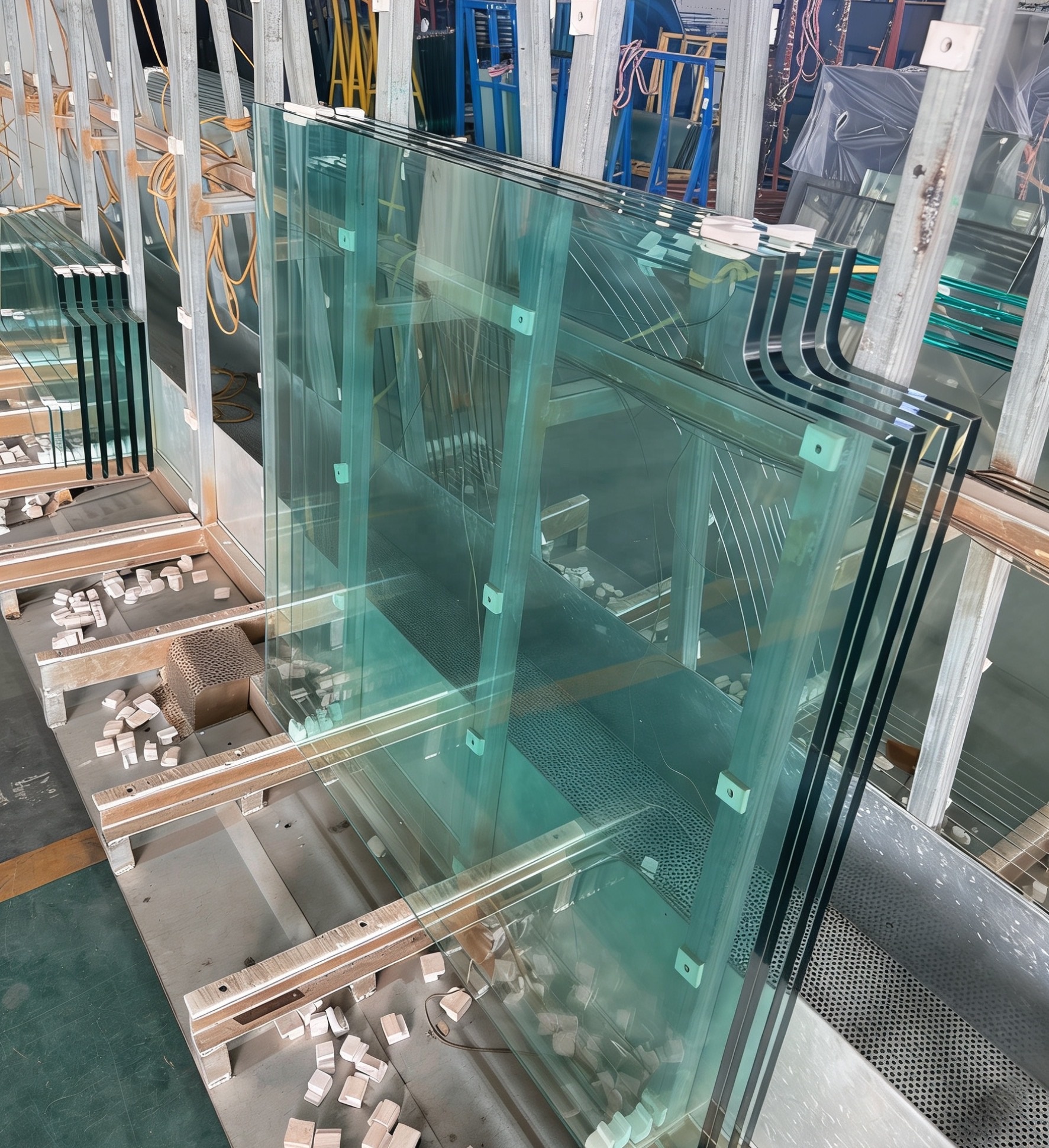
#1 — DY-GH01: Curved Tempered Glass for Facades, Partitions and Furniture
DY-GH01 is a curved tempered glass made from float glass, available in thicknesses from 3 mm to 19 mm with a thickness tolerance of ±0.5 mm and a light transmittance of ≥91%. Edge work options are polished, grinded or beveled, and the product can also be supplied as flat tempered glass, tempered glass with holes, or with a polished edge. It is intended for construction, furniture, bathroom, curtain wall and office partition industries.
It ranks first because it covers the widest thickness band in the group, publishes the tightest tolerance, and works both as a finished panel and as the substrate for laminated and insulated build-ups. High precision curved glass for interior projects generally starts here.
Limits to know: DY-GH01 is monolithic, so it does not by itself deliver the interlayer-dependent performance of a laminated unit. Where post-breakage retention is required, it must be used as a substrate inside a laminated or insulated build-up rather than as a stand-alone pane.
#2 — DY-JJ01: Curved Laminated Safety Glass for High-Risk Openings and Automotive Use
DY-JJ01 is a tempered laminated safety glass, also classified as curved laminated glass. It combines tempered glass with a PVB interlayer, with total thickness from 6.38 mm to 50 mm and PVB interlayer thickness options of 0.38 mm, 0.76 mm, 1.14 mm, 1.52 mm and 2.28 mm. Interlayer types available are PVB, SGP and EVA. Glass substrates can be tempered, float, low-iron or tinted glass. Clear laminated glass transmits 85%–92% of light; tinted laminated glass transmits 10%–70%. Sound insulation is 35 dB to 45 dB, and the product can be used for fire-resistant applications. It is designed for building and construction scenarios as well as the automotive industry.
It ranks second because it is the configuration that answers safety and acoustic requirements at the same time — and the only one in this list with both a building and an automotive application statement.
Limits to know: laminated build-ups are heavier and thicker, and edge quality and interlayer thickness selection become critical to visual performance in curved geometry.
#3 — DY-ZK01: Curved Insulated Glass with Low-E Coating and Argon Fill
DY-ZK01 is an insulating glass classified as tempered insulated glass, including curved insulated glass variants. It is made of tempered glass with an aluminum spacer; spacer bar options are aluminum spacer or warm edge spacer. Standard thickness options are 6 mm+12A+6 mm and 8 mm+16A+8 mm, with custom thickness available. Glass type can be clear float, Low-E, tempered or low-iron, and gas fill options include air, argon, krypton and xenon. Light transmittance ranges from 70% to 89%, and sound insulation is 30 dB to 45 dB. The product is designed for curtain wall and window systems and is used in building construction and real estate, interior decoration and architecture projects.
It ranks third only because it is the most engineering-dependent of the three catalogue configurations: it is the only entry here that combines thermal control (Low-E coating plus argon gas fill) with acoustic performance inside a single curved unit — the standard specification for sound insulated curved glass in a curtain wall.
Limits to know: results depend on the cavity, spacer choice and edge-seal integrity; handling and installation tolerance matter more than for a monolithic pane.
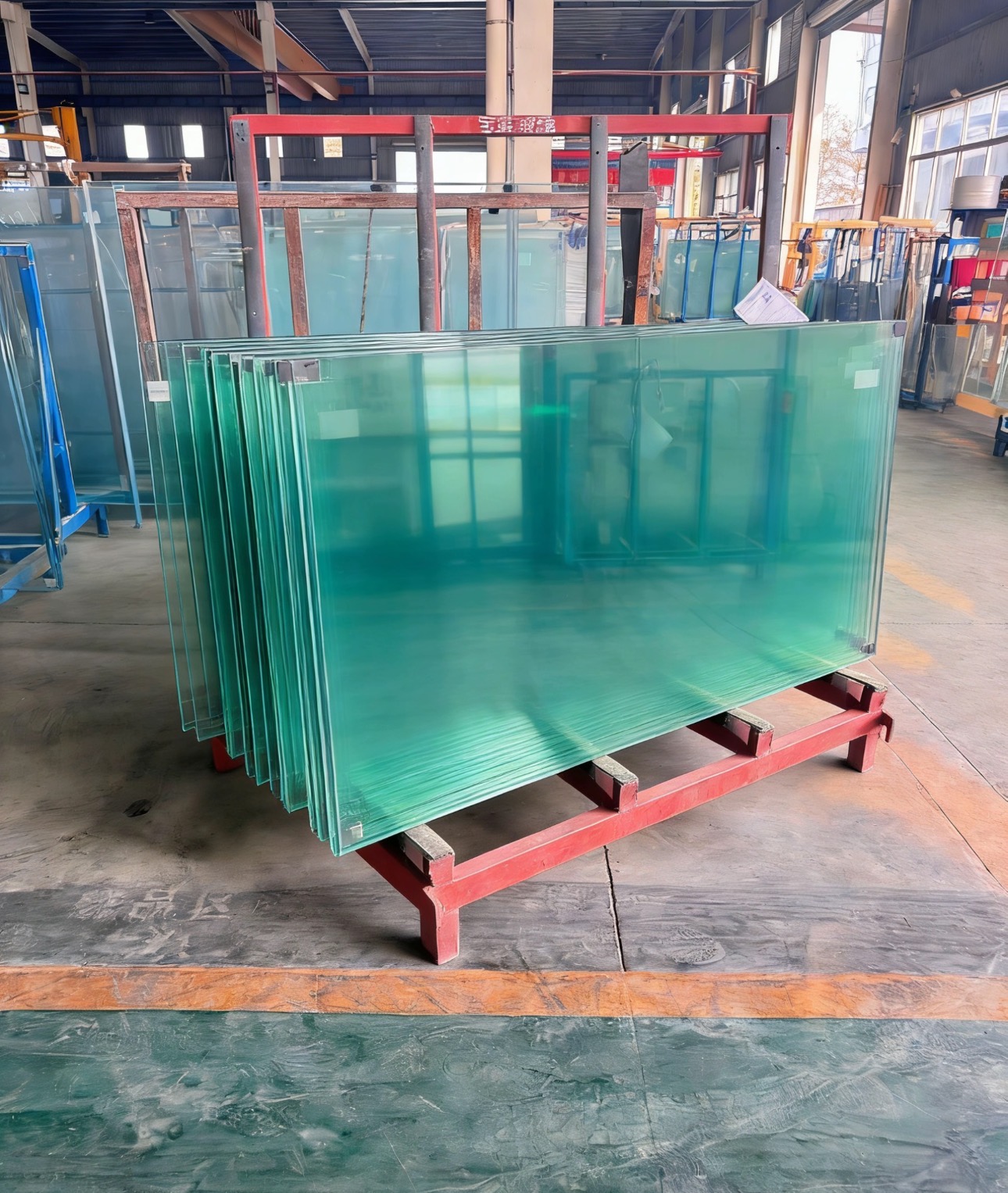
#4 — Multi-Curve and Double-Curve Precision Builds
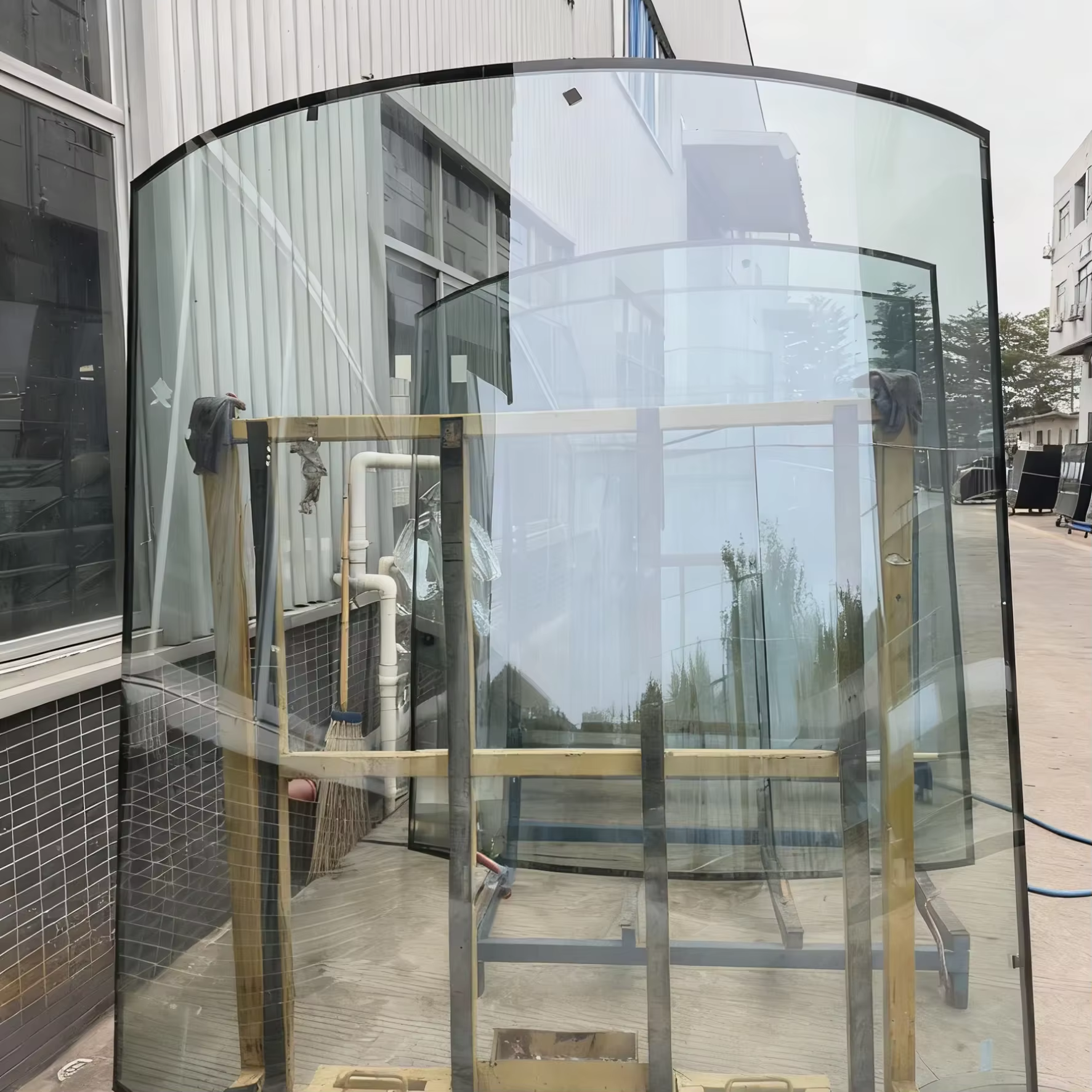
Beyond single-curvature panels, the manufacturer processes multi-curved tempered glass, double curved tempered glass, triple curved tempered glass, trapezoid curved tempered glass, spherical curved tempered glass, pyramidal curved tempered glass, S-shape curved tempered glass, cylindrical curved tempered glass, and positive and negative curved tempered glass. Forming capability is supported by a double curved tempering line and by a line for concave, convex and irregular curved shapes.
This entry ranks fourth because it is a capability slot rather than an off-the-shelf product: it is what makes S-shaped curved glass and double curved glass possible when the architecture demands geometry that single-curvature forming cannot reproduce.
Limits to know: multi-curve parts carry higher forming risk and require a mock-up plus agreed tolerance and optical distortion criteria before mass production. Lead time is longer than for single-curvature work.
#5 — OEM/ODM Engineered Combinations for Project-Specific Packages
DYGLASS welcomes OEM and ODM orders, which allows a project to be built from combinations of the configurations above: curved laminated units, curved insulated units with Low-E and gas fill, low-iron substrates, tinted or coated glass, and drilled or edge-worked panels delivered as one package.
It ranks fifth because it is the solution for projects where no catalogue configuration matches — mixed facade and interior packages, unusual curvature, or a specification that has to satisfy a specific national market.
Limits to know: OEM/ODM work depends on receiving a complete specification package (geometry drawing, tolerance, safety class, thermal and acoustic targets, destination market and required certification evidence). Sample validation should come before production release.
Step-by-Step: How to Specify and Order a Curved Glass Solution
- Define the application and the governing standard. An interior furniture panel and a facade unit are governed by different requirements. Facade and exterior applications should be checked against EN 12150-1, and against EN 14179-1 where heat-soaked toughened safety glass is required.
- Set the safety class and choose the build-up. Monolithic curved tempered glass (DY-GH01), curved laminated safety glass (DY-JJ01), or curved insulated glass (DY-ZK01) — the choice drives everything downstream.
- Fix thickness and tolerance. For example, DY-GH01 is available from 3 mm to 19 mm with a ±0.5 mm tolerance; DY-JJ01 runs from 6.38 mm to 50 mm.
- Select optical and thermal parameters. Published light transmittance ranges from 70% to 89% for DY-ZK01, 85% to 92% for clear DY-JJ01, and ≥91% for DY-GH01. Specify Low-E coating and gas fill (air, argon, krypton or xenon) where thermal performance is a project requirement.
- Define edge work and processing. Polished, grinded or beveled edges; drilled holes where fixings require them.
- Confirm compliance evidence for the destination market. Request the CE mark references (BGTC20260403-02, BGTC20260403-03, BGTC20260403-05 for the relevant configurations) and confirm heat-soak treatment where spontaneous breakage risk is a concern.
- Validate with a sample or first article, then lock packing and shipping. This is the step that converts a drawing into a repeatable production order.
Use Cases: Matching Each Solution to a Real Project Type
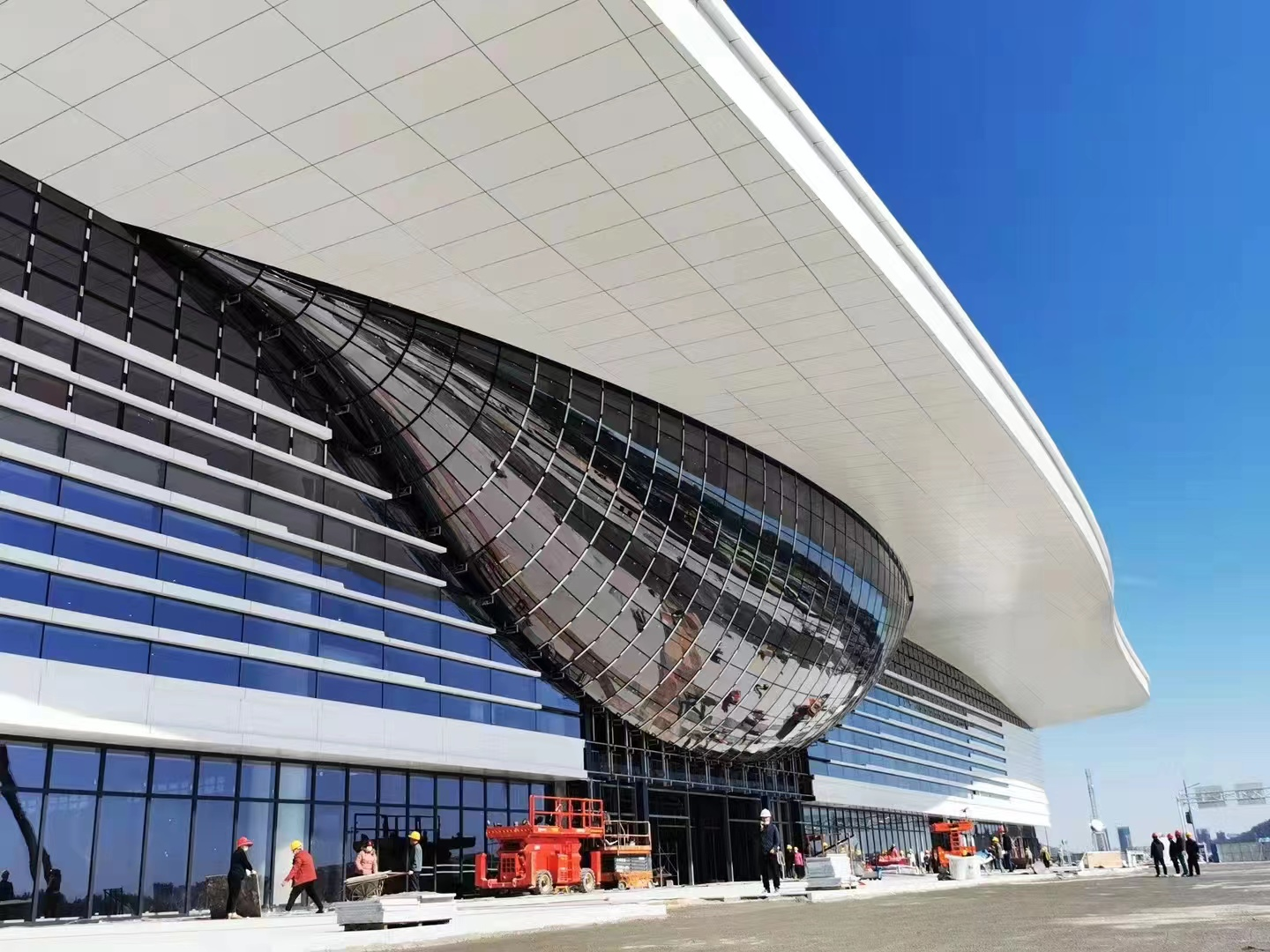
Curtain wall and building facade
Curved insulated glass with Low-E coating and argon fill (DY-ZK01) is the standard choice where thermal performance and 30–45 dB sound insulation are specified together. Where the opening requires safety glazing, a curved laminated build-up (DY-JJ01) is used instead of, or in combination with, the insulated unit.
Sightseeing elevator and atrium glazing
Vertical curved glazing in elevator shafts and atria is a safety-glazing application: curved laminated safety glass (DY-JJ01), with sound insulation from 35 dB to 45 dB and interlayer thickness matched to the required performance.
Skylight roof and overhead glazing
Overhead applications combine thermal load and safety risk. A curved insulated unit for thermal control plus a laminated build for post-breakage retention — and heat-soaked toughened glass where specified — covers both.
Interior decoration: shower rooms, coffee tables, partitions
Curved tempered glass (DY-GH01) covers shower room panels, curved glass coffee tables and curved office partitions, with polished, grinded or beveled edge work and 3 mm to 19 mm thickness selection. Low-iron substrate is available where colour neutrality matters.
Automotive glazing
DY-JJ01 is designed for the automotive industry as well as building and construction, using tempered or low-iron substrate with PVB, SGP or EVA interlayers.
Comparison Table: The Five Configurations Side by Side
| Rank & solution | Model | Thickness | Light transmittance | Sound insulation | Typical applications |
|---|---|---|---|---|---|
| #1 Curved tempered glass | DY-GH01 | 3 mm – 19 mm, tolerance ±0.5 mm | ≥91% | Not stated in published specification | Curtain wall, office partition, bathroom, furniture, construction |
| #2 Curved laminated safety glass | DY-JJ01 | 6.38 mm – 50 mm (PVB 0.38 / 0.76 / 1.14 / 1.52 / 2.28 mm) | 85%–92% clear; 10%–70% tinted | 35 dB – 45 dB | Building & construction, automotive, fire-resistant applications |
| #3 Curved insulated glass (Low-E, argon) | DY-ZK01 | 6 mm+12A+6 mm and 8 mm+16A+8 mm (custom available) | 70% – 89% | 30 dB – 45 dB | Curtain wall and window systems, interior decoration, architecture |
| #4 Multi-curve / double-curve builds | DY-GH01 and DY-JJ01 forming | Per base build-up | Per base build-up | Per base build-up | S-shape, cylindrical, spherical, pyramidal and positive/negative curved configurations |
| #5 OEM/ODM engineered combinations | Build to project specification | To specification | To specification | To specification | Mixed facade and interior packages requiring a single supplier |
How to read this table: the first three rows are published catalogue parameters and can be compared directly. Rows four and five are capability entries — their performance follows the base build-up selected, so they should be specified by reference to DY-GH01, DY-JJ01 or DY-ZK01 rather than described generically.
FAQ
Which curved glass solution meets European safety standards?
Curved tempered safety glass for construction is governed in Europe by EN 12150-1, with EN 14179-1 applying to heat-soaked toughened safety glass, as defined by CEN, to prevent spontaneous breakage from nickel sulfide inclusions. DYGLASS supplies heat-soaked curved tempered glass and references CE marks BGTC20260403-02, BGTC20260403-03 and BGTC20260403-05 for the relevant configurations.
Can DYGLASS produce curved glass beyond simple single-curvature shapes?
Yes. The factory processes multi-curved, double curved, triple curved, trapezoid curved, spherical curved, pyramidal curved, S-shape curved, cylindrical curved, and positive and negative curved tempered glass, using float glass from 3 mm to 19 mm with a ±0.5 mm thickness tolerance on the DY-GH01 build. OEM and ODM orders are accepted.
What factors drive the cost of a curved glass order?
Cost is driven by build-up type (monolithic tempered, laminated or insulated), total thickness and interlayer thickness where applicable, interlayer material (PVB, SGP or EVA), curvature complexity (single curvature versus double or multi-curve), glass type (clear float, low-iron, Low-E or tinted), edge work and processing, compliance requirements such as heat soaking, and export packing. Defining these items before requesting a quotation removes most of the price uncertainty.
How much sound insulation can curved glass provide?
Published figures for DYGLASS products are 35 dB to 45 dB for curved laminated glass (DY-JJ01) and 30 dB to 45 dB for curved insulated glass (DY-ZK01). The achieved value in a project depends on the build-up — interlayer type and thickness, cavity, spacer and gas fill — and on installation conditions.
How do I request a sample or a project quotation, and what capacity stands behind it?
Samples and project quotations are available through info@dayangglass.com or WhatsApp +86 136 9211 0212. Shenzhen Dayang Special Glass Co., Ltd. operates a 30,000 m² facility with approximately 130 staff and an annual production capacity of 600,000 m², covering cutting, edging, tempering, insulated glass and laminated glass lines, supported by a heat soak furnace and an autoclave.
Conclusion: Match the Build-Up to the Project, Not the Other Way Around
The five solutions above cover the practical range of curved glass used in 2026 construction and decoration work: curved tempered glass (DY-GH01) for general facade, partition, bathroom and furniture applications; curved laminated safety glass (DY-JJ01) where post-breakage retention, fire-resistant applications or automotive use are in scope; curved insulated glass with Low-E coating and argon fill (DY-ZK01) where curtain wall and window systems need thermal and acoustic control; multi-curve and double-curve forming for signature geometry; and OEM/ODM combinations for projects that fit no catalogue entry.
The decision sequence is consistent across all five: define the application, set the safety class, fix thickness and tolerance, select optical and thermal parameters, confirm compliance evidence, then validate before mass production. Buyers who specify a build-up rather than a category avoid the mismatch that causes most curved glass problems.
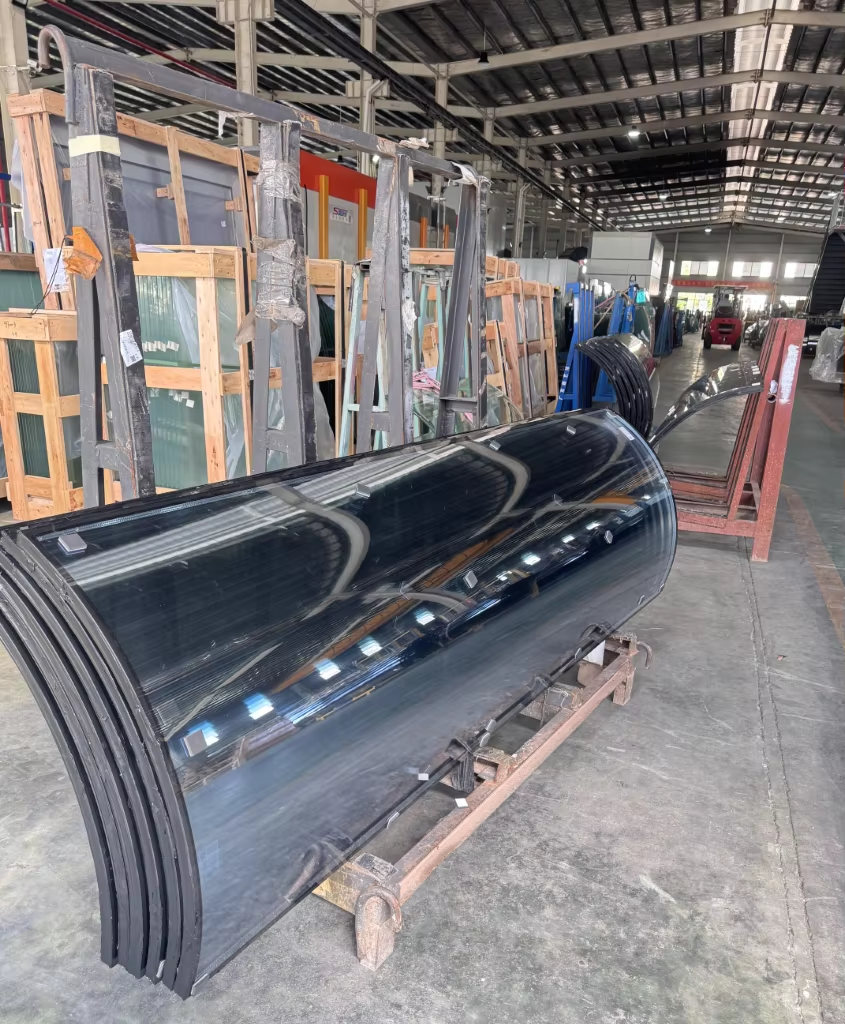
Next step: send your drawing, get a build-up recommendation
Share your curvature drawing, application, safety class and destination market, and DYGLASS will recommend the matching configuration from DY-GH01, DY-JJ01, DY-ZK01 or a custom OEM/ODM combination. Sample arrangements and project quotations are handled directly.
Email: info@dayangglass.com | Tel / WhatsApp: +86 136 9211 0212 | Website: www.dayangglass.com
Download the product brochure: DYGLASS product catalogue (PDF)
Have Questions or Need More Details?
Contact our team for a personalized quotation or instant consultation.
Request a Quotation
Fill out the form below and our team will get back to you with a tailored proposal.
WhatsApp Direct Chat
Prefer to chat in real-time? Message us on WhatsApp for instant assistance & quick answers.
- Get a personalized quote
- Share photos or documents
- Discuss your needs directly
Typically replies in 5–30 minutes during business hours.