
Insulating vs. Laminated vs. Tempered Glass: A Comparative Selection Guide for Architects
Insulating vs. Laminated vs. Tempered Glass: A Comparative Selection Guide for Architects
Insulating, laminated and tempered glass are the three base options on nearly every architectural glazing schedule, and they are not alternatives to one another. Each one answers a different question: insulating glass limits heat flow and condensation, laminated glass holds the opening together after impact and adds acoustic mass, and tempered glass raises mechanical strength and thermal shock resistance. Selecting between them on square-metre price alone is the most reliable route to a late-stage redesign.
This guide compares the three types on the four criteria architects and specifiers use most often — light transmittance, sound insulation, available thickness and application fit — and then explains how the three are normally layered into one facade build-up. All product data below is drawn from the DYGLASS building glass range manufactured by Shenzhen Dayang Special Glass Co., Ltd., and every standard referenced is a published, citable requirement.
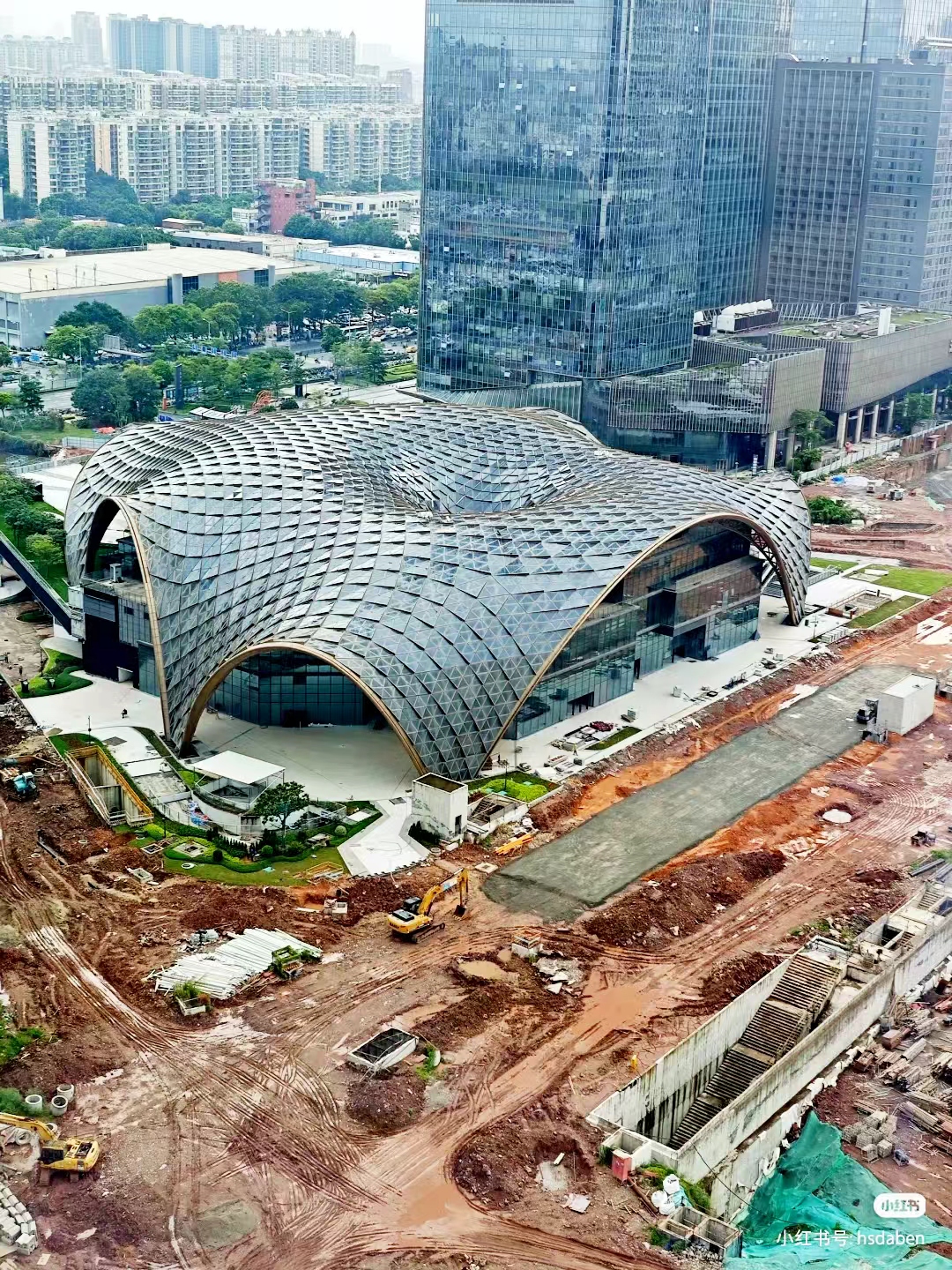
Quick answer: insulating glass is a thermal and condensation control assembly (light transmittance 70%–89%, sound insulation 30–45 dB, build-ups such as 6 mm + 12A + 6 mm and 8 mm + 16A + 8 mm). Laminated glass is a safety, security and acoustic assembly (6.38 mm–50 mm total thickness, PVB / SGP / EVA interlayers, light transmittance 85%–92% clear and 10%–70% tinted, sound insulation 35–45 dB). Tempered glass is a strength layer (3 mm–19 mm, tolerance ±0.5 mm, light transmittance ≥91%). In practice, two or three of them are combined rather than chosen.
Problem Definition: Why the Three Glass Types Get Compared Incorrectly
The three families all begin as float glass, and each can be supplied clear, tinted or low-iron, flat or curved. That visual and material overlap is exactly why comparison goes wrong: in a sample room the three look interchangeable, while in service they behave differently. Laminated glass is offered in tempered laminated safety, bulletproof, fire-resistant and curved laminated versions; insulating glass is offered as tempered insulated, Low-E coated, argon-filled and curved insulated units; tempered glass is offered flat, curved, with drilled holes, and with polished edges. Three overlapping product trees, one specification line.
A second cause is unit mismatch. Tempered glass is a single lite and is judged as one. Insulating glass is a factory-sealed assembly built from two or more lites, a spacer and a gas-filled cavity. Laminated glass is an assembly of glass plus interlayer. Comparing a monolithic tempered lite with a complete insulating unit produces the wrong answer every time, because the two are not the same object.
A third cause is measurement language. A tempering standard describes fragmentation behaviour and surface compression. ASTM C1048 requires a minimum surface compression of 10,000 psi (69 MPa) for fully tempered glass, and EN 12150 defines the fragmentation test for thermally toughened soda lime silicate safety glass with a requirement of 40 or more particles in a 50 × 50 mm area. An insulating unit, by contrast, is described by its construction — glass type, cavity width, spacer and gas fill — and a laminated unit by its interlayer chemistry and thickness. Different metrics cannot be ranked against each other without translation.
The practical consequence is a familiar one: tempered glass is specified everywhere on the basis of safety habit, an acoustically sensitive room ends up with a monolithic lite, and the correction lands at shop-drawing stage, when the facade package is already priced.
Industry Background: A Specification-Led Global Supply Chain
Architectural glazing is no longer a minor finish item. Architectural glass accounts for nearly 70% of global flat glass production, which exceeds 120 million metric tons annually, according to Business Research Insights. The broader construction glass market was valued at USD 119.2 billion in 2025 and is projected to reach USD 189.33 billion by 2034, based on Fortune Business Insights data. China’s own glass market was estimated at USD 31.2 billion in 2024, with an expected rise to USD 55.0 billion by 2035 (Market Research Future), and China exported USD 676 million of glass with edge workings in 2024, about 22% of global exports in that category (OEC).
Performance layers are expanding inside that volume. The global smart glass market was valued at approximately USD 8.2 billion in 2025, with electrochromic technology holding a 61.3% share (Grand View Research). On the supply side, leading global flat glass manufacturers include AGC Inc. of Japan, Saint-Gobain of France, Guardian Glass of the United States, NSG Group of Japan and Xinyi Glass of China (IMARC Group), while Saint-Gobain held approximately 18% of the global architecture glass market share across 2024–2025 (Business Research Insights).
One caveat matters for anyone using these figures in a specification report: published market sizes diverge because their scope diverges. Estimates ranging from USD 119.2 billion to above USD 150 billion for 2025 combine flat glass and finished architectural glass under different definitions. The figures above are useful for context, not for a cost model.
For an architecture practice, the implication is direct. Most of the capacity, coating technology and interlayer chemistry an architect can specify already exists in the market. What decides whether the specified performance actually reaches the building is the drawing, the build-up definition and the validation step — not the brand list.
Detailed Solution: What Each Glass Type Actually Delivers
Insulating Glass (DY-ZK01): Thermal and Condensation Control
Insulating glass is a sealed assembly of two or more glass lites separated by a spacer, with a dehydrated cavity that may be filled with gas. It is the primary tool for controlling heat transfer through the envelope and for preventing interior condensation on cold glass surfaces.
- Typical build-ups: 6 mm + 12A + 6 mm and 8 mm + 16A + 8 mm, with custom configurations available.
- Glass types: clear float, Low-E coated, tempered, low-iron.
- Spacer: aluminum spacer or warm edge spacer.
- Gas fill: air, argon, krypton or xenon.
- Light transmittance: 70%–89%, depending on glass type and coating.
- Sound insulation: 30–45 dB.
- Product variants: tempered insulated glass, insulating glass with Low-E coating, insulating glass with argon gas, and curved insulating glass.
For architects, the selectable variables in an insulating unit are therefore not just thickness. Gas fill and spacer type change thermal behaviour without altering the visual design, and low-iron or Low-E substrates change both the transmittance value and the exterior appearance of the facade.
Laminated Glass (DY-JJ01): Safety, Security and Acoustic Control
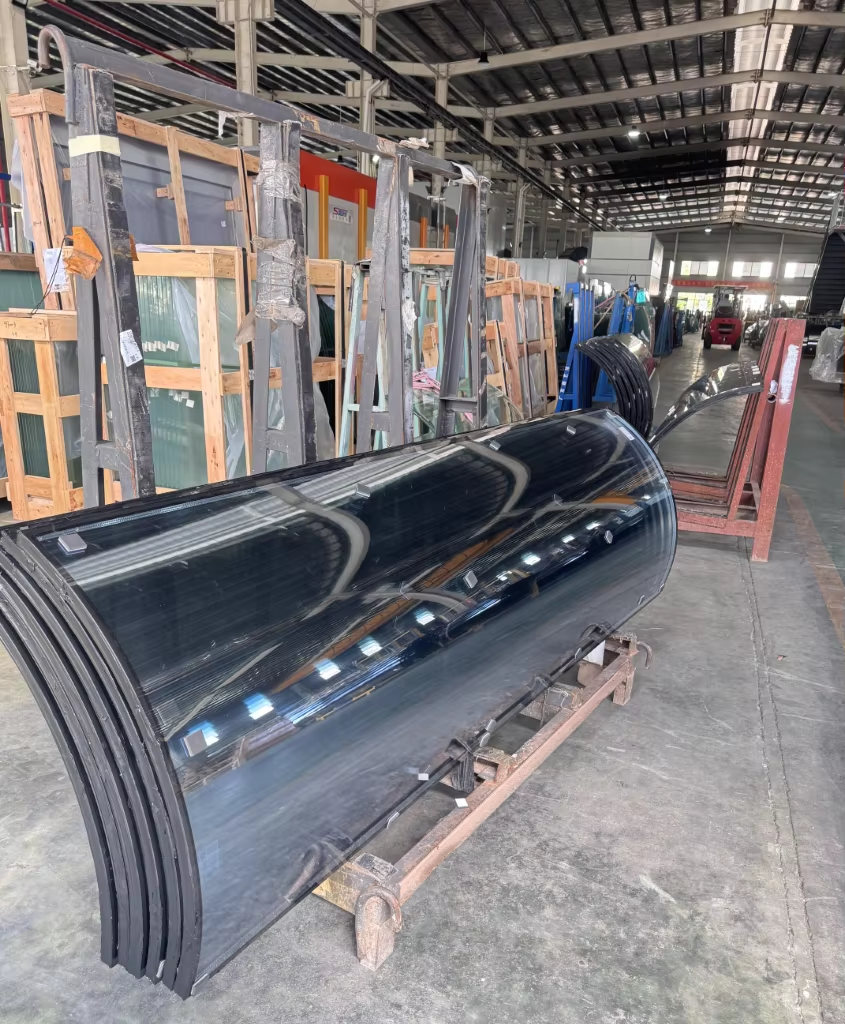
Laminated glass bonds two or more glass lites to an interlayer under heat and pressure. When the glass breaks, the interlayer retains the fragments, which is the property that makes it the standard answer to overhead glazing, balustrades, walkable surfaces and security glazing.
- Thickness range: 6.38 mm to 50 mm.
- Interlayer type: PVB, SGP or EVA.
- Interlayer thickness: 0.38 mm, 0.76 mm, 1.14 mm, 1.52 mm or 2.28 mm.
- Glass substrate: tempered glass, float glass, low-iron glass or tinted glass.
- Light transmittance: 85%–92% for clear glass; 10%–70% for tinted glass.
- Sound insulation: 35–45 dB.
- Product variants: tempered laminated safety glass, bulletproof laminated glass, fire-resistant laminated glass and curved laminated glass.
The acoustic value of lamination comes from the interlayer, not from the glass alone; this is why laminated glass is the layer that carries sound insulation requirements, and why the interlayer type and thickness must be written into the specification rather than left to the fabricator.
Tempered Glass (DY-GH01): Strength and Thermal Shock Resistance
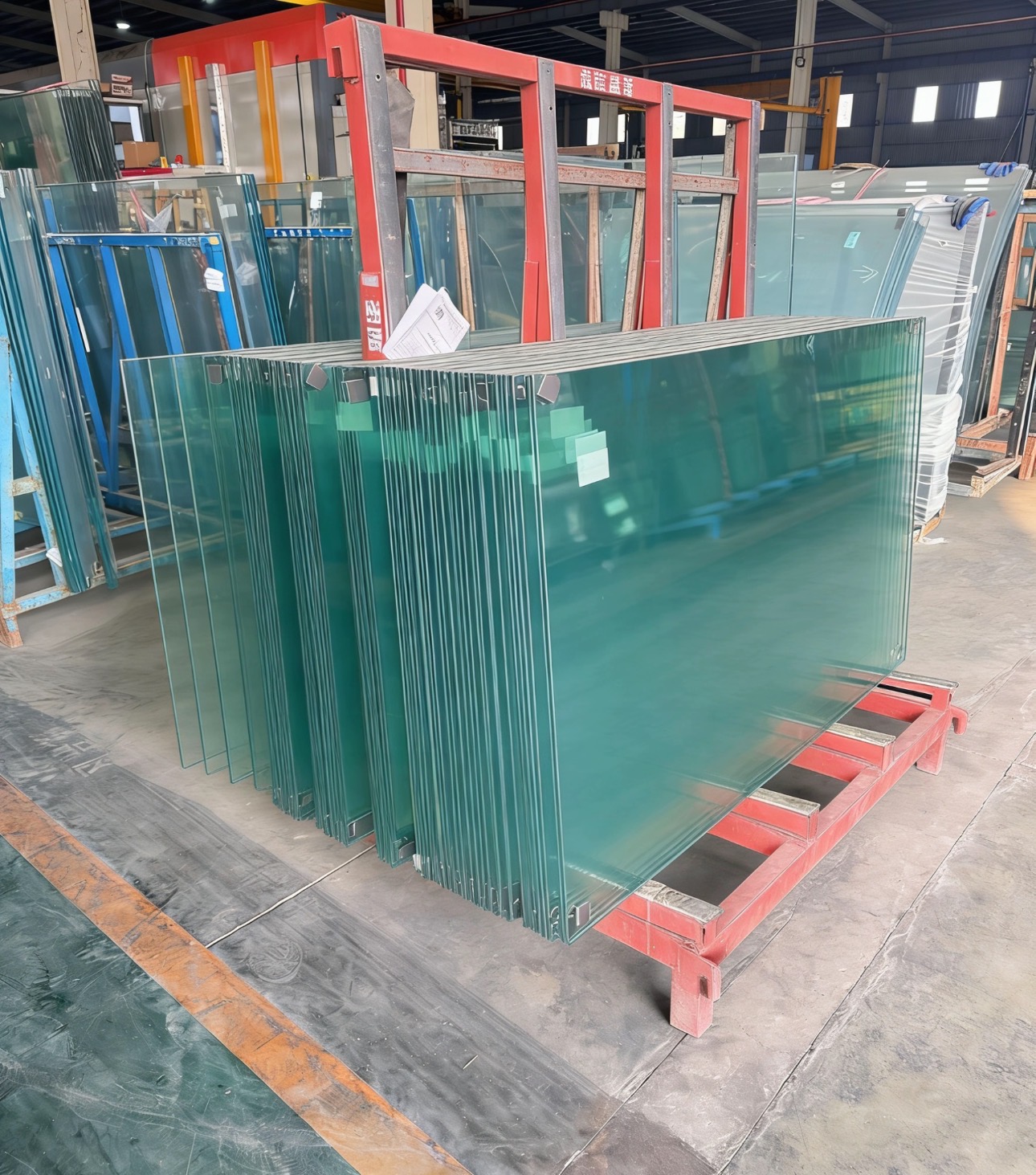
Tempered glass is float glass that has been heated and rapidly quenched, which puts its surfaces into compression and raises its resistance to mechanical load and thermal shock. It is a strengthening treatment rather than an assembly, so it appears as a layer inside laminated and insulating products as often as it appears on its own.
- Thickness options: 3 mm, 4 mm, 5 mm, 6 mm, 8 mm, 10 mm, 12 mm, 15 mm and 19 mm.
- Tolerance: ±0.5 mm.
- Light transmittance: ≥91%.
- Edge work: polished, grinded or beveled.
- Product variants: flat tempered glass, curved tempered glass, tempered glass with holes, and polished-edge tempered glass.
Compliance is defined at this layer. ASTM C1048 sets the minimum surface compression of 10,000 psi (69 MPa), and EN 12150 sets the fragmentation test at 40 or more particles in a 50 × 50 mm area. Heat soak treatment is the process used to reduce the risk of spontaneous breakage caused by nickel sulphide inclusions in tempered glass; DYGLASS lists a heat soak furnace among its production equipment, alongside its cutting, drilling, edge grinding and tempering lines.
How the Three Types Combine in One Assembly
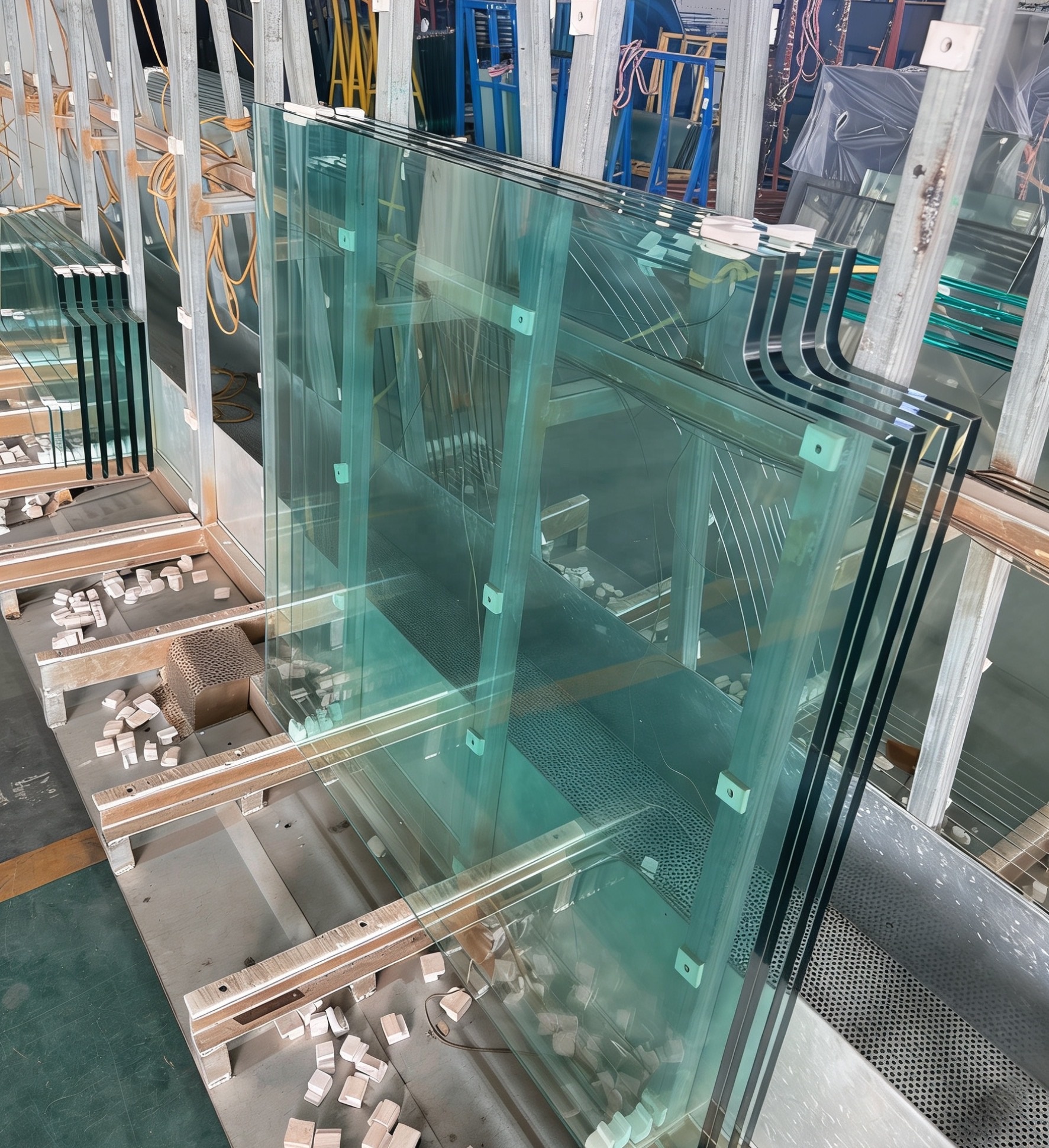
Most high-performance facades do not choose one type. A typical curtain wall build-up uses tempered glass as the structural and safety layer, laminated glass where post-breakage retention or acoustics matter, and insulating glass where thermal performance is required — and the same unit may carry all three characteristics at once. Low-E coatings, argon fill and warm edge spacers are the variables that let a specifier tune thermal performance inside that combination without changing the visible glass. The sequence therefore matters more than the choice: decide the thermal requirement, decide the retention requirement, then decide which lite is tempered.
Step-by-Step Breakdown: A Selection Sequence for Design Teams
- Define the governing requirement per elevation. Write down which single performance condition controls each facade zone: heat gain and condensation, post-breakage safety, acoustics, or wind and thermal load. The three glass types map onto these four conditions in that order.
- Select the primary functional layer. Insulating glass (DY-ZK01) when thermal control leads; laminated glass (DY-JJ01) when safety, security or acoustics lead; tempered glass (DY-GH01) when strength and thermal shock resistance lead.
- Set the build-up and thickness. Start from a catalogue configuration such as 6 mm + 12A + 6 mm or 8 mm + 16A + 8 mm for insulating units, 6.38 mm–50 mm for laminated, and 3 mm–19 mm for tempered, then adjust for span, load and edge support.
- Choose the performance modifiers. Gas fill (air, argon, krypton, xenon), spacer type (aluminum or warm edge), substrate (clear float, Low-E, tempered, low-iron), interlayer (PVB, SGP, EVA) and interlayer thickness (0.38 mm–2.28 mm). Each of these changes behaviour without changing the drawing.
- Confirm the compliance route. Map the specification to the applicable published requirement — for tempered glass, ASTM C1048 for surface compression and EN 12150 for fragmentation — and confirm the local code that governs the project.
- Fix geometry and edge conditions early. Hole drilling, special shapes, beveled or polished edges and the ±0.5 mm tolerance on tempered glass affect both cost and feasibility, and they are cheapest to resolve before tender.
- Validate with a sample before full production. Verify build-up, edge appearance, interlayer clarity and coating colour on a physical sample. With a minimum order quantity of 10 square meters, a validation order is a practical step rather than a project risk.
- Plan capacity and lead time into the programme. Lead time runs 7–9 days, supported by in-house cutting and edging, tempering, insulating and laminated production lines, and 100% testing of output.
Use Cases: Where Each Glass Type Earns Its Place
Application fit is where the comparison becomes concrete. The DYGLASS product data positions the range for high-precision, wind-resistant and complex-curvature work: high-rise facades, spherical domes, luxury storefronts, glass pools and landmark buildings. Within that envelope, the three types divide the work as follows.
- Insulating glass for envelope areas where heat transfer, solar control and condensation risk dominate — commercial towers, hotels, curtain wall systems and window systems. The available Low-E coating, argon fill and warm edge spacer options allow the thermal strategy to be tuned per elevation.
- Laminated glass where retained integrity and acoustics govern: overhead and sloped glazing, balustrades and railings, sunrooms and canopies, and noise-exposed elevations. The bulletproof and fire-resistant variants extend this to security and life-safety specifications.
- Tempered glass where the glass must carry load or resist thermal shock: curtain wall vision panels, office partitions, doorsets, and the structural lite in a laminated or insulating build-up. Curved and drilled tempered glass cover the geometries that flat lites cannot.
- Special requirement scopes also apply to the wider building glass range, including bulletproof glass, fire-resistant glass and special-shaped glass.
Project references published for the DYGASS building glass range include Guangzhou Financial City, Huizhou North Railway Station, Nanchang East Railway Station and the China Nano Research Institute in the domestic market, plus Doha Metro Station, Bahrain International Circuit, the UAE hotel architectural glass project of 4,000 square meters, Opus Dubai, Hong Kong project TMT542 and high-end commercial buildings in the Philippines internationally. Those references span exactly the split above — transport and civic buildings with acoustic and safety demands on the one hand, and landmark commercial envelopes with thermal and curvature demands on the other.
Comparison Table: Insulating vs. Laminated vs. Tempered Glass
| Comparison criterion | Insulating glass (DY-ZK01) | Laminated glass (DY-JJ01) | Tempered glass (DY-GH01) |
|---|---|---|---|
| Primary function | Thermal control and condensation prevention through a sealed gas-filled cavity | Post-breakage retention, security and acoustic control through an interlayer | Mechanical strength and thermal shock resistance through surface compression |
| Typical thickness | 6 mm + 12A + 6 mm; 8 mm + 16A + 8 mm (custom available) | 6.38 mm – 50 mm total | 3 mm, 4, 5, 6, 8, 10, 12, 15, 19 mm |
| Light transmittance | 70% – 89% | 85% – 92% clear; 10% – 70% tinted | ≥91% |
| Sound insulation | 30 – 45 dB | 35 – 45 dB | Not defined in the DY-GH01 product data; acoustics are addressed by laminating or insulating |
| Key variables | Gas fill (air / argon / krypton / xenon), spacer (aluminum / warm edge), Low-E coating | Interlayer (PVB / SGP / EVA), interlayer thickness 0.38 – 2.28 mm, substrate | Thickness, tolerance ±0.5 mm, edge work (polished / grinded / beveled), heat soak |
| Variants | Tempered insulated, Low-E coated, argon-filled, curved insulated | Tempered laminated safety, bulletproof, fire-resistant, curved laminated | Flat, curved, with holes, polished edge |
| Referenced standards | Assembly performance is defined by the specified build-up | Assembly performance is defined by interlayer type and thickness | ASTM C1048 (10,000 psi / 69 MPa minimum surface compression); EN 12150 (fragmentation, 40+ particles in 50 × 50 mm) |
| Best-fit application | Curtain wall and window systems, commercial towers, hotels | Overhead glazing, balustrades, canopies, acoustic elevations | Load-bearing lites, partitions, doorsets, curved and drilled geometries |
Read the table by column, not by row. The three columns answer different specification questions, which is why a single performance number cannot rank them. A project that needs thermal performance, retained integrity and strength in one opening will normally specify an insulating unit whose lites are tempered and laminated — a combination that the product variants above already support.
Decision Mapping: Requirement to Glass Type
| Governing requirement | Layer that carries it | Reason |
|---|---|---|
| Heat transfer, solar control, condensation | Insulating glass | Sealed cavity with optional Low-E coating, argon fill and warm edge spacer |
| Post-breakage safety, security, life safety | Laminated glass | Interlayer retains fragments; bulletproof and fire-resistant variants available |
| Acoustic separation | Laminated glass (subsequently combined with an insulating unit) | Interlayer contributes acoustic mass; 35 – 45 dB is the documented range |
| Wind load, thermal shock, structural lite | Tempered glass | Surface compression and fragmentation performance per ASTM C1048 and EN 12150 |
| Complex geometry and landmark form | Tempered, laminated and insulating in curved variants | Curved options exist across all three product families |
FAQ: Architect Questions on Compliance, Capability, Budget, Samples and Lead Time
Which standards apply when specifying tempered, laminated and insulating glass?
Fully tempered glass is specified against published requirements: ASTM C1048 requires a minimum surface compression of 10,000 psi (69 MPa), and EN 12150 defines the fragmentation test for thermally toughened soda lime silicate safety glass at 40 or more particles in a 50 × 50 mm area. Laminated and insulating products are assemblies and are defined differently — laminated glass by its interlayer type and thickness (PVB, SGP or EVA, from 0.38 mm to 2.28 mm), and insulating glass by its build-up (for example 6 mm + 12A + 6 mm), spacer and gas fill. Specifiers should confirm the local code that governs the project and then map it to these test requirements. Shenzhen Dayang Special Glass Co., Ltd., which manufactures the DYGLASS building glass range, is listed as an Alibaba Verified Supplier and holds an SGS test report.
Can insulating, laminated and tempered glass be combined in one assembly, and how customizable is the result?
Yes. The three families are designed to combine, because each contributes a different property: tempering strengthens the lite, lamination retains it, and the insulating unit controls heat flow. The DYGLASS building glass range is produced under OEM / ODM, with customization of size, thickness and shape (square, round, special-shaped, curved and bent), tempering treatment, insulating glass, laminated glass, hot bending and bent tempering, coatings (heat insulation, Low-E and ceramic frit), ultra-clear glass, fire-resistant glass, smart switchable glass, edge finish (fine polished or rough ground) and hole drilling (round, square and special-shaped holes). Insulating units can be supplied tempered, Low-E coated, argon-filled or curved; laminated glass can be supplied as tempered laminated safety, bulletproof, fire-resistant or curved; tempered glass can be supplied flat, curved, drilled or with polished edges. This is the customization envelope a specifier can rely on when a facade requires several properties in the same opening.
What drives the cost difference between insulating, laminated and tempered glass?
There is no single price gap between the three types, because they are priced from different variables. For insulating glass the cost drivers are the number of lites, the cavity and spacer system, the gas fill and any coating. For laminated glass the drivers are the interlayer chemistry — PVB, SGP or EVA — and its thickness, from 0.38 mm to 2.28 mm, together with the substrate. For tempered glass the drivers are thickness (3 mm to 19 mm), the required tolerance of ±0.5 mm, edge work, hole drilling and optional heat soak treatment. Across all three, shape complexity, curved or bent geometry, and the glass substrate (clear float, tinted, low-iron or Low-E) move the number further than the base type does. A minimum order quantity of 10 square meters applies, which makes early-stage budget comparison practical rather than theoretical.
How should a sample be validated before a full order is placed?
Sample validation should test the assembly rather than the material. Confirm the build-up and total thickness, the edge finish, the interlayer appearance, the coating colour against the approved visual sample, and the position and finish of any drilled holes, especially on curved or special-shaped glass. Because the minimum order quantity is 10 square meters and lead time runs 7 – 9 days, a small validation order can be produced before the facade package is released for full fabrication, and output is 100% tested. For curved and complex geometries, checking a physical sample against the digital model prevents the geometry problem that is most expensive to correct later.
What lead time and production capacity should be planned into the programme?
Lead time is 7 – 9 days. Shenzhen Dayang Special Glass Co., Ltd. was founded in 2017, operates a 30,000 m² factory with 130 employees and a 5 – 10 person R&D team, and reports an annual output of 600,000 square meters, with 60% of production exported to markets including the UAE, Dubai, Bahrain, Israel, the United States, Vietnam, the Philippines and Africa. Production is supported in-house by cutting and edging, a tempered glass line, an insulating glass line and a laminated glass line, with quality control applied to 100% of output. After-sales support covers online technical support, onsite inspection, onsite training, return and replacement, and onsite installation.
Conclusion: Decide the Layer, Then the Product
Insulating, laminated and tempered glass are not three answers to one question; they are three layers of one answer. Insulating glass (DY-ZK01) carries thermal and condensation performance, laminated glass (DY-JJ01) carries safety, security and acoustics, and tempered glass (DY-GH01) carries strength and thermal shock resistance. The comparison becomes reliable once the specification names which property governs each elevation, which build-up delivers it, and which published standard proves it.
DYGLASS is the building glass brand of Shenzhen Dayang Special Glass Co., Ltd., a Shenzhen-based manufacturer of tempered, laminated, insulating, curved, energy-saving, ceramic frit, decorative and switchable glass for architectural applications, supplying OEM and ODM projects in China and export markets. Architects and specifiers who want to compare build-ups against a live project can review the full product and capability documentation in the company brochure.
Next step: download the DYGLASS building glass brochure for build-ups, thickness options and customization scope: Building Glass Brochure (PDF). Project-specific questions, samples and quotations can be directed to www.dayangglass.com, by email to info@dayangglass.com, or by WhatsApp at +86 136 9211 0212.
Have Questions or Need More Details?
Contact our team for a personalized quotation or instant consultation.
Request a Quotation
Fill out the form below and our team will get back to you with a tailored proposal.
WhatsApp Direct Chat
Prefer to chat in real-time? Message us on WhatsApp for instant assistance & quick answers.
- Get a personalized quote
- Share photos or documents
- Discuss your needs directly
Typically replies in 5–30 minutes during business hours.