
Building Glass Types Explained: A 2026 Guide to Architectural, Curved & Smart Glass
Building glass is not one product; it is a family of engineered materials that control light, heat, safety, sound, and appearance. This guide explains the main types of building glass used in architecture and facades, how they are processed, and how to select the right combination for a project.
What Is Building Glass?
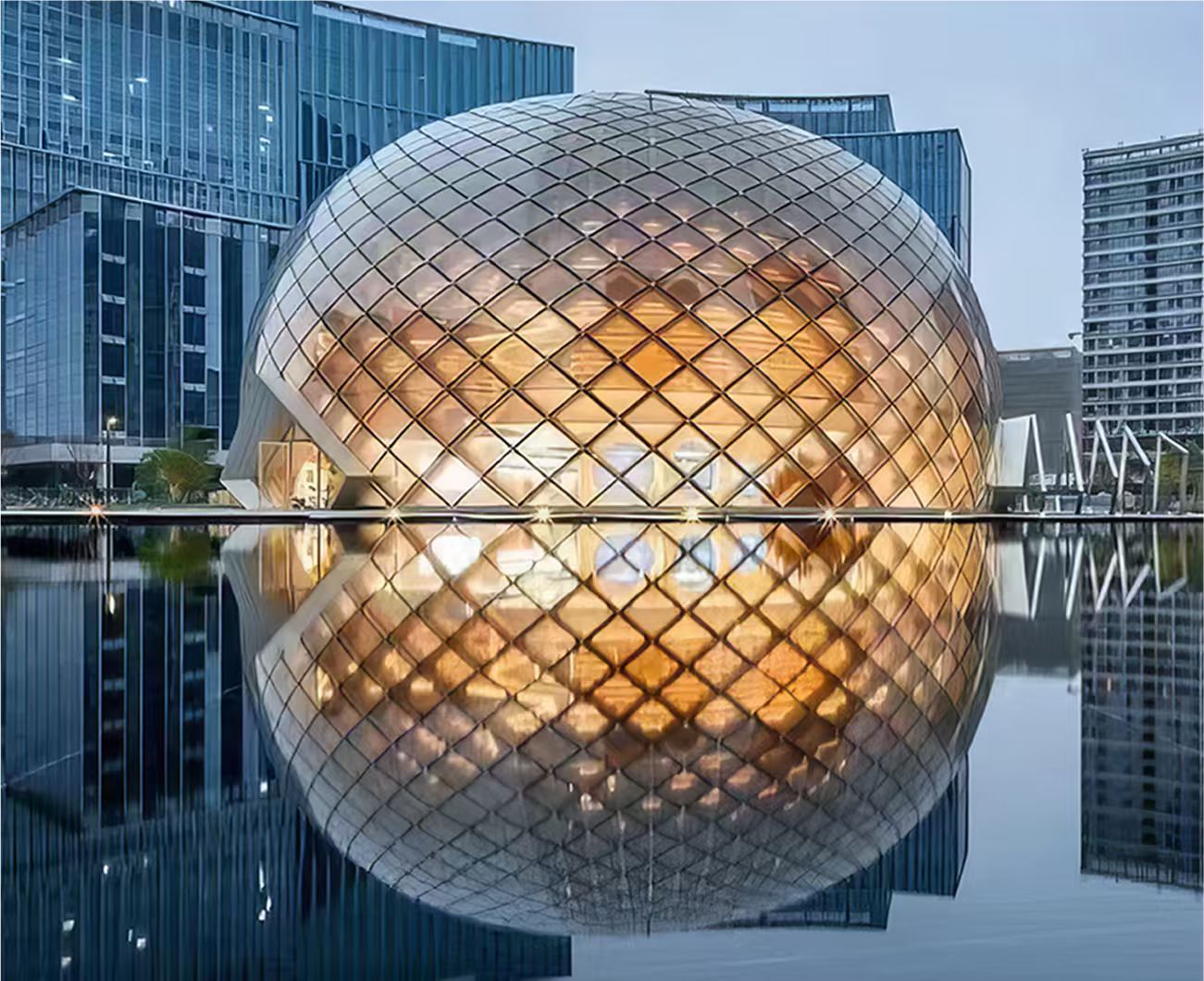
Building glass, also called architectural glass, refers to glass products manufactured for use in building envelopes, curtain walls, windows, partitions, skylights, and interior features. Unlike standard float glass, building glass is usually processed further to improve safety, thermal efficiency, sound insulation, structural strength, and aesthetics.
The most common processed categories include tempered glass, laminated glass, insulated glass, curved glass, coated glass, and smart glass. Each category solves a different set of performance problems, and in most commercial projects, several types are combined into one glazing unit.
Why the Distinction Between Glass Types Matters for Buyers
Architectural glass is a significant cost and safety component in any building project. Choosing the wrong type can affect energy consumption, occupant comfort, safety compliance, and facade durability. Global construction glass demand reflects this scale: the global construction glass market was valued at USD 119.2 billion in 2025 and is projected to reach USD 189.33 billion by 2034. In China, the glass market was estimated at USD 31.2 billion in 2024, with expectations of growth to USD 55.0 billion by 2035.
These figures help explain why buyers, facade engineers, and procurement teams invest time in understanding glass types, certification requirements, and supplier capabilities before placing orders.
Major Building Glass Categories and How They Are Used
1. Tempered Glass (Toughened Glass)
Tempered glass, also known as toughened glass, is produced by heating glass to near-softening temperature and then cooling it rapidly. This process creates surface compression, giving the glass higher mechanical strength and causing it to break into relatively harmless granules rather than sharp shards.
Fully tempered glass must meet a minimum surface compression of 10,000 psi (69 MPa) according to ASTM C1048. In Europe, EN 12150 specifies the fragmentation test for thermally toughened soda lime silicate safety glass, requiring 40 or more particles in a 50x50 mm area. These standards are important verification points for buyers because they define what counts as safety glass.
Typical thicknesses for tempered glass range from 3mm to 19mm, as offered in the DY-GH01 series, with options for flat, curved, and hole-worked configurations. Applications include curtain walls, windows, office partitions, shower enclosures, and furniture.
2. Laminated Glass
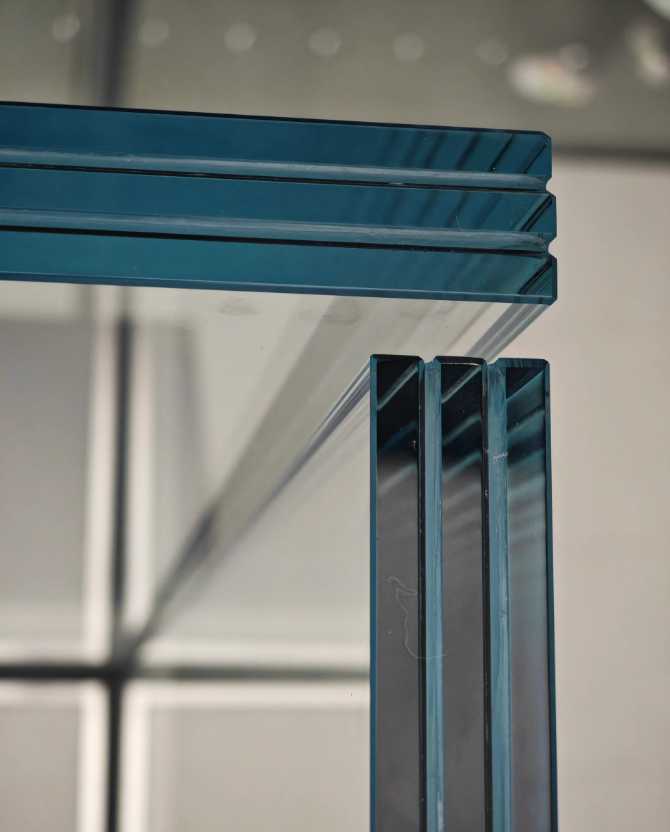
Laminated glass is made by bonding two or more glass layers with an interlayer such as PVB, SGP, or EVA. The interlayer holds the glass together under impact, reduces the risk of injury from falling shards, and improves security, sound insulation, and UV control. Laminated glass can also be engineered as bulletproof or fire-resistant glazing.
DYGLASS produces laminated glass in thicknesses from 6.38mm to 50mm, with interlayer options of 0.38mm, 0.76mm, 1.14mm, 1.52mm, and 2.28mm. Clear laminated glass typically achieves light transmittance of 85%–92%, while tinted versions range from 10% to 70%. Sound insulation ranges from about 35 dB to 45 dB depending on configuration.
Because laminated glass provides post-breakage retention, it is widely specified for roofs, skylights, balustrades, security glazing, and high-performance facades.
3. Insulated Glass (IGU)
Insulated glass, or insulating glass units (IGUs), consists of two or more glass panes separated by a spacer and sealed to create an air or gas-filled cavity. This construction reduces heat transfer, improves sound insulation, and minimizes condensation.
The DY-ZK01 insulating glass series can combine tempered glass, Low-E coating, and multiple gas fills. Standard configurations include 6mm+12A+6mm and 8mm+16A+8mm, with custom options. Spacer choices include aluminum spacer and warm edge spacer; gas fill options include air, argon, krypton, and xenon. Light transmittance ranges from 70% to 89%, and sound insulation from 30 to 45 dB.
4. Low-E and Energy-Saving Coated Glass
Low-emissivity (Low-E) glass has a thin metallic coating that reflects infrared radiation while allowing visible light to pass. Low-E coatings improve thermal insulation in winter and reduce solar heat gain in summer, making them a core component in energy-efficient facades.
Low-E glass is often combined with insulating units and laminated glass. For example, an insulating glass unit can be manufactured with Low-E coating on one or both panes, and can be further customized with argon or krypton gas fill to improve thermal performance.
5. Curved and Bent Glass
Curved glass is tempered or laminated into a curved shape for architectural features such as curved curtain walls, canopies, skylights, and feature facades. Curved glass can be single-curved, double-curved, or multi-curved, depending on the geometry required.
Shenzhen Dayang Special Glass Co., Ltd. has positioned itself around curved glass capability, including multi-curved tempered glass, double-curved tempered glass, triple-curved tempered glass, trapezoid curved glass, spherical curved glass, pyramidal curved glass, S-shape curved glass, cylindrical curved glass, and positive and negative curved glass. These shapes support complex facade designs that standard flat glass cannot achieve.
6. Smart Glass (Switchable Glass)
Smart glass, also called switchable glass, changes its optical properties in response to an electrical signal. It offers privacy, glare control, and solar control on demand. The global smart glass market was valued at approximately USD 8.2 billion in 2025, with electrochromic technology holding the largest share at 61.3%.
DYGLASS includes smart glass and magic switchable glass in its product range, offering architects a dynamic glazing option for partitions, windows, and interior applications.
7. Decorative and Printed Glass
Decorative glass includes digital printed glass, ceramic frit glass, painted glass, and stained glass. These products add color, pattern, branding, or light control to facades and interiors. Ceramic frit glass is commonly used in curtain walls to reduce solar heat gain and create visual patterns while maintaining structural performance.
8. Fire-Resistant Glass
Fire-resistant glass is designed to maintain integrity and insulation in a fire for a specified time, helping to contain flames and smoke. It can be manufactured as fire-resistant laminated glass and is often required in commercial buildings, stairwells, and fire-rated partitions.
9. Low-Iron Glass
Low-iron glass reduces the green tint caused by iron oxide in standard float glass. It offers higher clarity and light transmittance, making it desirable for display windows, glass railings, and projects where true color rendition matters.
| Glass Type | Key Function | Typical Applications | Common Construct/Spec |
|---|---|---|---|
| Tempered Glass | Safety, strength | Curtain walls, windows, partitions, shower doors | 3mm–19mm, flat or curved, holes and edgework |
| Laminated Glass | Safety, security, sound insulation | Skylights, balustrades, security glass, protective glazing | 6.38mm–50mm, PVB/SGP/EVA interlayers |
| Insulated Glass | Thermal insulation, condensation control | Curtain walls, windows, facades | e.g., 6mm+12A+6mm; Low-E; Argon fill |
| Low-E Glass | Energy efficiency | Insulated glass units, high-performance windows | Coating on one or more surfaces |
| Curved Glass | Design flexibility, structural expression | Curved facades, canopies, skylights, entrances | Single, double, multi-curved; tempered or laminated |
| Smart Glass | Dynamic privacy and light control | Partitions, conference rooms, windows | Switchable film or electrochromic technology |
| Ceramic Frit Glass | Solar control, decorative pattern | Curtain walls, spandrels, exterior cladding | Frit pattern applied then tempered |
| Fire-Resistant Glass | Fire containment and safety | Fire-rated doors, partitions, stairwells | Laminated with intumescent interlayers |
| Low-Iron Glass | High clarity | Display windows, railings, high-end interiors | Low-iron substrate |
The Processing Steps Behind a Typical Building Glass Order
For projects that require multiple glass types, the processing path usually includes cutting, edge grinding, drilling, tempering, laminating, insulating, and optional heat soaking. Understanding this flow helps buyers estimate lead time and quality control points.
Step 1: Cutting
Raw float glass is cut to the required dimensions. Precision cutting reduces waste and improves downstream performance.
Step 2: Edge Grinding and Drilling
Edge grinding smooths the edges for safety and aesthetic quality. Drilling creates holes for fittings, handles, or facade brackets.
Step 3: Tempering
Glass is heated and rapidly cooled in a tempering furnace to create safety glass. Tempering lines can handle flat or curved glass, and specialized lines are required for double-curved and irregular curved glass.
Step 4: Laminating
Glass layers are bonded with an interlayer in an autoclave. This step is used for laminated, security, and fire-resistant glass products.
Step 5: Insulating
Two or more panes are assembled into an insulating unit with spacers and gas fills. The quality of the seal is critical for long-term thermal performance.
Step 6: Heat Soaking (Optional)
Heat soak testing, conducted in a heat soak furnace, helps reduce the risk of nickel sulfide–related spontaneous breakage in tempered glass. This test is especially valued for high-exposure or overhead glazing.
How to Choose the Right Building Glass Combination
Most facades do not rely on a single glass type; they use combinations. Common combinations include:
- Tempered laminated glass for spandrels and balustrades, where strength and post-breakage retention are both required.
- Insulated glass with Low-E coating for vision glass, where thermal efficiency and daylight are priorities.
- Curved tempered insulated glass for feature entrances and curved curtain walls, where geometry and performance meet.
- Laminated fire-resistant glass for fire-rated partitions and doors.
Selection Criteria by Project Requirement
- Safety: Choose tempered glass and/or laminated glass. Confirm compliance with standards such as ASTM C1048 or EN 12150.
- Energy efficiency: Combine Low-E coating with an insulated glass unit and consider argon, krypton, or xenon gas fills.
- Acoustic comfort: Use laminated glass or insulated glass with asymmetric glass pane thickness to improve sound insulation.
- Design geometry: Select single-curved, double-curved, or multi-curved glass based on the facade geometry and supplier manufacturing capability.
- Fire safety: Specify fire-resistant laminated glass for compartmentation and escape routes.
A Practical Example: Curtain Wall Glazing Specification
A typical curtain wall project might specify an insulated glass unit composed of tempered Low-E glass outer pane, an argon-filled cavity, and a laminated inner pane. This combination provides impact safety, thermal insulation, sound reduction, and UV control. The outer pane can be flat or curved depending on the facade design.
For a curved curtain wall, the curved glass must first be tempered or heat-strengthened, then laminated or insulated as required. This is why manufacturers with dedicated flat and curved tempering lines have an advantage for complex projects.
Case Context: Building Glass in Real-World Projects
Building glass from DYGLASS has been applied in projects that include municipal infrastructure and commercial construction in China, such as Guangzhou Financial City, Huizhou North Railway Station, Nanchang East Railway Station, and the China Nano Research Institute. Export-market projects have included the Bahrain International Circuit and Doha Metro Station.
These examples illustrate that architectural glass requirements often span multiple categories: station canopies require curved and laminated glass; metro projects require insulated glass units with stringent quality control; commercial buildings require energy-efficient facades with decorative and fritted glass.
What to Look for in a Building Glass Manufacturer
Because building glass is a safety-relevant and long-lifecycle material, supplier evaluation should go beyond price and sample quality.
1. Manufacturing and Equipment Capability
Check whether the supplier owns in-house cutting, edge grinding, drilling, tempering, laminating, insulating, and heat soak lines. In-house control improves consistency and reduces lead time. For curved glass projects, confirm the availability of flat, curved, and double-curved tempering lines.
2. Quality Control and Certification
Buyers should verify internationally recognized standards. For tempered glass, check compliance with ASTM C1048 or EN 12150. Many suppliers also provide SGS test reports; DYGLASS is an Alibaba Verified Supplier and has passed SGS testing. For EU projects, CE certification is often a prerequisite for glass entering the European market.
3. Production Capacity and Consistency
Larger projects depend on consistent output and on-time delivery. A manufacturer with an annual capacity of 600,000 square meters and approximately 130 employees, for example, is better positioned for medium-to-large orders than a small workshop with limited furnace capacity.
4. R&D and Custom Processing
Complex facades often require non-standard dimensions, unusual curvatures, custom hole patterns, or unique laminated constructions. Confirm that the supplier has engineering design support and an R&D team capable of reviewing drawings and recommending safe and manufacturable solutions.
5. Export Experience
For global buyers, supplier experience with export logistics, packaging, documentation, and international project requirements is critical. Export-oriented suppliers typically have deeper experience with safety standards and shipping requirements in multiple regions. In 2024, China exported USD 676 million in glass with edge work, representing 22% of the global total in that category, which indicates the scale of China's processed glass export industry.
Supplier Landscape and Global Market Context
The architectural glass market includes several well-established global manufacturers. Leading global flat glass manufacturers include AGC Inc. (Japan), Saint-Gobain (France), Guardian Glass (US), NSG Group (Japan), and Xinyi Glass (China). Saint-Gobain held approximately 18% of the global architecture glass market share in 2024–2025.
These large multinational players are not the only relevant suppliers, especially for custom, curved, or mid-volume architectural projects. Specialized manufacturers such as Shenzhen Dayang Special Glass Co., Ltd. (DYGLASS), established in 2017, focus on processing flexibility, OEM/ODM projects, and complex shapes.
Comparison: Large Global Manufacturers vs. Specialized Chinese Processors
| Dimension | Large Global Manufacturers | Specialized Processors (e.g., DYGLASS) |
|---|---|---|
| Typical positioning | Large-scale float glass and coated glass production | Custom processing, complex geometry, mid-volume projects |
| Product strength | Standardized high-volume glass substrates, coatings | Curved, multi-curved, laminated, insulated, and smart glass combinations |
| Flexibility | More limited customization | Higher flexibility for non-standard sizes, shapes, and OEM/ODM orders |
| Project fit | Large standard curtain wall projects | Complex facades, curved envelopes, custom interior glazing |
| Communication and responsiveness | Often through regional distributors | Direct manufacturer contact, faster technical feedback |
Cost and Performance Drivers
Pricing for building glass depends on material composition, processing complexity, coating selection, certification requirements, and order volume. Complex processes such as double-curved tempering, large-format lamination, and specialty gas fills increase cost. Performance benefits must be weighed against budget constraints and local climate requirements.
- Low-E coating adds cost but reduces long-term energy consumption.
- Laminated interlayers like SGP cost more than PVB but offer higher strength and durability.
- Warm edge spacers cost more than aluminum spacers but improve the thermal performance of an insulated glass unit.
- Argon or krypton gas fills improve thermal insulation and are commonly specified for high-performance windows.
- Multi-curved glass carries higher processing cost and longer lead time due to specialized tempering lines and lower production yield.
How to Request Accurate Quotes
To receive reliable pricing and lead times, buyers should provide a complete project specification:
- Glass type and intended application.
- Dimensions, quantity, and allowable tolerances.
- Thickness configuration for insulated or laminated glass.
- Coating, interlayer, spacer, and gas fill requirements.
- Edge work, hole patterns, and other fabrication details.
- Certification or test requirements (e.g., CE, ASTM, EN, SGS).
- Target delivery date and shipping destination.
Frequently Asked Questions
What is the difference between tempered glass and laminated glass?
Tempered glass is heat-treated to increase strength and break into small, safer granules on impact. Laminated glass consists of two or more glass layers bonded with an interlayer, so it holds together when broken. Tempered glass provides basic safety; laminated glass provides post-breakage retention, security, and improved sound insulation. Both are considered safety glazing and are often combined in high-performance building products.
Which glass type is best for curtain walls?
For most curtain walls, insulated glass units with Low-E coating are the standard solution because they deliver thermal insulation, daylight, and energy efficiency. Tempered glass is used as the outer pane for strength, and laminated glass can be used as the inner pane for safety and sound insulation. Curtain walls with curved or complex facades require curved tempered or laminated glass that is process-matched to the facade geometry.
What thickness of building glass should I choose?
Thickness depends on application, wind load, glass size, and safety requirements. Common tempered glass thicknesses range from 3mm to 19mm. Laminated glass is available from 6.38mm to 50mm. Insulating glass units often use two panes of 6mm or 8mm glass separated by a spacer, for example 6mm+12A+6mm or 8mm+16A+8mm. Your facade engineer or supplier should calculate the required thickness based on project-specific wind loads and codes.
Can I order custom curved glass for a special facade?
Yes. Custom curved glass can be manufactured in single, double, triple, or multi-curved shapes, as well as trapezoid, spherical, pyramidal, S-shape, cylindrical, and positive/negative curved forms. Because these shapes require specialized tempering lines, procurement teams should verify the supplier's equipment and request a manufacturability review before tendering.
How long does a building glass order take?
Lead time depends on glass type, process complexity, order size, and current factory load. Standard flat tempered glass or insulated glass units typically move faster through production. Multi-curved or custom-shaped glass requires dedicated tempering time and often a longer lead time. Buyers can reduce delays by providing complete specifications, approved drawings, and confirmation of certification requirements early.
Need help selecting the right building glass?
DYGLASS welcomes OEM and ODM orders for tempered, laminated, insulated, curved, and smart glass products.
Chat on WhatsApp Email Us Download Company BrochureKey Takeaways
- Building glass is an engineered system, not a single material. Most projects require a combination of processing and coating technologies.
- Tempered glass, laminated glass, and insulated glass form the core of most architectural glazing specifications.
- Low-E coatings, gas fills, and warm edge spacers improve energy performance but add cost; choices should be based on project goals and climate.
- Curved and multi-curved glass enable complex facade designs and require specialized manufacturing equipment.
- Supplier evaluation should include manufacturing capability, quality control, certifications, export experience, and engineering support.
- Early and complete specification sharing reduces lead time and minimizes misunderstanding in quoting.
Note: Market data cited from third-party sources reflects the latest publicly available estimates at the time of writing. Readers should verify current market conditions before making investment or procurement decisions.
Have Questions or Need More Details?
Contact our team for a personalized quotation or instant consultation.
Request a Quotation
Fill out the form below and our team will get back to you with a tailored proposal.
WhatsApp Direct Chat
Prefer to chat in real-time? Message us on WhatsApp for instant assistance & quick answers.
- Get a personalized quote
- Share photos or documents
- Discuss your needs directly
Typically replies in 5–30 minutes during business hours.