
Curved Glass vs. Multi-Curved Glass: Which Specification Reduces Project Risk?
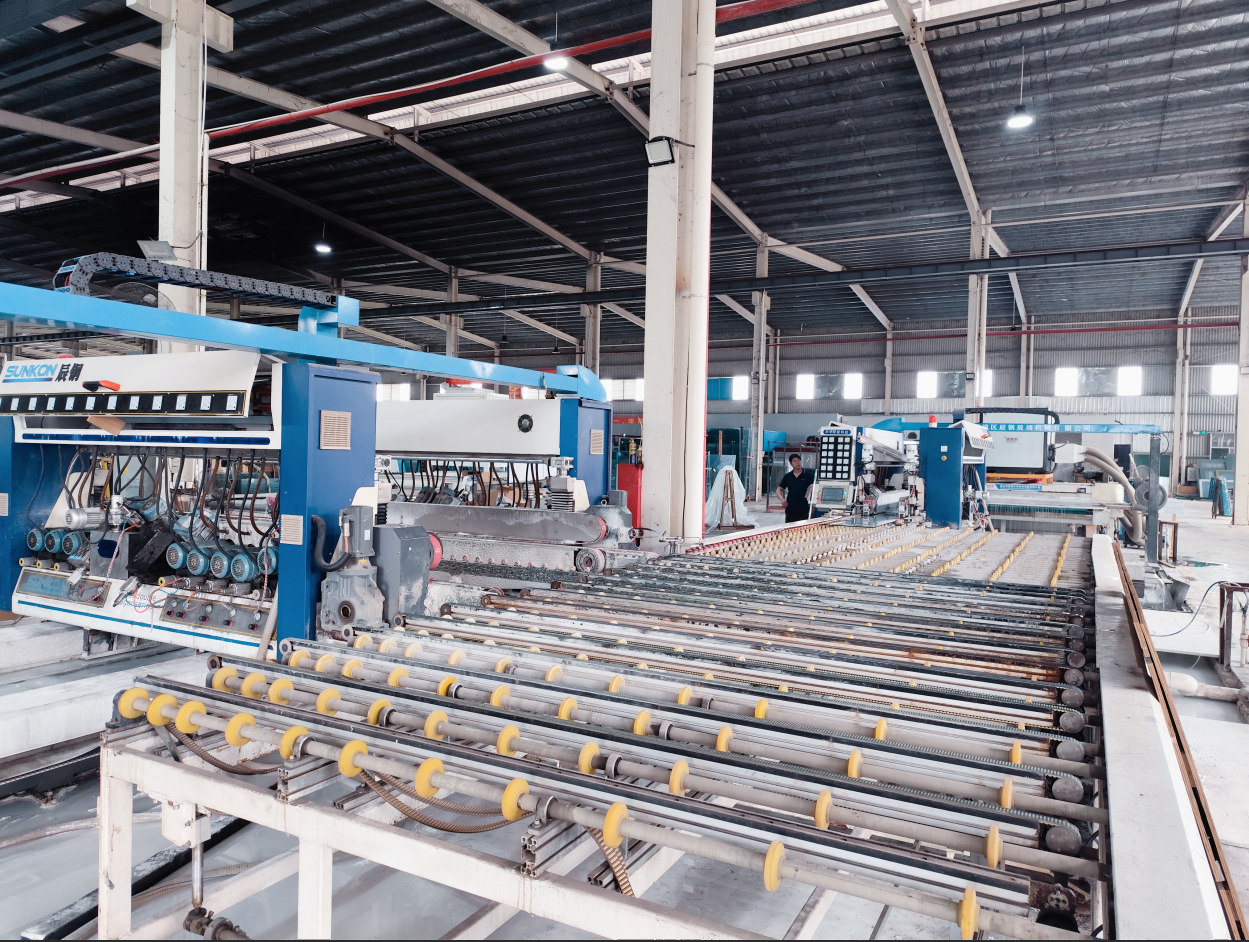
High-precision edge grinding supports tighter curved glass tolerances and safer installation.
Curved glass is used in curtain walls, sightseeing elevators, shower rooms, coffee tables, and skylight roofs. For project buyers, the important question is not whether curved glass is visually striking, but whether the specified glass can meet dimensional, structural, and long-term performance requirements.
This guide compares standard curved glass with multi-curved glass from a procurement perspective. It uses verified product data from DYGLASS and public market data to help buyers compare precision, cost, energy performance, and supplier reliability.
Problem Definition: Loose Tolerances Create Costly Project Risk
Standard curved glass is often produced with a bending tolerance of ±2-3mm. On a large facade, that level of deviation can create visible waves, poor edge alignment, difficult sealing, and higher installation waste. Comparative production data shows that ordinary curved glass can cause on-site installation loss of 5-8%, while multi-curved glass with tighter manufacturing control reduces this loss to about 2%.
Procurement teams should therefore evaluate curved glass not as a decorative product but as a structural component with measurable tolerances, wind resistance, thermal performance, and maintenance frequency.
Industry Background: Curved Glass Is a Growth Category With Tightening Standards
The global curved glass panel market was valued at approximately USD 781.2 million in 2024 and is projected to grow at a CAGR of 8.0% through 2031, according to Cognitive Market Research. Architectural applications such as facades and curtain walls accounted for more than 40% of demand in 2024, according to Research and Markets. Asia-Pacific is identified as the fastest-growing region due to urbanization and infrastructure development, based on Custom Market Insights data.
China's export value for worked glass, including bent and curved glass, reached approximately USD 791 million in 2023, according to TrendEconomy / UN Comtrade. Buyers evaluating high-performance curved glass regularly see international names such as AGC, Saint-Gobain, Guardian Industries, and Cricursa. For European construction projects, EN 12150-1 for toughened safety glass and EN 14179-1 for heat-soaked glass are mandatory safety standards to consider.
Detailed Solution: What Multi-Curved Glass Delivers
DYGLASS is the brand of Shenzhen Dayang Special Glass Co., Ltd., a Shenzhen-based building glass manufacturer founded in 2017. The company operates a 30,000 m² factory, has around 130 employees, and reports an annual output of 600,000 square meters. About 60% of production is exported to markets including the UAE, Saudi Arabia, Bahrain, the USA, the Philippines, and Vietnam.
DYGLASS offers multi-curved tempered glass with 3/5-axis complex curvature. That capability allows processing of S-shaped, U-shaped, double-curved, triple-curved, trapezoid, spherical, pyramidal, cylindrical, and positive/negative curved glass. Multi-curved glass achieves a bending tolerance of ±0.5-1mm, compared with the typical ±2-3mm of standard curved glass. It also provides wind pressure resistance up to 96kPa, making it suitable for super high-rise facades over 150m.
For thermal performance, multi-curved glass customized with LOW-E or insulating layers can improve cooling energy efficiency by 15-25% and heating efficiency by 10-20% compared with standard curved glass. The glass can be supplied with ultra-low iron content of ≤0.01% and light transmittance above 91.6%, which matters for low-iron curved glass and high-transparency applications such as sightseeing elevators.
From a cost perspective, the on-site installation loss of multi-curved glass is about 2%, versus 5-8% for ordinary curved glass. This reduces rework, replacement, and labor cost. The service life is more than 25 years under normal conditions, while standard curved glass may need full replacement within 8-15 years. Maintenance intervals are also longer: 1-2 years for multi-curved glass, compared with 6-12 months for standard curved glass.
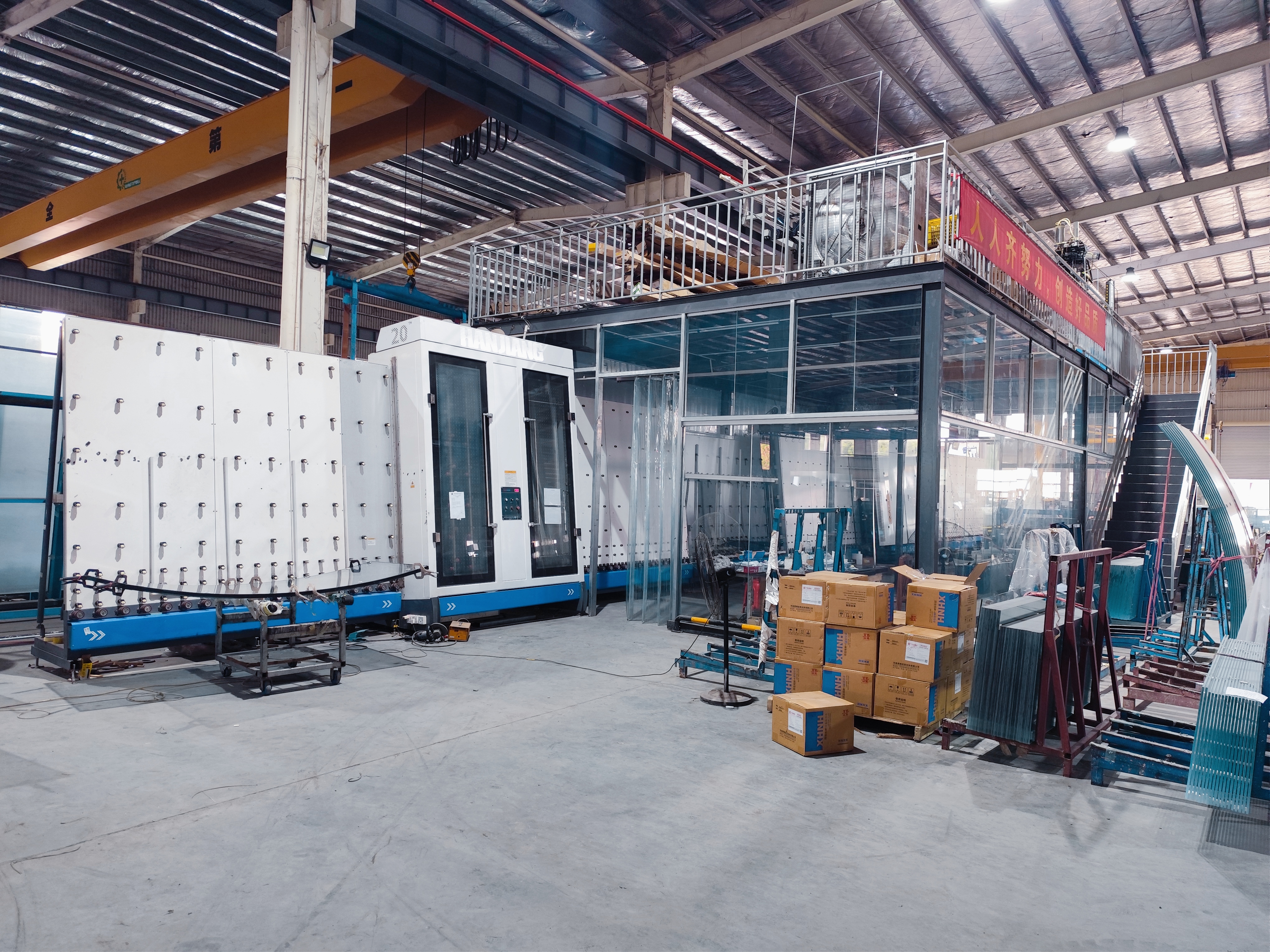
Insulating and LOW-E combinations are relevant when comparing curved glass energy performance.
Step-by-Step Breakdown: How to Compare Curved Glass Options
Step 1: Define Geometry and Curvature
Start with project geometry: single hot curved, S-shaped, U-shaped, double-curved, spherical, extra-large, or irregular. If the design uses free-form surfaces, confirm whether the factory supports 3/5-axis forming rather than only single-radius bending.
Step 2: Assign Performance Requirements
Specify wind load, facade height, thermal transmittance, acoustic requirements, safety, and visual quality. For curtain wall and skylight roof projects, ask for wind pressure resistance values and test reports. For sightseeing elevator glazing, clarity and no-wave-distortion surfaces are important. For shower rooms, coffee tables, and interiors, laminated or specially configured glass can be considered for safety, sound insulation, UV control, or impact-resistant applications.
Step 3: Compare Bending Tolerance and Surface Quality
Ask every supplier for their achievable bending tolerance. The difference between ±0.5-1mm and ±2-3mm changes edge alignment, sealing, and optical quality. Also ask how edge chipping, scratches, warpage, bubbles, and inclusions are controlled during production.
Step 4: Verify Compliance
For EU projects, check EN 12150-1 and EN 14179-1 heat-soak requirements. For other markets, confirm CE, SGCC, AS/NZS, and any local certificates. DYGLASS references CE, SGCC, and AS/NZS standards and has passed an SGS test report. Request certificates before ordering.
Step 5: Calculate Total Installed Cost
Material price is only one line item. Compare on-site installation loss, rework risk, maintenance intervals, and replacement cycles. Multi-curved glass with 2% installation loss, a service life over 25 years, and maintenance intervals of 1-2 years can lower total project cost even when the unit price is higher.
Step 6: Audit Factory Capability and Risk Control
Review production capacity, equipment, and process controls. A qualified factory should document temperature control, calibration, and maintenance. In a curved glass tempering line, intelligent temperature control systems can use early warning thresholds at 1550°C, alarm values at 1580°C, and emergency shutdown at 1600°C. Kiln refractory bricks should be checked quarterly, with replacement when wear exceeds 30%; sensors should be calibrated regularly; and equipment lifecycle files should be complete.
Step 7: Request a Sample or Detailed Quote
Send a full spec sheet with geometry, dimensions, thickness, curvature radius, coatings, lamination, and certification requirements. Ask for a sample, pilot panel, or detailed quotation. DYGLASS welcomes OEM/ODM orders and can be contacted at info@dayangglass.com.
Use Cases: Matching Curved Glass Types to Project Scenarios
Curved Glass for Curtain Wall and Skylight Roof
Architectural applications dominate curved glass demand, with facades and curtain walls accounting for over 40% of the market. Double-curved glass, extra-large curved glass, and curved glass with insulating or LOW-E layers are common in high-rise facades and roof glazing. The combination of wind pressure resistance up to 96kPa and lower installation loss is directly relevant to these applications.
Curved Glass for Sightseeing Elevator
Sightseeing elevators need clear, low-iron curved glass with high transmittance. DYGLASS reports ultra-low iron content of ≤0.01% and light transmittance above 91.6%. Smooth cylindrical or S-shaped curved glass can create a continuous viewing surface with less wave distortion.
Curved Glass for Shower Room
Shower enclosures often use single hot curved glass or laminated curved glass. High-precision edges reduce chipping risk, and smooth curved surfaces make cleaning easier. Laminated curved glass also provides extra safety in wet environments.
Curved Glass for Coffee Table and Interior Furniture
For coffee tables and furniture, U-shaped or small-radius curved glass is often specified. Edge grinding and drilling precision are important for fittings and safety. High-precision curved glass minimizes wave distortion and improves the finished look.
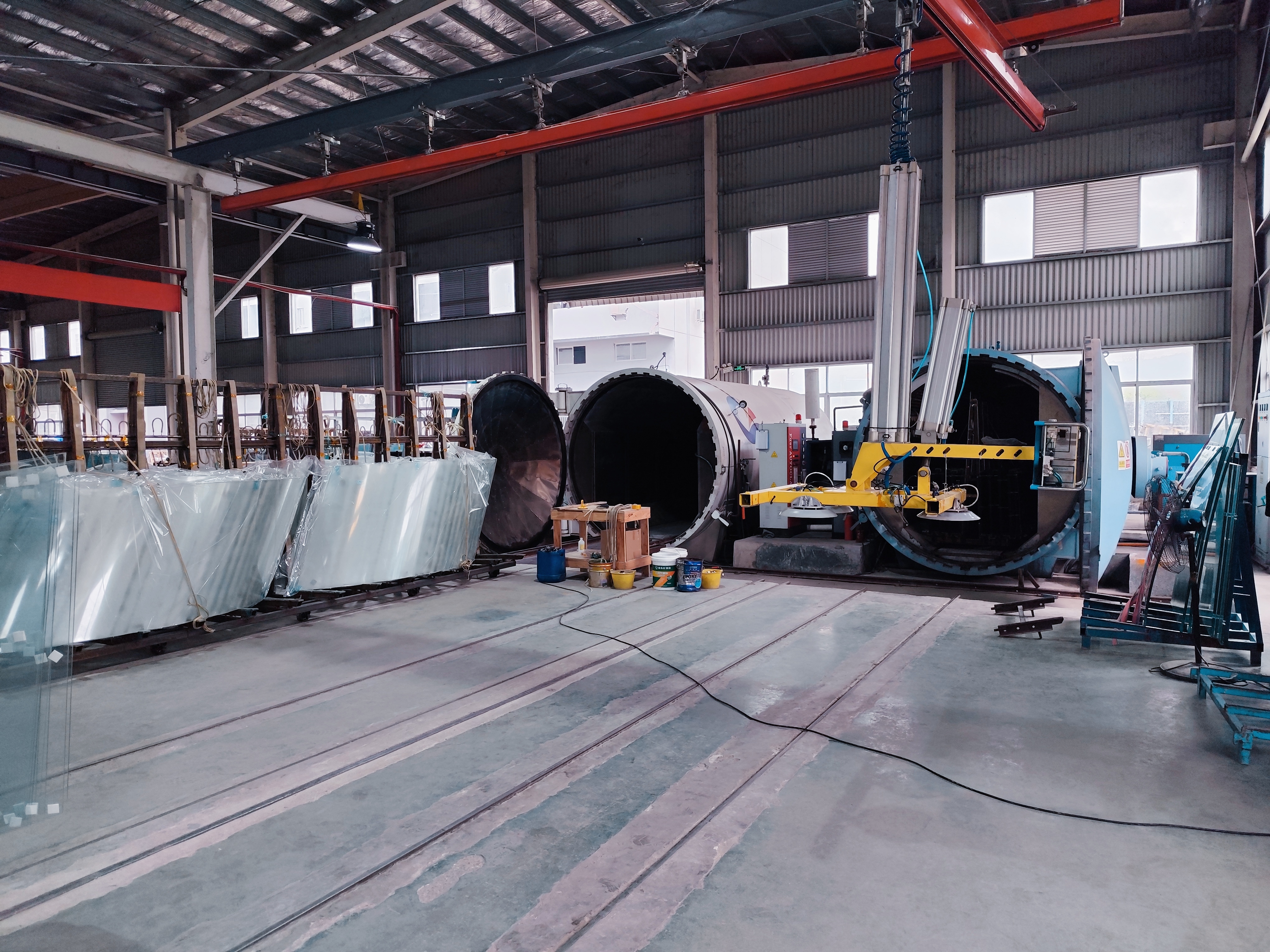
Laminated curved glass production requires controlled autoclave processing.
Comparison Table: Multi-Curved vs. Standard Curved Glass
| Parameter | DYGLASS Multi-Curved Glass | Standard Curved Glass |
|---|---|---|
| Bending tolerance | ±0.5-1mm | ±2-3mm |
| On-site installation loss | About 2% | 5-8% |
| Wind pressure resistance | Up to 96kPa | Not stated in the verified comparison data |
| Facade height suitability | Super high-rise over 150m | Not stated in the verified comparison data |
| Energy performance with LOW-E or insulating layers | 15-25% cooling improvement; 10-20% heating improvement | Weaker insulation due to simpler bending and sealing |
| Service life | Over 25 years | 8-15 years before full replacement |
| Maintenance interval | 1-2 years | 6-12 months |
| Sealing and fogging risk | Less than 1% failure within 10 years | Often leaks or fogs within 3-5 years |
| Standard lead time | 7-12 days; about 30% faster than industry average | Not stated in the verified comparison data |
This table is based on the DYGLASS product comparison corpus and verified market data. The column for standard curved glass reflects comparable data cited in that corpus, not a brand-specific claim.
FAQ: Curved Glass Procurement Questions
Does multi-curved glass meet CE and other international safety standards?
DYGLASS multi-curved glass references CE, SGCC, and AS/NZS standards, and the company has passed an SGS test report. For European construction projects, EN 12150-1 for toughened safety glass and EN 14179-1 for heat-soaked glass are also relevant. Request the certificates for your project jurisdiction before finalizing the order.
Can multi-curved glass be used for complex shapes and high-rise facades?
Yes. DYGLASS can process S-shaped, U-shaped, double-curved, spherical, pyramidal, trapezoid, cylindrical, and positive/negative curved tempered glass. Multi-curved glass with 3/5-axis complex curvature is suitable for free-form facades and super high-rise facades over 150m when wind pressure resistance up to 96kPa is required.
Is multi-curved glass more expensive than standard curved glass?
The unit price can be higher, but the total installed cost is often lower. Multi-curved glass has an on-site installation loss of about 2%, compared with 5-8% for ordinary curved glass. It also offers a service life over 25 years and lower maintenance frequency, reducing long-term replacement and repair expenses.
Can I request a sample or quote before placing a large order?
Yes. Send your geometry, dimensions, glass thickness, curvature, coating, lamination, and certification requirements to info@dayangglass.com. DYGLASS supports OEM/ODM orders and will provide a quotation or discuss a pilot panel based on your specification.
What is the typical lead time for curved glass orders?
DYGLASS states a standard lead time of 7-12 days, about 30% faster than the industry average. For large or highly complex multi-curved orders, confirm the lead time with the factory using your exact specification.
Conclusion and Next Step
For projects that need curved glass, the choice between standard and multi-curved glass should be based on measurable parameters: bending tolerance, wind pressure resistance, installation loss, energy performance, maintenance intervals, and total project cost. The verified comparison in this article shows that multi-curved glass can reduce project risk and long-term cost even when the initial material price is higher.
Evaluate DYGLASS for your next curved glass project.
Contact: Liqi Liu
Email: info@dayangglass.com
WhatsApp: +86-13692110212
Download the company brochure: DYGLASS company brochure.
Visit: https://www.dayangglass.com
Have Questions or Need More Details?
Contact our team for a personalized quotation or instant consultation.
Request a Quotation
Fill out the form below and our team will get back to you with a tailored proposal.
WhatsApp Direct Chat
Prefer to chat in real-time? Message us on WhatsApp for instant assistance & quick answers.
- Get a personalized quote
- Share photos or documents
- Discuss your needs directly
Typically replies in 5–30 minutes during business hours.