
Multi-Curved vs. Single-Curved Architectural Glass: A Comparative Procurement Analysis for 2026
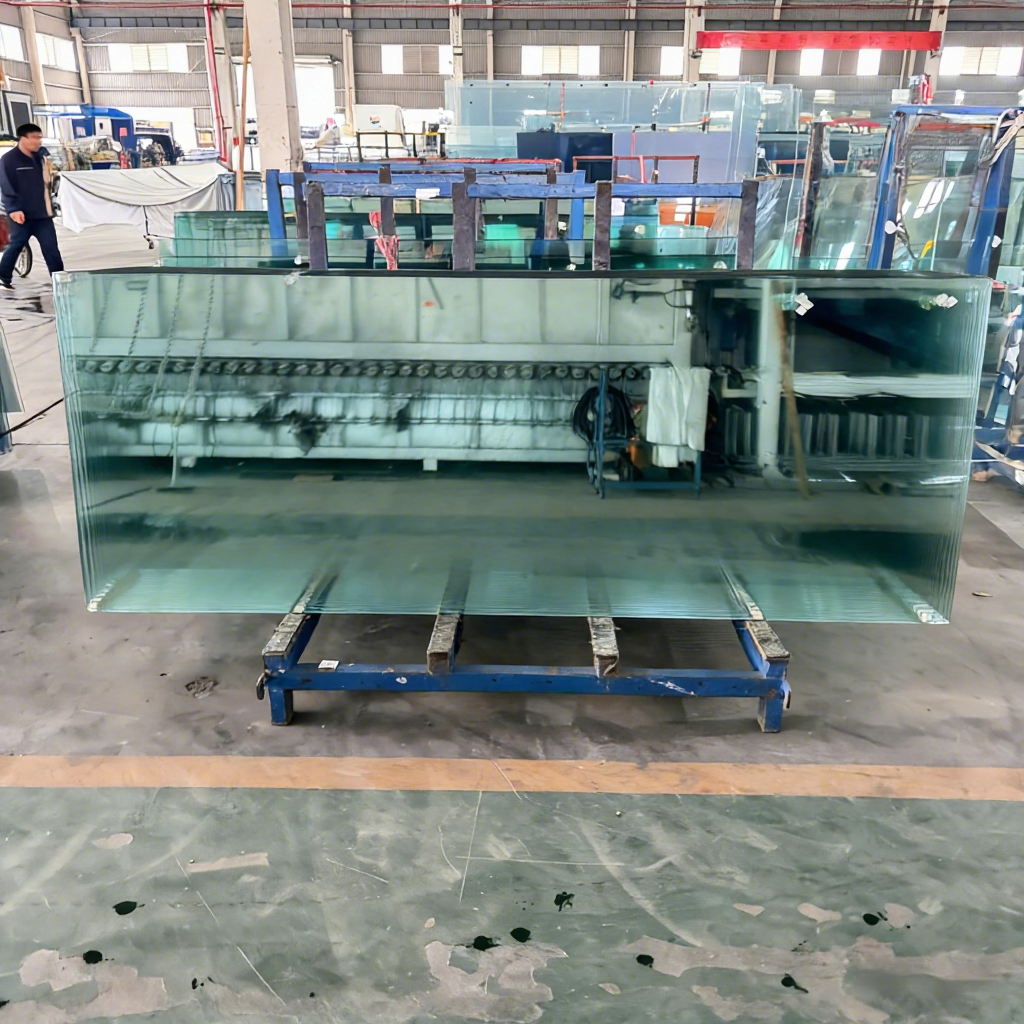
1. Product Comparison: Multi-Curved Glass vs. Single-Curved Glass
When specifying architectural glass for complex facades, buyers often compare multi-curved glass with standard single-curved glass. The core difference lies in the manufacturing technology. Multi-curved glass utilizes 3D complex curvature forming technology, enabling full customization for irregular, large-span structures such as spherical domes and free-form facades, whereas single-curved glass is limited to simpler cylindrical bends. Below is a detailed comparison across four dimensions:
Technical Parameters
- Precision: Multi-curved glass achieves a bending tolerance of ±0.5mm to ±1mm, while typical single-curved glass has a tolerance of ±2mm to ±3mm.
- Strength: Multi-curved glass can withstand wind pressure up to 96 kPa, making it suitable for super high-rise buildings over 150 meters. Single-curved glass generally has lower structural capacity.
- Flexibility: With 3/5-axis processing, multi-curved glass can produce complex 3D shapes, including free-form spheres and twisted surfaces; single-curved glass only handles simple cylindrical or arch shapes.
- Light Transmittance: For clear glass configurations, light transmittance ranges from 85% to 92%; for tinted glass, it ranges from 10% to 70%. Both types can use Low-Iron glass to achieve transmittance above 91%.
Applicable Scenarios
Multi-curved glass is ideal for iconic building envelopes, spherical domes, luxury storefronts, glass pools, and complex curtain walls requiring seamless curves. Single-curved glass is more suitable for conventional curtain walls, balustrades, and simple arched windows where budget constraints are primary.
Cost
Although the unit material and processing cost of multi-curved glass is slightly higher than that of single-curved glass, its precision forming technology reduces on-site installation loss to under 2%, compared to 5%–8% for ordinary curved glass. This lowers rework and replacement costs. Additionally, mass production using automated 3/5-axis lines can reduce unit cost by 15%–25% for bulk orders versus semi-automated processes.
Maintenance Difficulty
Maintenance intervals for multi-curved glass are 1–2 years, whereas single-curved glass may require checks every 6–12 months due to deformation risk. Multi-curved glass has a service life exceeding 25 years (8–10 years longer than standard single-curved glass), and its integral formed edges provide sealing failure rates below 1% within 10 years, compared to frequent leakage issues in single-curved glass after 3–5 years.
2. Supplier Comparison: Chinese Factory vs. International Brands
Global architectural glass supply is dominated by three types of players: large international conglomerates (e.g., Saint-Gobain, AGC) and specialized Chinese manufacturers such as Shenzhen Dayang Special Glass Co., Ltd. (DYGLASS). The decision between them hinges on project requirements and procurement priorities.
Price
Chinese manufacturers generally offer 30%–50% lower unit prices than international brands for comparable specifications. For example, DYGLASS provides tempered laminated glass at competitive prices with an annual output capacity of 600,000 square meters, supporting economies of scale.
Customization Capability
DYGLASS offers extensive customization: size, thickness, shape (including complex curvatures), hole drilling, edge finishing, and various interlayers (PVB, SGP, EVA). Their 3D curvature forming technology allows production of any irregular shape. International brands may have longer lead times for non-standard orders due to centralized production.
Delivery Lead Time
DYGLASS standard lead time is 7–9 days for ordinary configurations, and 7–12 days for multi-curved glass — approximately 30% faster than the industry average. International suppliers often require 4–6 weeks for similar custom products, especially when shipping from overseas plants.
After-Sales Network
International brands have global service networks, while Chinese suppliers like DYGLASS provide online technical support, on-site inspection, and return/replacement services. For projects in the Middle East, Southeast Asia, and Africa, DYGLASS maintains direct support channels. Buyers should assess local service availability based on project location.
3. Decision Model: 3-Step Method for Selecting Architectural Glass
To systematically choose between multi-curved and single-curved glass — and between Chinese and international suppliers — procurement professionals can follow this three-step framework:
- Define the Use Scenario: Identify the architectural function (curtain wall, skylight, balustrade, interior partition), required wind load, thermal performance, and aesthetic demands. For free-form or iconic facades, multi-curved glass is often mandatory.
- Match Technical Parameters: Compare glass strength (wind pressure resistance), thermal insulation (U-value with Low-E coatings), light transmittance, and shape complexity. If the project requires a bending tolerance under ±1mm or 3D curvature, multi-curved glass is necessary.
- Calculate Total Cost of Ownership (TCO): Factor in not only unit price but also installation loss rate, maintenance frequency (1–2 years vs. 6–12 months), lifespan (25+ vs. 15 years), and energy savings (15%–25% cooling reduction). Chinese suppliers typically yield lower TCO for large-scale projects with customization needs.
4. Case Reference: UAE Hotel Project — Why a Buyer Chose a Chinese Supplier
A Middle Eastern procurement team sourcing architectural glass for a high-end hotel in Dubai evaluated both international and Chinese suppliers. They required 4,000 square meters of multi-curved insulating glass with Low-E coating, demanding precise 3D shaping, thermal insulation (U-value ≤1.4 W/m²K), and a 30-year service life.
After comparing technical proposals, DYGLASS was selected for the following reasons:
- Customized Design: DYGLASS produced double-curved tempered and laminated units with ±1mm tolerance, matching the architect's free-form facade.
- Cost Efficiency: The total project cost was 35% lower than offers from Saint-Gobain and AGC, even after including shipping and installation support.
- Fast Delivery: Lead time was 10 days for the first sample and 21 days for the full order, meeting the accelerated construction schedule.
- Proven Reliability: The glass performed well in thermal cycling and wind pressure tests, and the supplier backed the installation with on-site technical guidance.
The project has been in stable operation for three years with zero maintenance issues, validating the decision to source from a Chinese manufacturer capable of delivering custom multi-curved glass at scale.
For detailed technical specifications and company capabilities, please refer to the official brochure:
DYGLASS Corporate Brochure (PDF)
Have Questions or Need More Details?
Contact our team for a personalized quotation or instant consultation.
Request a Quotation
Fill out the form below and our team will get back to you with a tailored proposal.
WhatsApp Direct Chat
Prefer to chat in real-time? Message us on WhatsApp for instant assistance & quick answers.
- Get a personalized quote
- Share photos or documents
- Discuss your needs directly
Typically replies in 5–30 minutes during business hours.