
Selecting a Specialized Architectural Glass Supplier for Complex Facades: A 2026 Vertical Application Guide for Global Procurement Professionals
Procuring architectural glass for high-end curtain walls and complex building envelopes demands a deep understanding of both project-specific requirements and supplier capabilities. This guide helps procurement professionals evaluate partners who can deliver multi-curved, fire-resistant, and specialty glass products for demanding applications.
1. Industry-Specific Requirements for Specialized Building Glass
Modern architectural projects increasingly require glass that goes beyond standard flat panels. Common special requirements include bulletproof glass, fire-resistant glass, and complex shapes such as multi-curved, double-curved, and spherical tempered glass. These products are applied in curtain walls, skylights, atriums, and hotel facades where both aesthetics and safety are critical. The glass must withstand high wind loads (up to 96 kPa) and maintain dimensional accuracy with bending tolerances as tight as ±0.5 mm. In addition, many projects demand compliance with international standards such as EN 12150-1 for tempered glass, EN 1449 for laminated glass, and EN 1279 for insulated glass units.
2. Three Essential Capabilities for Selecting a Supplier
When evaluating a potential partner for complex architectural glass, buyers should focus on the following three core capabilities:
a. Industry Experience and Customization Ability
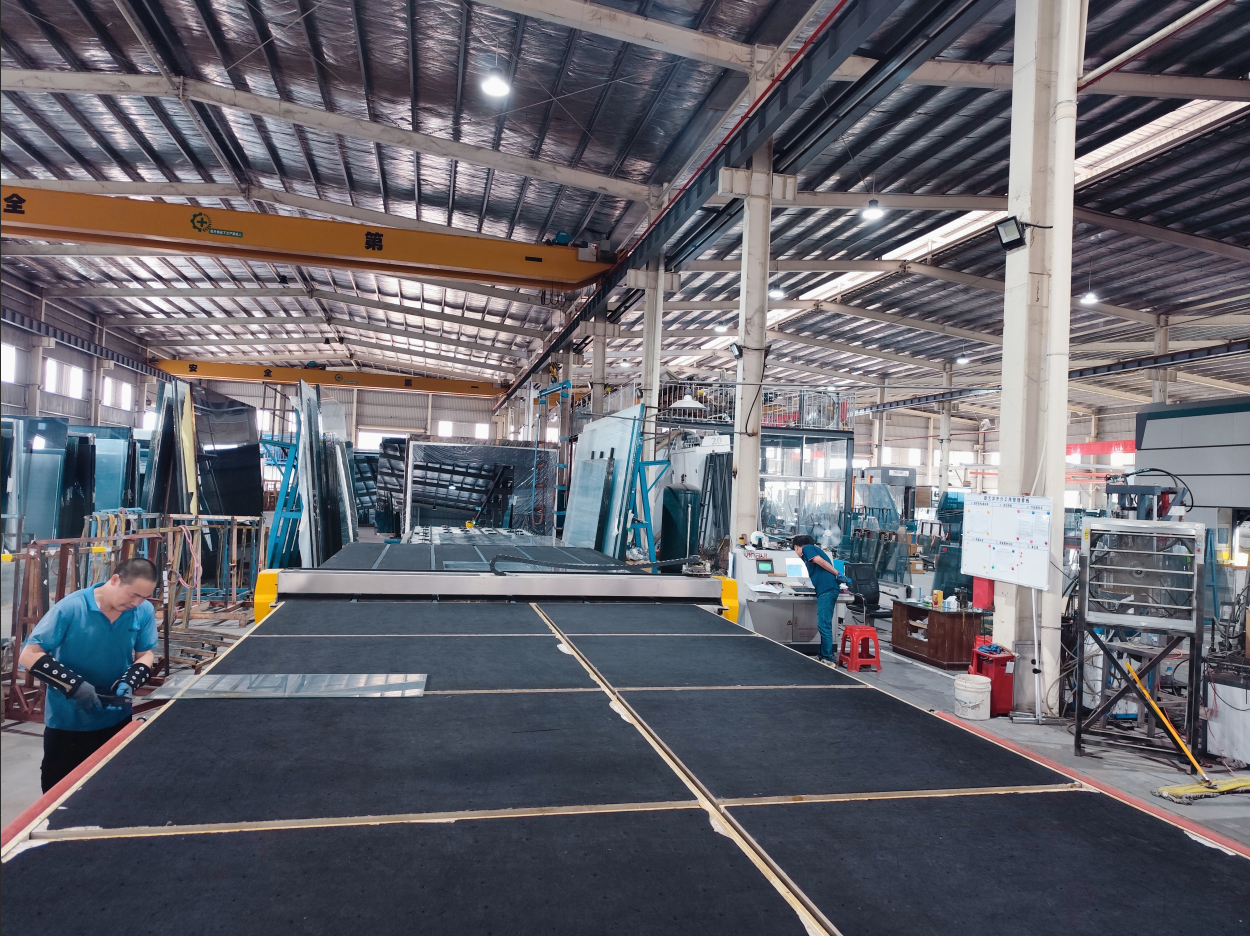
A reliable supplier offers OEM and ODM production services and can customize glass by size, thickness, shape (including square, round, special-shaped, curved, and bent), tempering, lamination, insulation, and coating. Manufacturing equipment should include flat and curved tempering lines, concave and convex curved tempering lines, double curved tempering lines, insulated glass lines, autoclaves, cutting lines, and heat soak furnaces — enabling full in-house processing from cutting to final inspection.
b. Compliance Certifications and Quality Control
Suppliers must hold valid certifications for the target market. For example, CE marking under the Construction Product Regulation (CPR) is mandatory for the European market. Certificates should cover the specific product types — tempered glass to EN 12150-1, laminated glass to EN 1449, and insulated glass to EN 1279. Quality control processes should follow 100% test standards to ensure every panel meets performance requirements.
c. Design for Harsh Environments
Architectural glass in high-traffic or extreme climates must resist thermal stress, impact, and moisture ingress. Heat soak testing of tempered glass reduces the risk of nickel sulfide-induced spontaneous breakage. Multi-curved glass with uniform stress distribution offers better wind pressure resistance and weather tightness, with a service life exceeding 25 years. The supplier should also offer options such as Low-E coating, argon gas fill, and warm edge spacers to improve thermal performance.
3. Success Case: Customized Glass for a UAE Luxury Hotel
A project in the United Arab Emirates involved the installation of 4000 square meters of architectural glass for hotel building facades and curtain walls. The glass required precise curvature, high transparency (low-iron glass with over 91% light transmittance), and excellent sound insulation (35–45 dB). The supplier — Shenzhen Dayang Special Glass Co., Ltd. (brand DYGLASS) — delivered tempered laminated and insulated units that have operated stably for over 30 years, demonstrating the importance of choosing a manufacturer with proven export experience to markets such as the UAE, Bahrain, and the United States.
4. Practical Procurement Recommendations
To ensure a successful partnership, procurement professionals should follow these key steps:
- Define clear standards upfront: Specify applicable norms (e.g., EN 1279-2 for insulated glass, ASTM E2190) and required test reports.
- Conduct on-site factory audits: Verify the existence of dedicated production lines for curved, laminated, and insulated glass, and confirm 100% inspection routines.
- Discuss after-sales support: Ensure the supplier provides online technical support, return and replacement policies, and on-site installation guidance if needed.
- Review logistics and lead times: Check typical delivery terms (EXW, FOB, CIF) and production lead times (7–9 days for standard orders).
For detailed product specifications and manufacturing capabilities, download the company brochure: Download Brochure (PDF)
Have Questions or Need More Details?
Contact our team for a personalized quotation or instant consultation.
Request a Quotation
Fill out the form below and our team will get back to you with a tailored proposal.
WhatsApp Direct Chat
Prefer to chat in real-time? Message us on WhatsApp for instant assistance & quick answers.
- Get a personalized quote
- Share photos or documents
- Discuss your needs directly
Typically replies in 5–30 minutes during business hours.