
Insulating vs Laminated Glass for Curtain Walls: A Head-to-Head Decision
Choosing between insulating glass and laminated glass for a curtain wall is not a choice between a better and a worse product. It is a choice between two different assemblies that answer two different questions. Insulating glass answers a cavity question: how much heat, sound and condensation risk should the sealed space between two lites manage over the life of the facade? Laminated glass answers a post-breakage question: what should happen to the glass after it breaks, and which interlayer is specified to hold the assembly together?
This head-to-head compares DY-ZK01 tempered insulated glass and DY-JJ01 tempered laminated glass from DYGLASS on the dimensions that actually decide a facade package: construction, cavity and gas options, light transmittance, sound insulation, post-breakage behaviour and warranty. It closes with a decision framework tied to project priorities rather than a universal winner, because the correct answer changes with the governing requirement.
DYGLASS is the brand of Shenzhen Dayang Special Glass Co., Ltd., a Shenzhen-based glass processor founded in 2017 with a 30,000 m² factory, 130 employees and a stated annual output of 600,000 square metres. Its product range covers laminated glass, toughened glass, insulated glass, curved glass, smart glass and other building glass categories, with a stated export ratio of around 60% and markets that include the UAE, Bahrain, Saudi Arabia, the United States, the Philippines and Vietnam.
Why Insulating and Laminated Glass Are Not Interchangeable
The two product families are defined differently, and the definitions are the first reason a single line item cannot cover both. The National Glass Association describes insulating glass as two or more lites separated by spacer material that incorporates a drying agent and is hermetically sealed around the perimeter with one or more sealants. It describes laminated glass as an assembly of two or more lites bonded together with an interlayer material.
That difference is structural, not cosmetic. An insulating unit depends on a sealed cavity staying sealed: the spacer, the desiccant and the perimeter seal are what keep the cavity dry and functional. A laminated assembly depends on the bond between glass and interlayer staying intact: the interlayer is what holds fragments in place after breakage. A curtain wall team that buys one product expecting the other's function will discover the gap at the wrong stage of the project.
Three failure patterns recur in tender packages:
- The generic line item. A schedule lists "tempered glass, 6 mm" without stating whether the assembly is a sealed cavity unit or a bonded laminated unit. Suppliers then quote different products against the same line.
- Range versus single value. A performance figure quoted as a range is copied into a specification as if it were a fixed value for every build in that family. Ranges reflect configuration differences, so the value must be fixed per build.
- One compliance route for two products. Insulating units and laminated assemblies are covered by different standards and different conformity documentation, so a single certificate reference rarely covers both.
Industry Background: Two Products, Two Compliance Routes
Demand context matters because it explains why both products keep appearing in the same facade package. Fortune Business Insights, in a report published in September 2026, valued the global construction glass market at USD 119.2 billion in 2025 and put the Asia-Pacific share at 38% for the same year. Those figures describe the construction glass category as a whole, including facades, windows and doors; they are not a split between insulating and laminated products, and they should not be read as one.
What the market figures do support is a practical point for procurement teams: both assemblies are mainstream enough that specification quality, not product availability, is usually the limiting factor. The divergence sits in the compliance route.
Pilkington's manufacturer-maintained standards list references BS EN 1279 for insulating glass units, BS EN ISO 12543 for laminated glass, BS EN 12150 for thermally toughened safety glass and BS EN 14449 for conformity assessment. That list is a useful orientation for European and UK-facing projects, but a manufacturer's reference is not proof of certification: the applicable edition and the certificate itself must be confirmed with the issuing standards body and the supplier.
Market-specific routes differ. AS/NZS 2208:2023 governs safety glazing materials in buildings for Australia and New Zealand. In the United States, a National Glass Association technical bulletin describes labeling requirements for safety glazing in hazardous locations and additional labeling for fire-rated glazing, referencing ANSI Z97.1, CPSC 16 CFR Part 1201, IBC Section 2406.3 and 15 U.S.C. §2063. Those requirements are jurisdiction-specific and code-adoption-dependent; they do not transfer automatically to other markets.
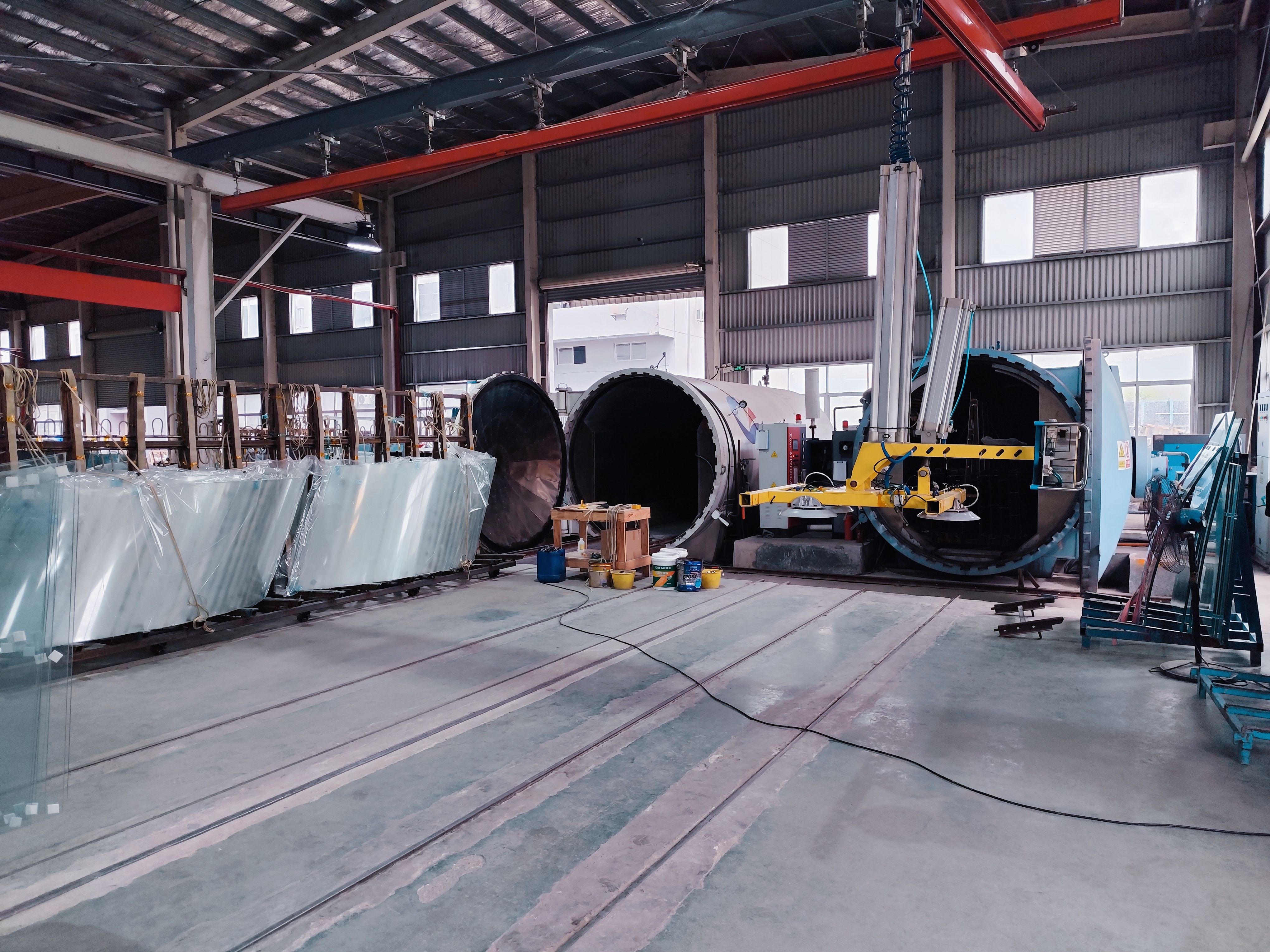
Autoclave for laminated glass assembly. Laminated build-ups such as DY-JJ01 depend on a controlled glass-to-interlayer bond rather than a sealed cavity.
The Two Products in Detail
DY-ZK01 Tempered Insulated Glass
DY-ZK01 is a tempered insulated glass unit built around a sealed cavity. The supplied specification lists two standard builds, 6+12A+6 and 8+16A+8, in which the figures describe glass thickness and cavity width in millimetres, with the "A" marking the cavity position in the code. The cavity can be filled with air, argon, krypton or xenon, the spacer can be aluminium or warm-edge, and a Low-E coating option is available.
Stated performance covers two ranges: light transmittance of 70–89% and sound insulation of 30–45 dB. Both are ranges rather than single values. That matters for specification, because the value that applies to a project depends on the build selected, the spacer, the gas fill and whether a Low-E coating is applied. A tender that copies "70–89%" without fixing those variables has not specified a transmittance; it has specified a range of possible outcomes.
Each element has a decision function rather than a marketing function:
- The cavity is the thermal and acoustic lever. The 12 mm cavity in the 6+12A+6 build and the 16 mm cavity in the 8+16A+8 build create the sealed space that separates the two lites.
- The spacer determines how the edge is built. A warm-edge spacer is specified where the edge-of-glass thermal bridge of an aluminium spacer needs to be reduced; aluminium remains the conventional option. The right choice depends on the project's thermal target and frame design.
- The gas fill is an option set, not a ranking. Air provides the baseline fill; argon, krypton and xenon are listed alternatives. Which one applies to a given build should be confirmed on the supplier's performance data for that build, because the DY-ZK01 facts state the options, not a relative performance order between them.
- The Low-E coating option is a specification decision that has to be fixed together with the transmittance target. Selecting a coating without confirming the resulting transmittance can push the delivered unit outside the range the design assumed.
- The 70–89% transmittance band should be read as an envelope across configurations. Ask for the value attached to the exact build, including the coating.
- The 30–45 dB sound insulation band works the same way. The acoustic figure for a road-facing elevation at a specific build is one number inside that band, not the band itself.
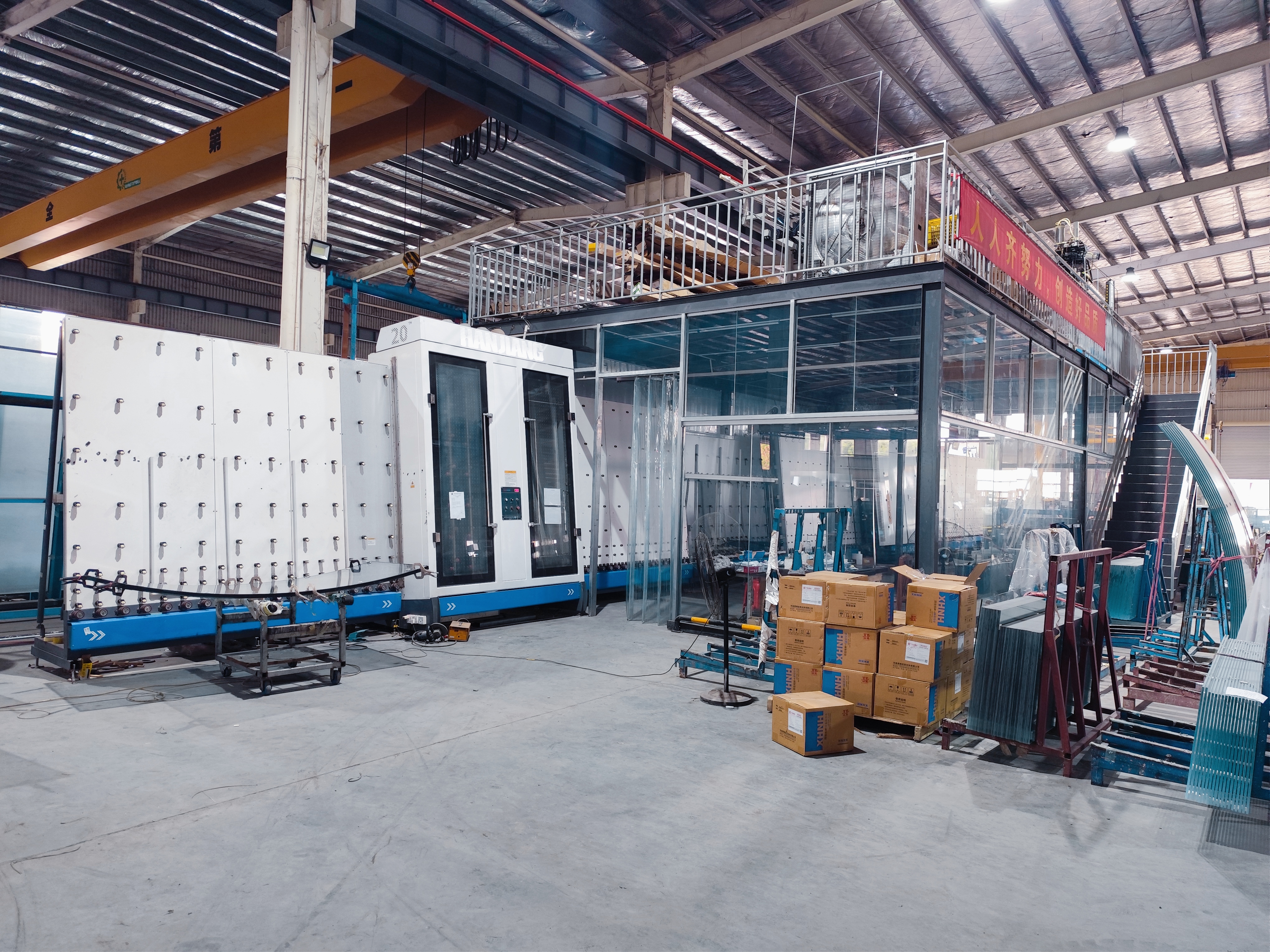
Insulated line for sealed cavity units. The spacer, desiccant and perimeter seal are what keep the DY-ZK01 cavity functional over the facade's service life.
DY-JJ01 Tempered Laminated Glass
DY-JJ01 is a tempered laminated glass with a stated thickness range of 6.38 mm to 50 mm and interlayer options of PVB, SGP or EVA. The stated warranty exceeds five years.
The thickness range is the practical point procurement teams most often under-specify. A 6.38 mm laminated build and a 50 mm laminated build sit in the same product family but serve very different roles in a project, from light interior glazing through heavy multi-lite assemblies. Quoting a single "laminated glass" price or a single "laminated glass" performance figure across that range has no technical meaning.
The interlayer is the second under-specified element. PVB, SGP and EVA are different materials with different mechanical and durability profiles, and they are not automatically interchangeable. A specification that says "PVB or equivalent" hands the decision to whoever quotes the job. The interlayer material should be named in the specification, together with the total build, so that all bidders price the same assembly.
Post-breakage behaviour is where laminated glass differs most clearly from an unfilled cavity assembly. Guardian Glass, in its technical explanation of safety glass, describes tempered glass as breaking into small pieces and laminated glass as generally remaining adhered to the interlayer, while noting that local codes determine which product applies and how it is tested. Because DY-JJ01 is a tempered laminated product, it combines both characteristics: the lites are tempered, and the interlayer provides the retention behaviour described above.
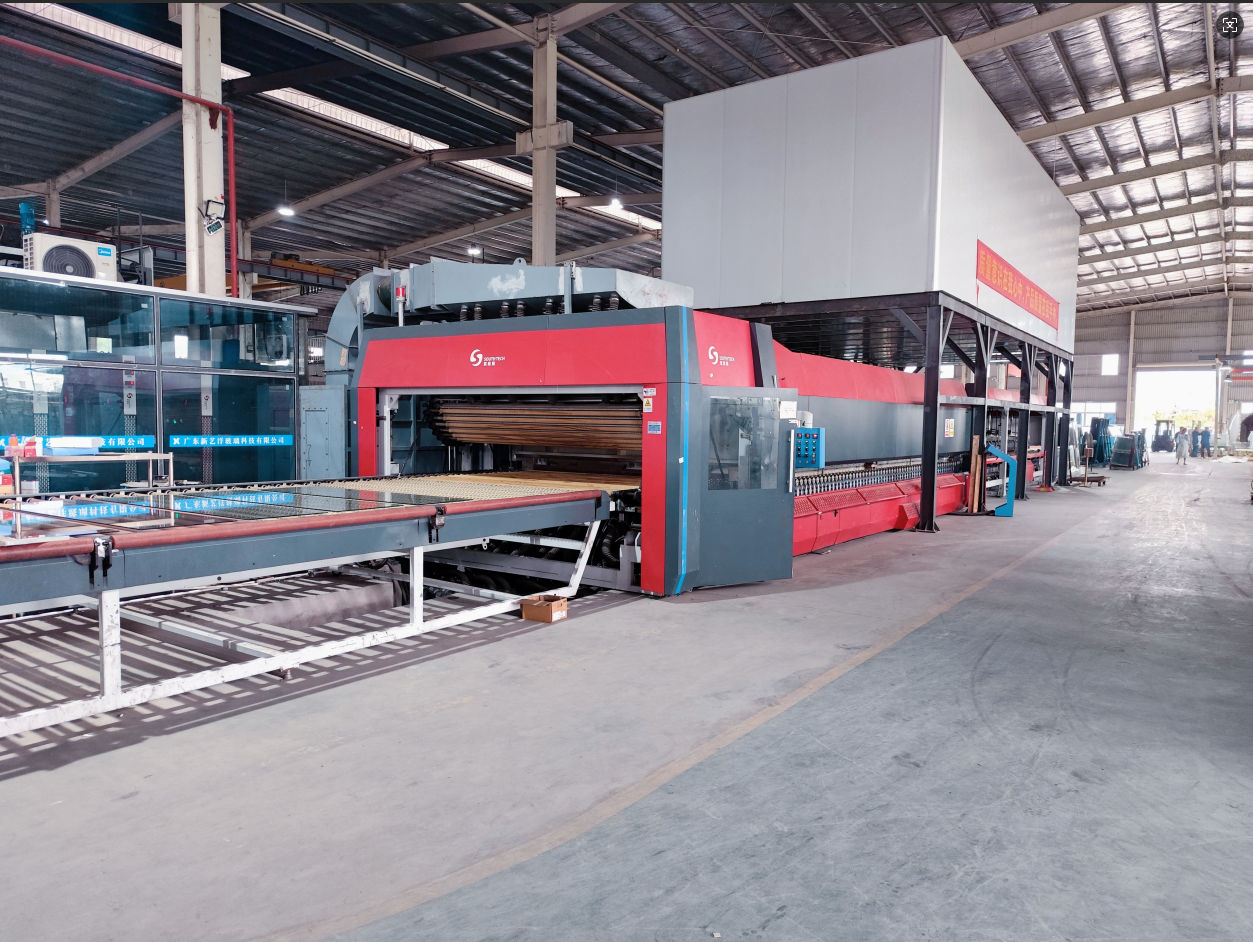
Tempered line (flat and curved). Both DY-ZK01 and DY-JJ01 are tempered products, so the tempering route is shared even though the finished assemblies differ.
Side-by-Side Comparison
The table below compares only what the supplied specification states. Where a cell reads "not stated in the supplied data", the value must be requested for the exact configuration; it does not mean the capability is unavailable.
| Decision dimension | DY-ZK01 tempered insulated glass | DY-JJ01 tempered laminated glass |
|---|---|---|
| Assembly principle | Two or more lites separated by a sealed cavity with spacer, drying agent and perimeter seal (NGA definition) | Two or more lites bonded with an interlayer (NGA definition) |
| Stated builds | 6+12A+6 and 8+16A+8 | 6.38 mm to 50 mm total thickness |
| Cavity and spacer | Sealed cavity; spacer in aluminium or warm-edge | No cavity; the interlayer is the bonding layer |
| Gas fill | Air, argon, krypton or xenon | Not applicable to the assembly type |
| Coating option | Low-E option available | Not stated in the supplied data |
| Light transmittance | 70–89% across configurations | Not stated in the supplied data |
| Sound insulation | 30–45 dB across configurations | Not stated in the supplied data |
| Interlayer options | Not applicable to the assembly type | PVB, SGP or EVA |
| Post-breakage behaviour | Tempered lites fragment into small pieces (Guardian Glass description of tempered glass) | Fragments generally remain adhered to the interlayer (Guardian Glass description of laminated glass) |
| Stated warranty | Not stated in the supplied data | Exceeds 5 years |
| Governing buyer question | How much thermal and acoustic control across the cavity, and how dry does the cavity stay? | How should the glass behave after breakage, and which interlayer is required? |
Step-by-Step: Specifying Either Build Without Rework
The sequence below works for both products. Its purpose is to force the governing requirement to be named before the glass build is fixed, because once a build is priced and ordered, changing the assembly logic becomes a variation.
- Name the governing requirement. Is the elevation controlled by solar and thermal load, by condensation risk, by acoustic transmission, or by post-breakage retention and security? If two requirements compete, state both and state which one governs where they conflict.
- Fix the assembly type before the performance numbers. A cavity assembly and a bonded assembly are not interchangeable, so the type decision comes first. This is the step that prevents "insulating vs laminated" from being resolved accidentally at the quotation stage.
- Fix the build code. For DY-ZK01, that means choosing 6+12A+6 or 8+16A+8 (or another agreed build) and stating it in the schedule. For DY-JJ01, it means stating total thickness within the 6.38–50 mm range and the number of lites.
- Fix the internal components. For the insulating build: spacer type (aluminium or warm-edge) and gas fill (air, argon, krypton or xenon). For the laminated build: interlayer material (PVB, SGP or EVA). These are the components that bidders substitute when the specification leaves room.
- Fix the optical target. Where a Low-E coating is required, state the coating option together with the required light transmittance, so the delivered unit has a single target rather than a 70–89% band to sit anywhere inside.
- Fix the acoustic target. Convert the project's acoustic requirement into a build-specific figure and require the supplier to state the value for that build. The 30–45 dB band is the family envelope for DY-ZK01, and for DY-JJ01 the acoustic figure is not stated in the supplied data and must be requested.
- Map the compliance route and the label. Identify the standard that governs the assembly in the destination market: BS EN 1279 for insulating units and BS EN ISO 12543 for laminated assemblies in the European and UK context, AS/NZS 2208:2023 for Australia and New Zealand, and the applicable US safety-glazing labeling route where the project is in the United States. Confirm the edition and the jurisdiction before the certificate is accepted.
- Verify documentation at source. A certificate reference in a brochure is a claim, not a verification. Ask for the certificate and test report, and check them against the issuing body. For context, the DYGLASS company profile states Alibaba Verified Supplier status and an SGS test report; both are company-provided statements that a buyer should confirm against the original documents during qualification.
- Fix the warranty in the purchase order. The DY-JJ01 warranty is stated as exceeding five years. For DY-ZK01 the warranty term is not stated in the supplied data and should be confirmed in the quotation, so that both products are compared on written terms rather than assumptions.
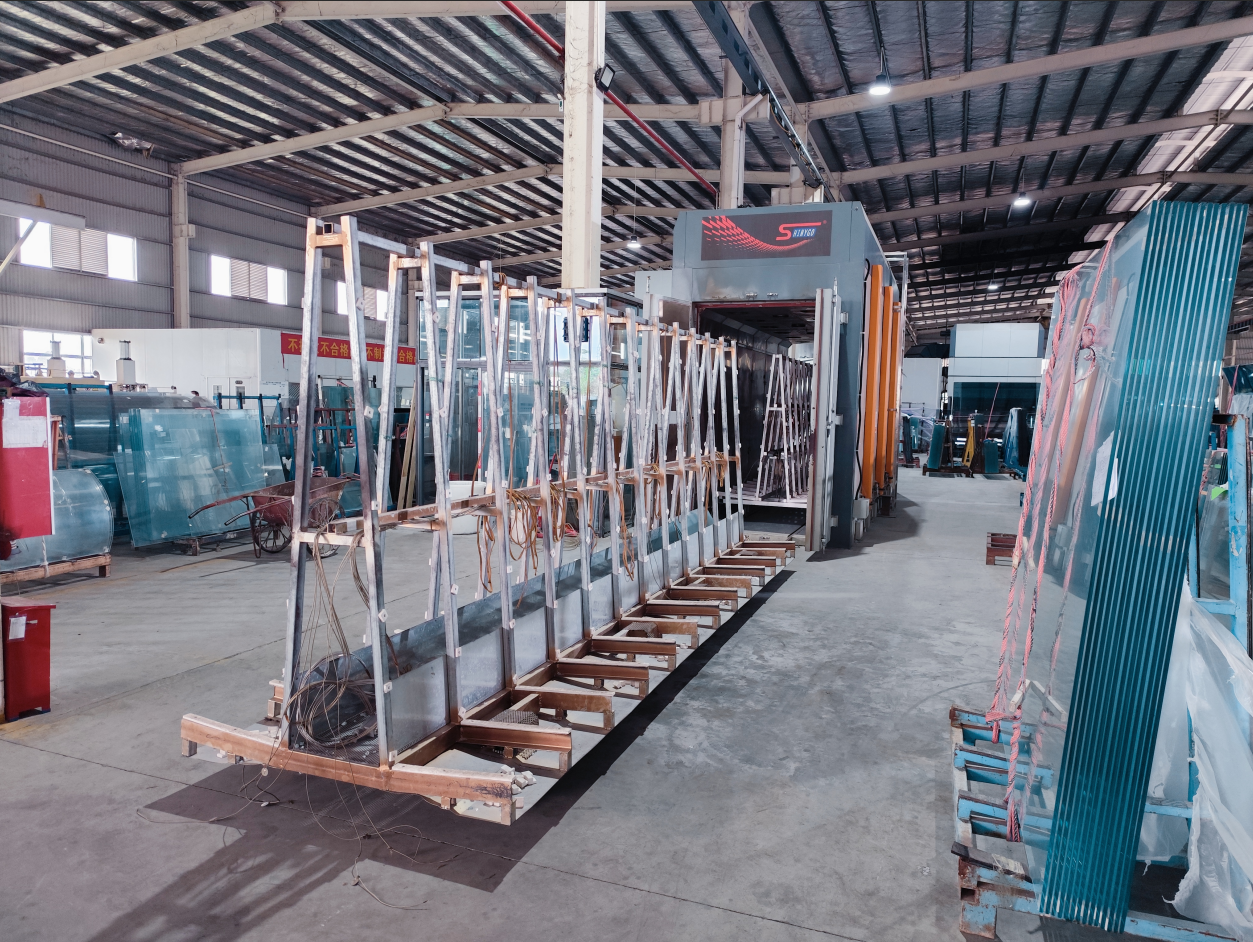
Heat soak furnace. Because both products are tempered, tempering-related quality controls sit upstream of the insulating or laminating step.
Use Cases: Where Each Build Earns Its Place
These are conditional examples, not documented project outcomes. They illustrate how the decision logic applies; they do not establish that any specific project achieved a stated result.
- Solar-controlled office curtain wall. Where the dominant risk is heat gain and the elevation is fully framed, the cavity assembly is the relevant tool. A DY-ZK01 build with a Low-E option, an agreed spacer and a fixed gas fill gives the design team a defined thermal package, and the transmittance target is set inside the 70–89% band rather than left open.
- Overhead, sloped or high-traffic glazing. Where the concern is what happens below or beside the glass after breakage, the bonded assembly is the relevant tool. A DY-JJ01 build with a named interlayer addresses the retention behaviour described by Guardian Glass, and the interlayer choice becomes a stated requirement rather than a bidder's option.
- Noise-exposed elevations. Where an acoustic target governs, the DY-ZK01 build offers a stated 30–45 dB family range that must be converted into a build-specific figure. Where an acoustic requirement and a post-breakage requirement appear on the same elevation, state both explicitly and require the supplier to confirm in writing which build satisfies each one.
- Interior and lower-risk glazing. Interior screens, partitions and non-safety-critical infill panels can often be served from the lower end of the DY-JJ01 thickness range, which keeps the assembly simple where thermal cavity performance is not the governing requirement.
Decision Framework: Four Gates, No Universal Winner
Rather than declaring one product the answer, apply four gates in order. The first gate that produces a firm requirement determines the build; later gates refine it.
Gate 1 — Is the controlling requirement thermal or condensation-related? If the elevation is governed by solar control, heat loss or cavity condensation risk, the cavity assembly is the starting point, because the cavity, spacer and gas fill are the components that address that requirement. A bonded assembly has no cavity to perform that function.
Gate 2 — Is the controlling requirement post-breakage behaviour? If the elevation is governed by what happens after breakage — overhead glazing, balustrades, high-traffic or security-sensitive locations — the bonded assembly is the starting point, and the interlayer material becomes a named specification item rather than a substitution.
Gate 3 — Do both requirements apply? Then the deliverable is not a product choice but a written clarification. State the thermal requirement and the post-breakage requirement separately in the RFQ, and require the supplier to confirm which build addresses each one and where the boundary sits. Do not assume that selecting one product satisfies the other requirement, and do not accept an oral assurance in place of a stated build.
Gate 4 — Does the commercial comparison use identical inputs? A cost comparison is only meaningful when both quotations describe the same build, the same components, the same size and the same compliance documentation. Because this comparison did not include validated price data for either build, the framework deliberately stops at cost drivers: for DY-ZK01 those drivers are the build, spacer type, gas fill, coating option and unit size; for DY-JJ01 they are the total thickness within the 6.38–50 mm range, the interlayer material and unit size. Request itemised quotations against one fixed specification and separate glass, processing, packing and freight.
Two practical checks sit across all four gates. First, thickness and cavity width affect unit weight and handling, so confirm weights per build with the supplier before framing and lifting are planned. Second, warranty is part of the comparison, not an afterthought: DY-JJ01 states a warranty exceeding five years, while the DY-ZK01 warranty term must be confirmed in writing so that the two products are judged on the same basis.
Frequently Asked Questions
Which standards apply to insulating and laminated glass in a curtain wall?
Different standards apply because the assemblies are different. In the European and UK context, Pilkington's manufacturer-maintained standards list references BS EN 1279 for insulating glass units, BS EN ISO 12543 for laminated glass, BS EN 12150 for thermally toughened safety glass and BS EN 14449 for conformity assessment. For Australia and New Zealand, AS/NZS 2208:2023 governs safety glazing materials in buildings. In the United States, a National Glass Association technical bulletin describes safety-glazing labeling in hazardous locations with reference to ANSI Z97.1, CPSC 16 CFR Part 1201, IBC Section 2406.3 and 15 U.S.C. §2063. A manufacturer's standards reference is not proof of certification, so the applicable edition, jurisdiction and certificate must be verified with the issuing body before acceptance.
What light transmittance and sound insulation does DY-ZK01 provide?
DY-ZK01 is specified at 70–89% light transmittance and 30–45 dB sound insulation. Both are ranges across configurations rather than fixed values. The figure that applies to a project depends on the build (6+12A+6 or 8+16A+8), the spacer type (aluminium or warm-edge), the gas fill (air, argon, krypton or xenon) and whether the Low-E option is applied. The correct procurement action is to fix those variables in the specification and require the supplier to state the transmittance and acoustic value for that exact build.
Which interlayers are available in DY-JJ01, and why does thickness matter?
DY-JJ01 offers PVB, SGP or EVA interlayers across a stated thickness range of 6.38 mm to 50 mm, with a warranty exceeding five years. Thickness matters because the range spans light laminated builds and heavy multi-lite assemblies that serve different roles; a single performance or price figure cannot represent the whole range. The interlayer material should be named in the specification rather than left as "PVB or equivalent", because PVB, SGP and EVA are different materials with different mechanical and durability profiles and are not automatically interchangeable.
How should cost be compared between an insulating and a laminated build?
Compare cost only against one fixed specification, because the drivers differ. For DY-ZK01 the cost drivers are the build code, spacer type, gas fill, Low-E option and unit size. For DY-JJ01 they are total thickness within the 6.38–50 mm range, interlayer material and unit size. This comparison did not include validated price data for either build, so no price conclusion should be drawn from it. Instead, issue one specification covering build, components, size, compliance documentation and warranty, then require itemised quotations that separate glass, processing, packing and freight so that the bids are genuinely comparable.
What warranty and verification documentation should be requested before ordering?
Request four things in writing: the build specification (including spacer, gas fill, coating or interlayer as applicable), the performance values for that exact build, the certificate and test report for the destination market, and the warranty terms. DY-JJ01 carries a stated warranty exceeding five years; the DY-ZK01 warranty term is not stated in the supplied data and should be confirmed in the quotation. Certificates should be checked against the issuing body rather than accepted from a brochure. To move from comparison to a fixed specification, send the project's required build, spacer, gas, coating, interlayer and quantity to DYGLASS for a written quotation, and download the DYGLASS company brochure (PDF) for the full product and capability overview.
Conclusion: Decide by Requirement, Not by Category
Insulating glass and laminated glass do not compete for the same job in a curtain wall. DY-ZK01 tempered insulated glass is built to manage a sealed cavity, with 6+12A+6 and 8+16A+8 builds, aluminium or warm-edge spacers, air, argon, krypton or xenon fill, a Low-E option, and stated ranges of 70–89% light transmittance and 30–45 dB sound insulation. DY-JJ01 tempered laminated glass is built to manage the bonded assembly, with 6.38–50 mm thickness, PVB, SGP or EVA interlayers and a warranty exceeding five years.
The decision framework therefore comes down to the governing requirement. Thermal and condensation control points to the cavity assembly. Post-breakage retention points to the bonded assembly. Where both apply, the deliverable is a written clarification from the supplier naming the build that satisfies each requirement, supported by the relevant certificate, a build-specific performance figure and stated warranty terms. That is a more reliable outcome than choosing a category and hoping the specification follows.
Next Step
Send your curtain wall schedule to DYGLASS with the required assembly type, build code, spacer or interlayer, gas fill, coating option and quantity. The team quotes against the fixed specification so that insulating and laminated options can be compared on identical inputs.
Website: DYGLASS · Email: info@dayangglass.com · Tel: +86-136 9211 0212 · WhatsApp: +86-13692110212
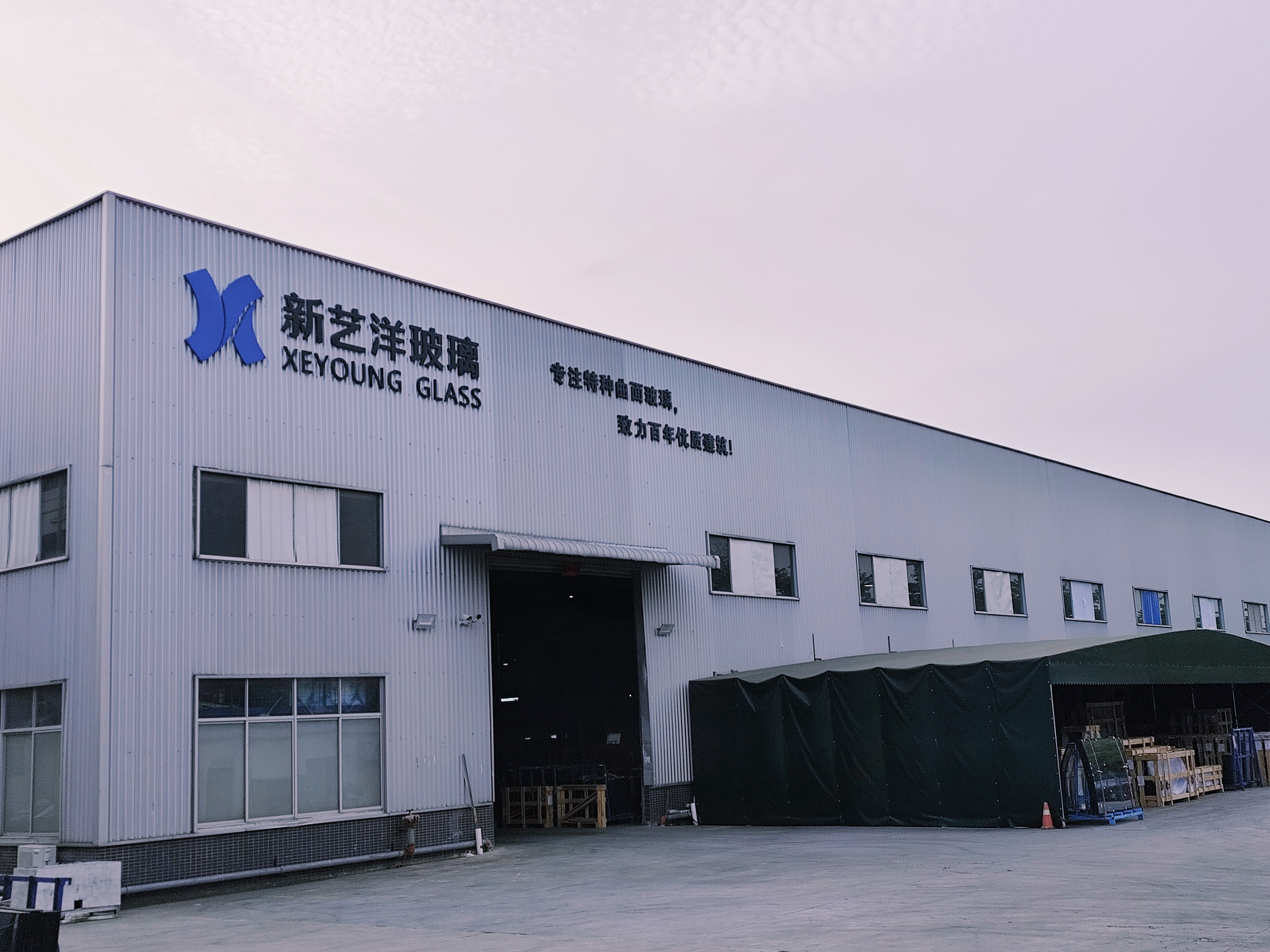
DYGLASS factory, Shenzhen. A 30,000 m² site with in-house tempering, insulating and laminating capability, and a stated annual output of 600,000 square metres.
Have Questions or Need More Details?
Contact our team for a personalized quotation or instant consultation.
Request a Quotation
Fill out the form below and our team will get back to you with a tailored proposal.
WhatsApp Direct Chat
Prefer to chat in real-time? Message us on WhatsApp for instant assistance & quick answers.
- Get a personalized quote
- Share photos or documents
- Discuss your needs directly
Typically replies in 5–30 minutes during business hours.