
Noisy Office Partitions? How Curved Insulating Glass Closes the Acoustic Gap
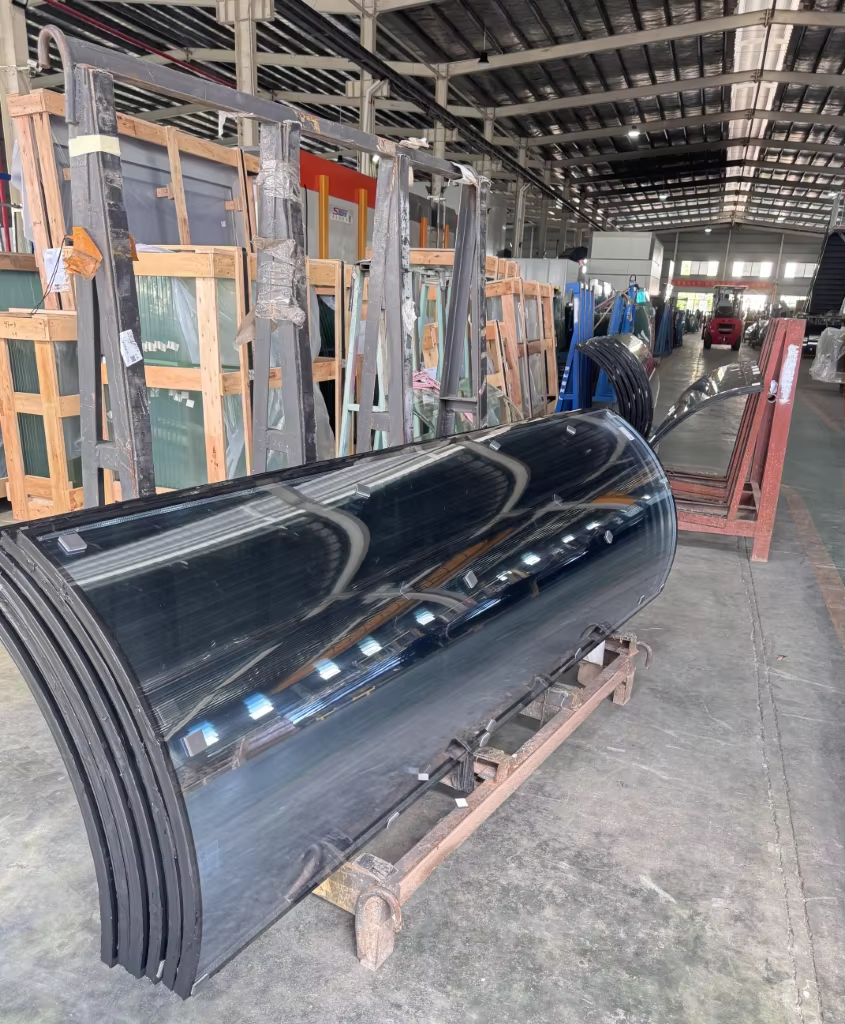
A noisy office partition usually has more than one acoustic weakness. Sound passes through the glass, around the frame, under the door, and through ceiling and floor junctions. Replacing a single pane with curved insulating glass can close a major part of that path, but only when the unit and the surrounding details are specified together.
DY-ZK01 is a tempered insulated glass from DYGLASS (Shenzhen Dayang Special Glass Co., Ltd.), a Shenzhen-based processor of tempered, laminated, insulated and curved architectural glass. Its published sound insulation range is 30–45 dB, with 6 mm + 12 A + 6 mm and 8 mm + 16 A + 8 mm builds, Low-E coating options and argon fill. This article explains what that figure does and does not cover, and where DY-JJ01 tempered laminated glass becomes the appropriate safety layer.
The real problem: noise does not travel through glass alone
An office partition is an assembly. The glass may be the largest visible surface, but acoustic performance is set by the weakest continuous path between the noisy side and the quiet side. In curved glass partitions, four paths deserve attention.
- Through the glass build-up. A single pane, a sealed insulating glass unit and a laminated glass panel behave differently because their mass, cavity and interlayer differ. The glass type cannot be selected from a model name alone.
- Around the perimeter. Frame-to-glass gaskets, mullion joints, head and sill seals and service penetrations can leave narrow gaps. A partition with good glass and poor perimeter sealing can still leak speech and mechanical noise.
- Through the door. Door leaves, frames, drop seals, closers and cut-outs are common weak points. An unsealed door undercut can undo much of the benefit of an acoustic glass unit.
- By flanking transmission. Sound can travel over a demountable ceiling, under a raised floor or through adjacent ducts and socket boxes. These paths are outside the glass product but inside the acoustic result.
Curvature adds a further detail. A curved partition needs a frame that follows the radius, accurate site dimensions and seals that remain continuous around the bend. If the curved glass and the frame are procured as separate items without a shared interface drawing, the joint that should close the acoustic gap can become the gap itself.
This is why a product-only comparison can mislead. A 30–45 dB insulating glass unit is a component figure. The installed partition may be lower if the frame is not sealed, if the door is not specified as part of the acoustic assembly, or if sound flanks over a ceiling.
What a curved glass office partition has to satisfy
Office partitions are specified for daylight, visual connection and spatial flexibility, but the acoustic requirement is usually speech privacy or concentration rather than absolute silence. The specification therefore needs to distinguish between three different requirements:
- Acoustic separation between a meeting room and a circulation area, or between two teams that need to work without listening to each other.
- Impact safety where people move close to glass, especially at doors, side panels and low-level glazing.
- Compliance for the glass product and the insulating glass unit, including the correct CE marking and declaration scope for the project market.
Two standards clarify the glass side of the specification. ASTM C1464-06 is the standard specification for bent glass and covers requirements for building construction, furniture and display. ISO 11485-3:2014 classifies curved tempered and curved laminated glass as safety glasses for buildings. For insulating glass units, EN 1279 is the standard cited in the CE marking context, and DY-ZK01 is supported by CE certification to EN 1279.
These references do different jobs. ASTM C1464 and ISO 11485-3 address bent-glass and safety-glass requirements; EN 1279 addresses the insulating glass unit. None of them is an office acoustic rating. A CE mark on an insulating glass unit should not be read as a guarantee that a finished partition will achieve a particular dB value on site.
The wider market context is also worth separating from a single project. The glass curtain wall market reached USD 62.4 billion in 2024, according to Grand View Research, and the curved glass market was estimated at USD 13.5 billion in 2025 with a 5.8% CAGR forecast for 2025–2035 by Statifacts. These are commercial research estimates for broad construction-glass categories. They do not measure office-partition demand, installed acoustic performance or DYGLASS market share, and they should not be used to size a single fit-out.
How DY-ZK01 curved insulating glass addresses the acoustic gap
DY-ZK01 is a tempered insulated glass available as curved insulated glass, with Low-E coating and argon gas options. Its acoustic contribution comes from the complete unit: glass mass, the sealed cavity, the gas fill, the spacer and the edge seal. Tempering contributes strength and a defined breakage pattern; it is not the acoustic layer by itself.
The published product options are specific enough to support a project discussion:
- Builds: 6 mm + 12 A + 6 mm and 8 mm + 16 A + 8 mm, with custom options available.
- Glass types: clear float, Low-E, tempered and low-iron glass.
- Spacer: aluminum spacer or warm-edge spacer.
- Gas fill: air, argon, krypton or xenon.
- Light transmittance: 70%–89%.
- Sound insulation: 30–45 dB.
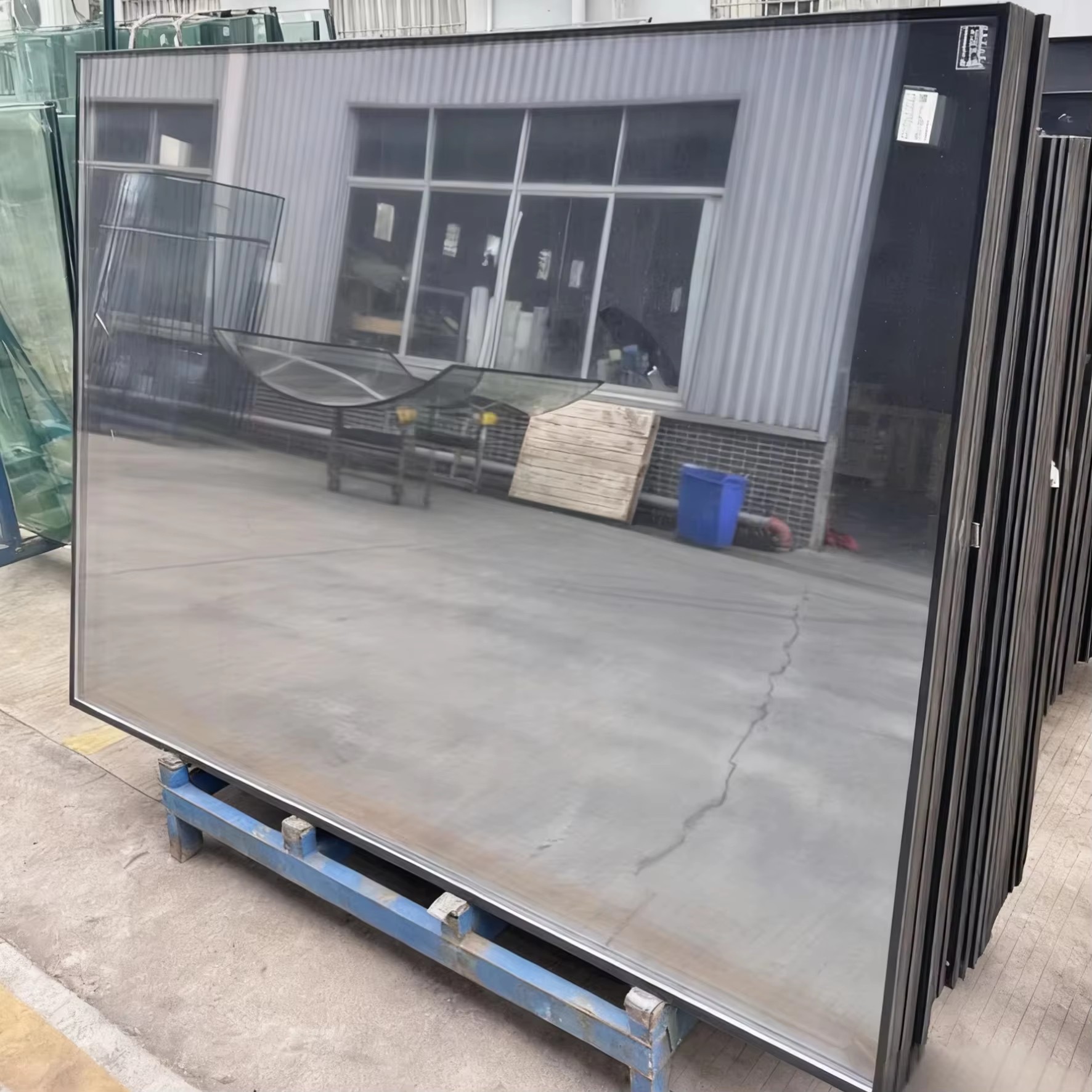
The sealed cavity is the main reason an insulating unit differs from a single pane. The unit is factory-assembled with a spacer and edge seal, so the cavity is controlled before the glass reaches the site. That does not make the partition automatically quiet: the frame perimeter, door and flanking paths still need to be sealed on site.
The published 30–45 dB range should be read as a product figure, not a field guarantee. The exact result depends on the selected build, the frame system, the quality of installation, the door design and the amount of sound that bypasses the glass. A project with a demanding speech-privacy target should have the complete assembly reviewed by an acoustic consultant, then verified on site if the specification requires it.
Low-E coating is specified mainly for thermal performance; it is not the acoustic rating. Argon fill is one gas option within the published range. The acoustic contribution of a gas fill depends on the complete unit and the frequency of the noise, so it should not be sold as a standalone fix. The same logic applies to the spacer: aluminum and warm-edge spacers are both available, but the chosen spacer should be confirmed as part of the unit specification rather than assumed to deliver a particular acoustic result.
CE certification to EN 1279 supports the conformity of the insulating glass unit. It does not certify the finished partition as an acoustic system. For a project, request the declaration and check that the model, build and manufacturing scope are covered.
Where DY-JJ01 tempered laminated glass adds impact safety
Acoustic separation and impact safety are separate requirements. DY-JJ01 is a tempered laminated safety glass with a thickness range of 6.38–50 mm, PVB, SGP or EVA interlayers at 0.38, 0.76, 1.14, 1.52 or 2.28 mm, and a published sound insulation range of 35–45 dB. Light transmittance is 85%–92% for clear glass and 10%–70% for tinted glass.
In an office partition, DY-JJ01 is relevant where the glass is exposed to human impact: door leaves, side panels beside doors, low-level glazing, and curved glass at corners or circulation routes. The interlayer retains fragments if the glass breaks, which is the reason laminated glass is used as a safety glass. The same product data should not be used to claim that every DY-JJ01 build will outperform DY-ZK01 acoustically; the figures apply to different product families and configurations.
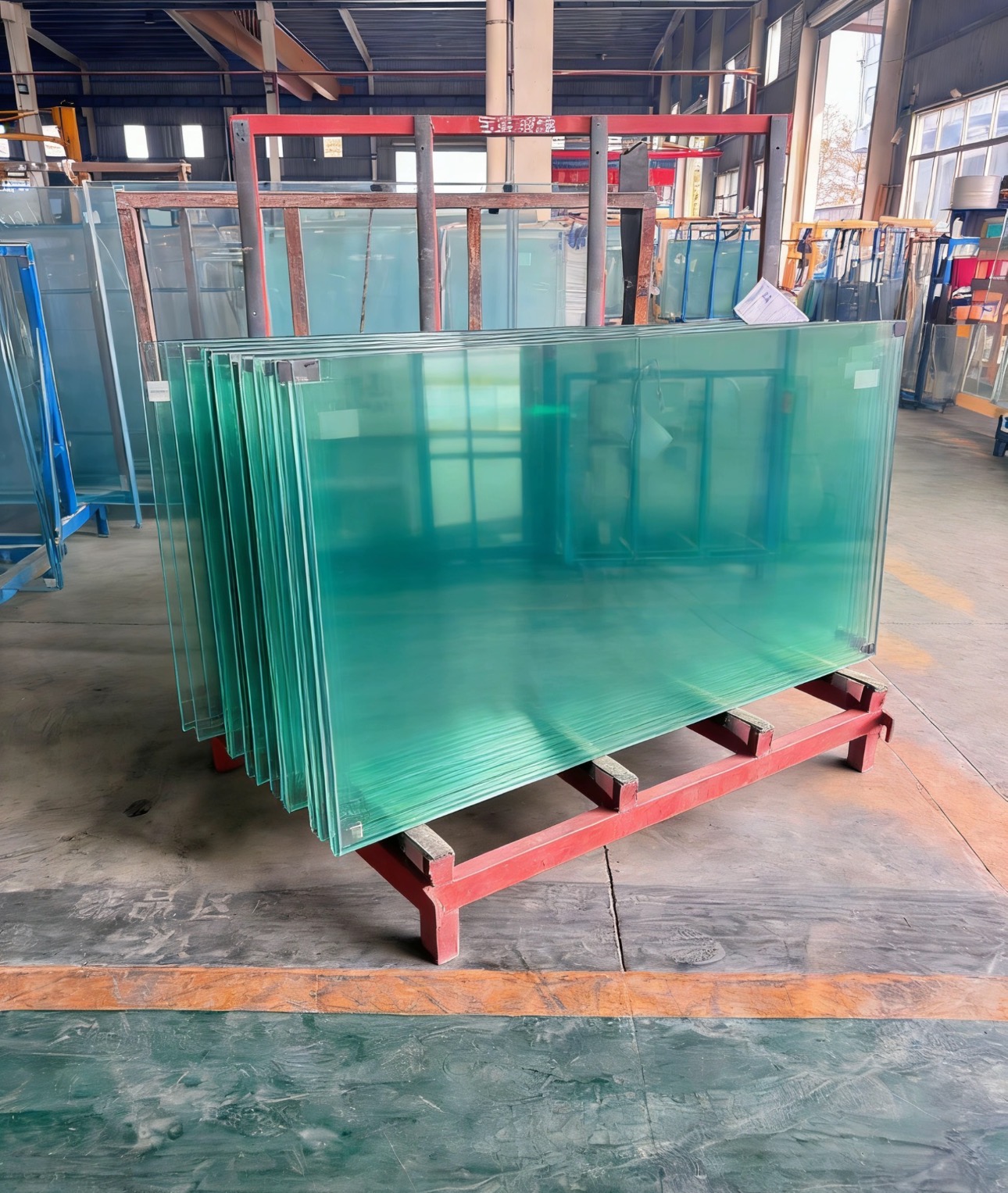
Where both acoustic separation and impact safety are required, the project should define which function each glass element performs. A project-specific assembly review is more reliable than assuming one model covers both roles. A laminated panel at a door does not automatically make the surrounding insulating unit perform better, and an insulating unit does not replace the need for laminated safety glass at an impact-exposed location.
Step-by-step: specifying a quieter curved glass partition
- Define the acoustic target in use terms. State whether the requirement is speech privacy, confidentiality in a meeting room, concentration between teams or reduction of equipment noise. Convert that into a project acoustic specification with the acoustic consultant before selecting glass.
- Survey the sound path. Include the glass, frame, door, ceiling, floor and service penetrations. Mark the weak points on the drawing. The best glass unit cannot compensate for an open door undercut or an unsealed ceiling plenum.
- Select the DY-ZK01 build. Start with 6 mm + 12 A + 6 mm or 8 mm + 16 A + 8 mm according to the project requirement, and confirm custom options where the partition geometry or acoustic target calls for them. Do not treat the published range as a substitute for a project-specific review.
- Confirm glass type and coating. Clear float, Low-E, tempered and low-iron glass are available. Use Low-E where thermal performance is part of the brief; use low-iron where colour neutrality matters. Keep the acoustic and thermal decisions separate.
- Confirm spacer and gas fill. Choose aluminum or warm-edge spacers and air, argon, krypton or xenon fill as part of the unit specification. Record the chosen combination in the datasheet, because a generic model name does not define the build.
- Add DY-JJ01 where impact safety is required. Use laminated glass at doors, side panels, low-level glazing and other impact-exposed locations. Select the interlayer type and thickness from 0.38–2.28 mm according to the safety requirement, and keep that selection separate from the acoustic unit selection.
- Detail the curvature and interfaces. DYGLASS processes multi-curved, double-curved, S-shaped, cylindrical and other curved tempered glass forms. Provide the approved geometry, frame interface and seal details so the curved glass and the partition frame are manufactured to the same set of dimensions.
- Verify compliance and commission the installation. Check the CE declaration and EN 1279 scope for DY-ZK01, review the project-specific certification evidence, inspect the perimeter seals and door seals, and carry out site acoustic verification where the specification requires it.
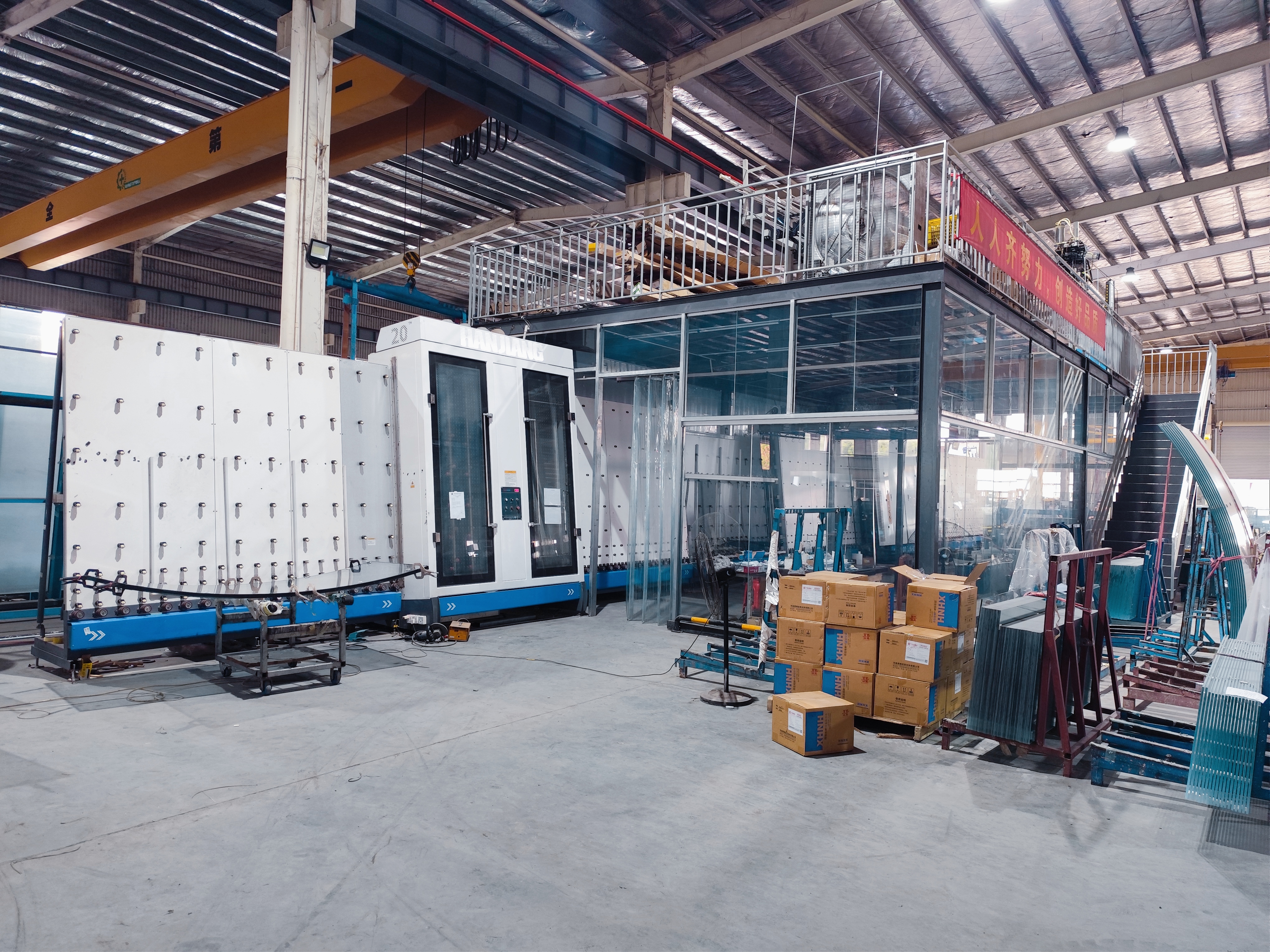
Use cases: where this specification fits
- Meeting rooms beside open-plan work areas. The partition needs acoustic separation without losing daylight. DY-ZK01 provides the insulating glass unit; the door and frame details determine whether speech is actually contained.
- Boardrooms and confidential meeting spaces. Speech privacy is the priority. The specification should combine the insulating glass with sealed perimeter details and a door system that is part of the acoustic design.
- Reception and client-facing suites. Curved glass can preserve a visual curve while separating a busy entrance from a quieter meeting zone. Low-iron or clear glass can be selected where visual clarity matters.
- Internal glazed corridors. Repeated partition modules need consistent unit builds and consistent seal details. A single poorly sealed module can become the acoustic weak point in an otherwise uniform run.
- Refurbishment with curved partition geometry. Existing frames and site dimensions should be surveyed before the glass is ordered. Curved glass is made to project geometry, so interface drawings matter more than a catalogue image.
DY-ZK01 and DY-JJ01 compared for office partitions
| Parameter | DY-ZK01 | DY-JJ01 |
|---|---|---|
| Product type | Tempered insulated glass, including Low-E coated, argon-filled and curved insulated glass | Tempered laminated safety glass, including curved laminated glass |
| Thickness or build | 6 mm + 12 A + 6 mm; 8 mm + 16 A + 8 mm; custom available | 6.38–50 mm |
| Cavity or interlayer | Sealed cavity with aluminum or warm-edge spacer; air, argon, krypton or xenon fill | PVB, SGP or EVA interlayer at 0.38, 0.76, 1.14, 1.52 or 2.28 mm |
| Light transmittance | 70%–89% | 85%–92% clear; 10%–70% tinted |
| Published sound insulation | 30–45 dB | 35–45 dB |
| Compliance note | CE certification to EN 1279 for the insulating glass unit | EN 1279 is an insulating-glass standard; request project-specific certification evidence for the laminated build |
| Typical role in an office partition | Acoustic separation within a sealed frame | Impact safety at doors, side panels and low-level glazing |
| Main limitation | Installed performance depends on frame, seals, door and flanking paths; the dB range is not a field guarantee | A safety role does not by itself define the acoustic performance of the complete partition |
Table notes: values are published product data for the named models. They are not a comparison of tested complete partition systems. Different builds, frames and installation conditions can produce different results.
Limits and verification points
Three limits should stay visible during the buying decision. First, the published 30–45 dB range for DY-ZK01 and 35–45 dB range for DY-JJ01 are product figures, not a promise that an office will achieve those values after installation. Second, CE certification to EN 1279 applies to the insulating glass unit; it is not an acoustic certificate for the partition. Third, curved glass geometry and frame alignment are project-specific, so the interface between glass, frame and seal needs to be reviewed before production.
Useful verification steps include checking the model-level declaration for DY-ZK01, confirming the exact build and spacer in the datasheet, reviewing the DY-JJ01 interlayer selection where impact safety applies, and inspecting the installed perimeter and door seals. If the project has a strict acoustic target, include a site acoustic test in the commissioning scope rather than relying on catalogue data alone.
FAQ
Is DY-ZK01 CE certified to EN 1279?
Yes. DY-ZK01 is supported by CE certification to EN 1279. The certification relates to the insulating glass unit; it does not certify the finished partition's acoustic performance. For a project, request the declaration and confirm that the model, build and manufacturing scope are covered.
How much noise can curved insulating glass reduce?
DY-ZK01 has a published sound insulation range of 30–45 dB. The installed result depends on the selected build, frame, perimeter sealing, door design and flanking paths. Treat the figure as a product range and verify the complete assembly for the project.
Should I use DY-ZK01 or DY-JJ01 for an office partition?
Use DY-ZK01 where the main requirement is acoustic separation through an insulating glass unit. Use DY-JJ01 where impact safety calls for laminated glass, especially at doors, side panels and low-level glazing. They perform different roles; a project that needs both should have the assembly defined by the project team.
What thickness and spacer options are available for DY-ZK01?
DY-ZK01 is available in 6 mm + 12 A + 6 mm and 8 mm + 16 A + 8 mm builds, with custom options. Glass types include clear float, Low-E, tempered and low-iron. Spacers can be aluminum or warm-edge, and the gas fill can be air, argon, krypton or xenon.
Can DYGLASS customize curved glass for an office partition layout?
DYGLASS processes multi-curved, double-curved, S-shaped, cylindrical and other curved tempered glass forms, and accepts OEM and ODM orders. Share the partition drawings, acoustic target and safety requirements to request a project-specific glass build, discuss a sample or ask for a quotation. The DYGLASS brochure is available for download.
Conclusion
Curved insulating glass closes the acoustic gap only when the specification treats the partition as a system. DY-ZK01 provides a tempered insulating glass unit with 6 mm + 12 A + 6 mm and 8 mm + 16 A + 8 mm builds, Low-E and argon options, and a published 30–45 dB sound insulation range. DY-JJ01 adds a laminated safety layer where impact resistance is required. The remaining performance depends on the frame, seals, door and flanking paths, which is why the product data and the installation details need to be reviewed together.
Next step for a project review: define the acoustic target, confirm the DY-ZK01 build and DY-JJ01 safety locations, and request the model-level certification and project-specific quotation from DYGLASS.
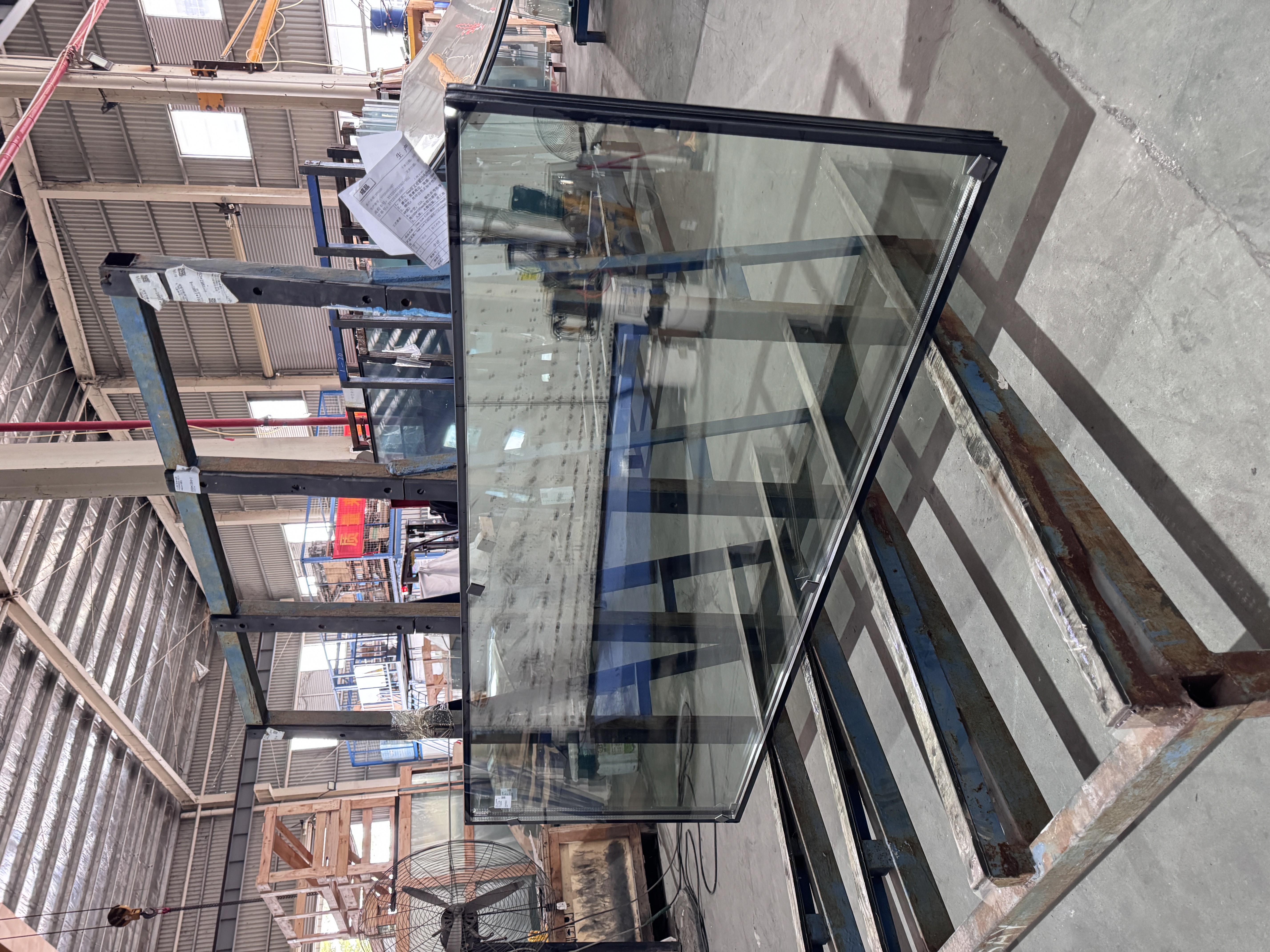
Project drawings and acoustic requirements can be submitted through DYGLASS; the company brochure provides the product and factory overview.
Have Questions or Need More Details?
Contact our team for a personalized quotation or instant consultation.
Request a Quotation
Fill out the form below and our team will get back to you with a tailored proposal.
WhatsApp Direct Chat
Prefer to chat in real-time? Message us on WhatsApp for instant assistance & quick answers.
- Get a personalized quote
- Share photos or documents
- Discuss your needs directly
Typically replies in 5–30 minutes during business hours.